
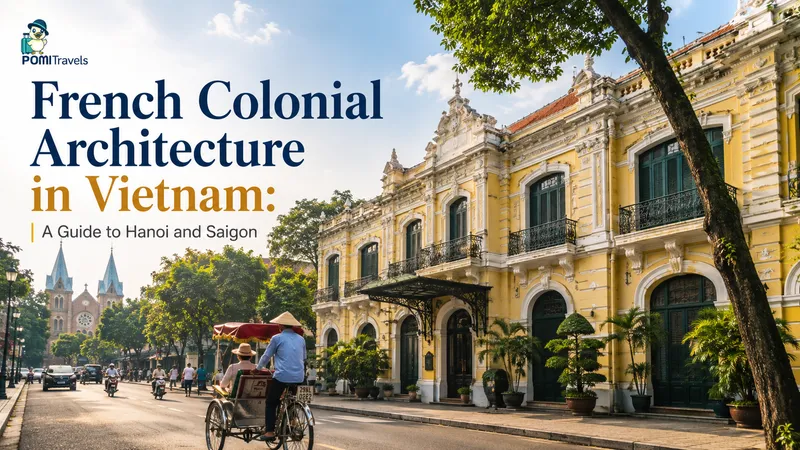
French colonial architecture shapes both Hanoi and Saigon, but each city wears it differently. This guide shows Singapore travellers what to look for and where to start.
If you enjoy old civic buildings, facades, boulevards and street grids, Vietnam gives you two strong cities to study: Hanoi and Saigon, now Ho Chi Minh City.
Both carry French colonial influence. They just express it in different ways.
Hanoi feels layered, political and restrained. Saigon feels grander, more commercial and more open. If you fly from Singapore, both are easy short-haul city breaks. Hanoi sits about 3 hours away. Ho Chi Minh City is about 2 hours away.
What French Colonial Architecture Means Here
In Vietnam, French colonial architecture does not appear as a neat district frozen in time.
You see it mixed with local life, later state buildings, shop houses, traffic and modern redevelopment. That mix is part of the appeal. A post office still functions. A government building still shapes the street. A faded villa survives beside newer construction.
Look for these traits:
- shutters and tall windows
- balconies and ironwork
- pale yellow or cream facades
- symmetrical civic buildings
- wide boulevards and formal setbacks
- masonry details that contrast with older Vietnamese streets
Hanoi: Colonial Form Inside a Deeper Historic City
Hanoi’s colonial buildings sit within a capital shaped by older layers.
The strongest contrast appears when you move between the Old Quarter and the broader French-influenced streets nearby. In the Old Quarter, the city feels dense, mercantile and local. Step outward and you start to see more formal planning and wider roads.
That transition is the point.
The site already frames Hanoi through its Old Quarter, Ho Chi Minh Mausoleum area, and colonial streetscape. When you walk here, pay attention to how the city shifts from medieval trade lanes into buildings that reflect colonial administration and later political power.
What to focus on in Hanoi
Start with:
- the edges of the Old Quarter
- streets with wider pavements and civic buildings
- the St Joseph Cathedral area
- colonial-era facades mixed into commercial blocks
Hanoi rewards walking. You notice proportions, shutters, balconies and corners best on foot. Early morning or late afternoon works better than noon, especially in warmer months.
Saigon: Bigger Statements, Cleaner Visual Hits
Saigon’s colonial core feels more immediate.
The site’s Ho Chi Minh City content already points you to the key pairing: Notre-Dame Cathedral and the Central Post Office. These are the easiest entry points because they are central, visually clear, and close to other historic sites like Reunification Palace.
This part of the city suits travellers who want architecture without much effort. You can move between major buildings quickly and understand the urban logic fast.
What to focus on in Saigon
Prioritise:
- Notre-Dame Cathedral area
- Central Post Office
- Reunification Palace as a contrast in political era and style
- nearby central boulevards in District 1
Saigon’s architecture reads differently from Hanoi because the city feels more open and commercially driven. The buildings announce themselves more strongly.
Which City Is Better for Architecture Lovers?
That depends on what you want.
Choose Hanoi if you like:
- layered streets
- contrast between old trading quarters and colonial planning
- slower observation
- atmosphere over clean sight lines
Choose Saigon if you like:
- grand central landmarks
- easier first-time orientation
- shorter sightseeing distances
- stronger visual impact in a compact area
A Good Two-City Strategy
If you want to compare both cities, do not rush the architecture into one checklist.
In Hanoi, pair your colonial walk with time in the Old Quarter so you can feel the contrast.
In Ho Chi Minh City, combine the French colonial landmarks with modern city sites and wartime history. That creates a clearer sense of how Saigon changed across eras.
Practical Notes for Singapore Travellers
You do not need a full architecture-only trip to enjoy this theme.
Both cities fit easily into broader packages:
- Hanoi with Ha Long Bay, Sapa or Ninh Binh
- Ho Chi Minh City with Cu Chi Tunnels, Mekong Delta or Ba Den Mountain
That makes architecture a useful lens rather than a separate holiday category.
If halal food matters, Ho Chi Minh City gives you the clearest support around District 1 and Ben Thanh Market. Hanoi also has growing halal options, especially around the Old Quarter. That makes both cities workable with planning.
How to See More Than the Obvious
The obvious landmarks matter, but do not stop there.
Look at:
- corners and side elevations, not just front facades
- street widths and building setbacks
- how locals still use colonial buildings today
- the way newer Vietnamese life fills old European forms
That is where Vietnam becomes more interesting than a postcard.
Final Take
Hanoi and Saigon both reward travellers who pay attention to the built environment.
Hanoi gives you contrast and texture. Saigon gives you clarity and impact. If you only have one trip, choose the city that matches how you like to explore. If you can do both, compare them slowly and let the architecture explain the rest of the country’s history for you.
Plan Your Trip
Browse our private Vietnam tour packages from Singapore, priced in SGD with no hidden fees. Private guide, 3 to 4 star hotels, and meals included from SGD 448 per person.
Related Reads
- Hanoi Old Quarter Walking Guide
- 7-Day Northern Vietnam Itinerary
- Best Time to Visit Vietnam from Singapore
- Transportation in Vietnam for Tourists