A practical guide to doing the Mekong Delta as a day trip from Saigon: what you will see, how long it takes, when to go, and what to wear.
The Mekong Delta is the most accessible rural experience from Ho Chi Minh City. Within two hours of leaving District 1, you are in a landscape of rice paddies, river channels, fruit orchards, and floating markets, a strong contrast to the urban pace of Saigon. It works well as a day trip and suits most travel styles, from families with children to solo travellers and couples.
What it is not: a rushed half-day. To get real value from the Delta, you need to leave early and give yourself the full day.
How Far Is It from Ho Chi Minh City
The most commonly visited Mekong Delta areas (My Tho and Ben Tre) are roughly 70 to 90 kilometres south of Ho Chi Minh City. In a private car, with an early start before peak traffic, the drive takes 1.5 to 2 hours each way.
Cai Rang floating market, near Can Tho, is further: about 170 kilometres, making it a 3 to 3.5 hour drive. Most Singapore day-trippers on a 4 or 5 day itinerary stick to the closer areas unless they have a dedicated Delta night stay. If you want Cai Rang, consider overnight at Can Tho and allow two days.
Traffic out of Ho Chi Minh City along the main highways can stack between 7am and 9am. Leaving at 6.30am gives you a noticeably smoother drive and means you arrive at the floating market while activity is still at its peak.
What You Will See and Do
Floating markets. The morning markets on the river are the visual centrepiece of most Delta day trips. Vendors sell fruit, vegetables, and local goods from wooden boats. The market is busiest between 6am and 9am, which is one reason an early departure matters.
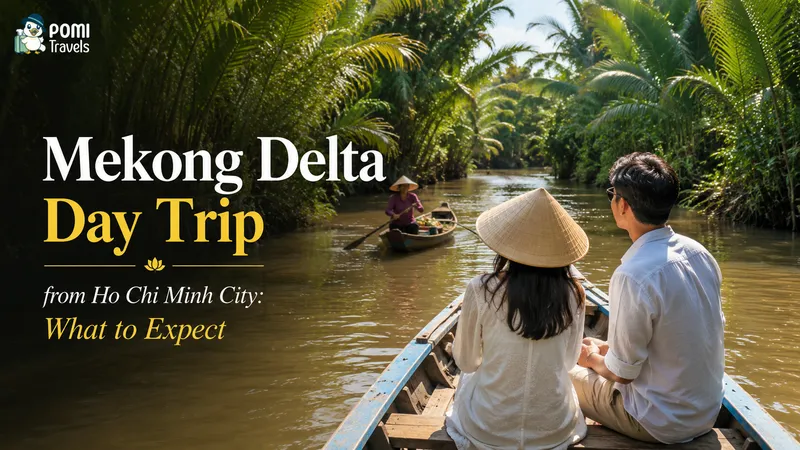
Sampan boat rides. A narrow wooden boat ride through the Delta’s smaller waterways is a standard part of most itineraries. The waterways are shaded by palm and coconut trees, and the pace is slow enough to take in the landscape properly. This is usually a 30 to 45 minute experience.
Coconut candy workshops. Several stops in the Ben Tre area demonstrate the process of making coconut candy, from cracking and pressing fresh coconuts to pouring and wrapping the sweets. It is hands-on, low-key, and interesting for all ages.
Fruit orchards. Depending on the season, stops at local orchards let you taste seasonal fruit: rambutan, longan, pomelo, jackfruit, and others. Many orchards also serve fruit platters as part of a sit-down lunch stop.
Local villages. Part of what makes the Delta worthwhile is simply moving through the villages along the river. The architecture, the market stalls, and the daily routines offer a picture of Vietnamese rural life that is quite different from what you see in a city tour.
Best Areas: My Tho, Ben Tre, and Cai Rang
My Tho is the first major Delta city you reach from Saigon and is often used as the departure point for boat rides into the surrounding islands. It is the most tourist-facing of the Delta destinations but works efficiently for a day trip.
Ben Tre is slightly further and has a more local feel. It is known for its coconut products and the river scenery through the Coconut Land area is particularly good for boat rides. Many Singapore travellers find Ben Tre a better balance between accessibility and authenticity.
Cai Rang floating market near Can Tho is the largest floating market in the Delta. The scale is more impressive than the My Tho alternatives, but the distance makes it a harder fit for a single day from Ho Chi Minh City.
Dry Season vs Wet Season
The Mekong Delta operates year-round, but the experience changes with the season.
Dry season (November to April) means lower water levels, clearer boat rides, and easier movement through the waterways. This is when most Singapore travellers visit, and it aligns with peak travel periods including the school holiday windows in June and December.
Wet season (May to October) brings higher water levels, which can make boat access to some areas easier but others muddier. The landscape is greener and the fruit harvest is often more abundant. Rain usually comes in short afternoon bursts rather than all-day downpours, so a wet season visit is still manageable.
What to Wear and Bring
Wear light, breathable clothing. Sun exposure on the boat rides is significant even under cloud cover. A hat, sunglasses, and SPF are important. Sandals work well for the boat portions and orchard stops; avoid white shoes if you are walking through village paths.
Bring cash in Vietnamese dong. Most market stops and small eateries in the Delta are cash-only. Your guide will typically carry change but having small notes yourself saves time.
A light rain jacket is useful in the wet season. In the dry season, it is less necessary but takes up little space.
Halal Considerations
Pork features heavily in Delta cooking, particularly at lunch stops. If you keep halal, notify your tour operator in advance. Seafood-focused meals are common in the Delta and can be arranged with appropriate preparation. Most private tour operators servicing Singapore visitors have experience managing dietary requirements here.
Should You Combine the Delta with Cu Chi Tunnels
In short: no. Both the Cu Chi Tunnels and the Mekong Delta are best given a full day each. Attempting both in a single day means a rushed experience at each site and a very long drive day. On a 4-day itinerary, devote Day 3 to Cu Chi and Day 4 to the Delta. On a 5-day trip, this structure works even more comfortably.
If you are only on a 3-night trip and must choose one, most Singapore travellers with families prefer the Mekong Delta for its variety. Solo travellers and history-focused visitors tend to prioritise Cu Chi.
For a deeper look at Delta food culture, see our guide to the Mekong Delta culinary experience.
Plan Your Trip
Browse our private Vietnam tour packages from Singapore, priced in SGD with no hidden fees. Private guide, 3 to 4 star hotels, and meals included from SGD 448 per person.
View Ho Chi Minh City Tour Packages
Related Reads
- Mekong Delta Culinary Adventure
- The Ultimate Ho Chi Minh City Experience
- Ho Chi Minh City Districts Explained
- Cu Chi Tunnels Guide