A practical Ha Giang Loop packing list for Singapore travellers, built around layering for cold mountain mornings, monsoon rain and long days on the bike.
You step off the Scoot flight in Hanoi into familiar heat, then six hours and 300 kilometres north your morning starts at 13C on a ridge at altitude. That swing is the whole reason your Ha Giang Loop packing list matters more than for most Vietnam trips.
The loop is not one climate. In a single riding day you drop into warm river valleys and climb back onto cold, windy passes. Pack for layering and you will be comfortable everywhere. Pack like it is a beach holiday and you will be miserable by mid-morning. If the loop is one leg of a bigger trip through Hanoi, Ha Long Bay, Ninh Binh or Sapa, our full northern Vietnam guide shows how the regions connect and when to visit each.
This is a Singapore-focused, practical list: what to wear, what to carry and what the tour already provides so you do not double up. For routing and timing, see our Ha Giang Loop itinerary for 3 to 4 days, and for the full picture of how the trip runs, the Ha Giang Loop tour pillar.
The Singapore packing shock: layering is everything
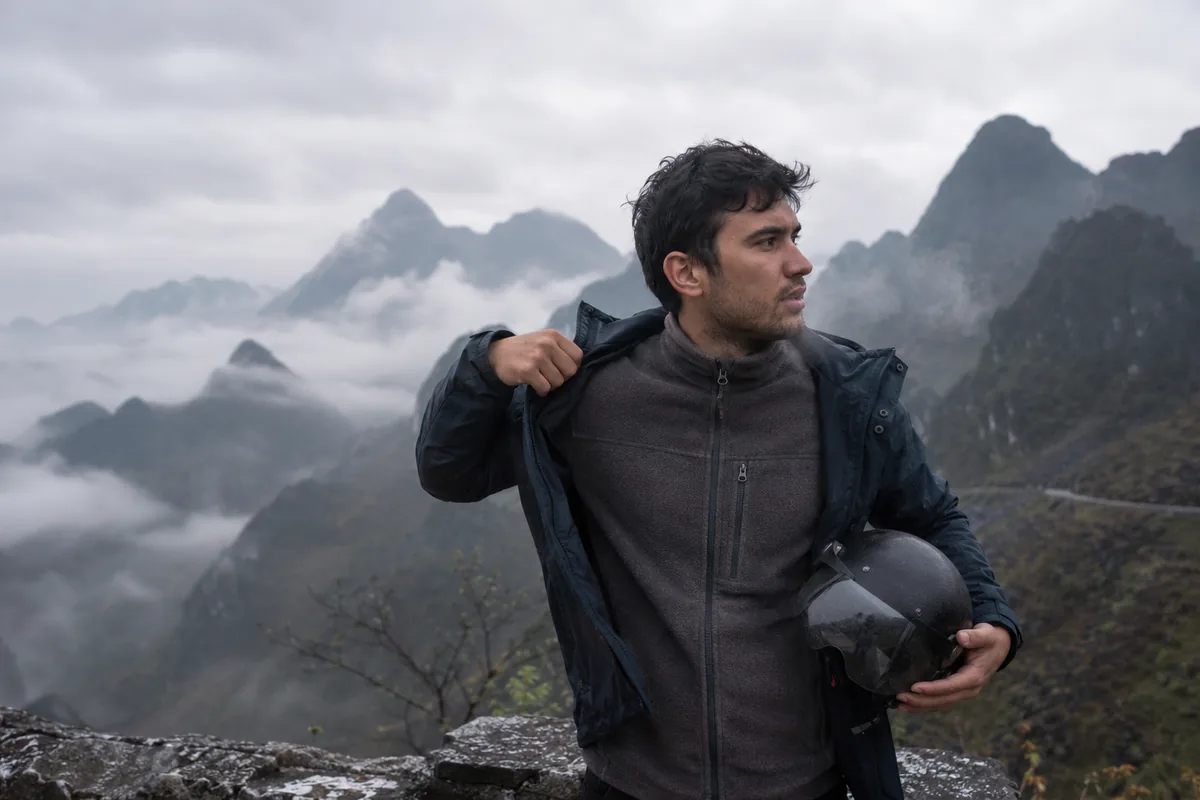
Singaporeans pack for one temperature. The loop demands three. The trick is layers you can add and shed without unpacking your whole bag at a viewpoint.
Build your kit in three pieces. A base layer (a thin long-sleeve or merino top) sits against your skin and manages sweat. A mid-layer (a fleece or light down jacket) traps warmth on cold passes. A windproof, waterproof shell blocks the wind chill that hits hard when you are moving on a bike, even at 22C.
That combination covers almost any day on the loop. On a warm afternoon you ride in the base layer; on a cold morning climb you wear all three. Cotton hoodies do not count, because once they are damp from sweat or drizzle they stay cold and clammy.
One detail Singaporeans miss: it is the wind, not the air temperature, that makes you cold on a bike. Sitting still, 20C feels mild. Moving at 50 kilometres per hour into a headwind on an exposed pass, that same air strips the warmth out of you fast. This is why the shell layer earns its place even in the milder months, and why a thin scarf or buff around the neck makes a bigger difference than its size suggests.
Choose darker colours for your outer layers. The loop is dusty in the dry season and muddy in the wet, and pale clothing shows every kilometre of it. Two of each base and mid-layer is plenty for a six or seven-day trip, since homestays can usually arrange a quick wash.
What to wear by season (for packing, not weather-watching)
You do not need a month-by-month forecast here. For best time to visit details, the pillar covers it. For packing, group the year into three:
- Oct-Nov and Mar-Apr (mild): The easy seasons. Base layer plus a fleece plus a shell handles it. Pack a light pair of gloves for cool mornings.
- Dec-Feb (genuinely cold mornings): This catches Singaporeans out every year. Add thermals, a thicker fleece, insulated gloves and a warm beanie. Mountain dawns can sit in single digits Celsius.
- May-Sep (heat and heavy rain): Monsoon season. The afternoons are hot, but the rain is the real story. Prioritise serious waterproofs over warmth, and expect to ride through downpours.
If you are unsure which bracket your dates fall into, tell us when you book and we will advise exactly what to pack for your week.
Rain gear: do not skimp
Rain on the loop is not a drizzle you wait out under a roof. It arrives in sheets, especially May to September.
A poncho is cheap, packs small and covers you and your daypack in one, but it flaps in the wind. A proper rain jacket (and rain trousers) seals better and is worth it if you are travelling in monsoon months. Many travellers carry both and decide each morning.
Protect your electronics separately. A small dry bag for your phone, power bank and camera, plus a waterproof phone pouch you can navigate through, will save your trip if you get caught out. Do not rely on a jacket pocket staying dry.
What the tour provides versus what you bring
One reason to book a guided trip is that the heavy safety kit is handled. On an easy rider 6D5N package you ride pillion behind an experienced local driver, so you never handle the bike yourself.
| Item | Provided | You bring |
|---|---|---|
| Helmet | Yes, fitted | Buff to wear under it |
| Knee guards | Usually | Long trousers |
| Rain poncho | Often, one spare | Your own jacket and dry bag |
| Warm clothing | No | All layers and gloves |
| Toiletries and meds | No | Full personal kit |
Confirm the exact inclusions for your chosen package when you book, since they differ between the easy rider and private-car options.
Documents, money and health
ATMs are scarce once you leave Ha Giang town, and many homestays and roadside stops are cash-only. Sort your money before you ride.
- Documents: Passport, a printed and digital copy, and proof of travel insurance. Keep them in a waterproof sleeve.
- Cash: Bring enough Vietnamese dong in small notes for the whole loop. Change some SGD to dong in Hanoi before heading north, where rates are better and ATMs are reliable.
- Motion-sickness tablets: The switchbacks are relentless. Even strong stomachs feel it. Take a tablet before the day starts rather than once you feel queasy.
Pack a compact health kit: basic painkillers, any personal medication, high-SPF sunscreen and lip balm (the sun at altitude burns even through cloud), wet wipes and hand sanitiser for cash-only stops, and plasters for the pillion soreness that sneaks up on day two. A small tube of anti-chafe balm is the kind of thing nobody packs and everybody wishes they had by the second long riding day.
If you take regular medication, bring more than you think you need and keep it in your daypack, not your main bag. Pharmacies on the loop are basic, and the nearest well-stocked one may be hours away.
Electronics
Power is unreliable on the more remote nights, so a power bank is non-negotiable. Bring a universal adapter; Vietnam runs 220V on type A and C sockets, so most Singapore plugs need one.
Download offline maps before you go, since mobile coverage drops out on the high passes. A local SIM or eSIM bought in Hanoi gives you data in the towns, but do not count on a signal between them. If you want footage, an action cam with a spare battery captures the riding far better than a phone you have to keep dry and steady, and it leaves your hands free to hold on.
Charge everything overnight whenever you have power. Homestay electricity can be intermittent, and you will not always get a full night plugged in, so top up your power bank the moment a socket is free.
Your Ha Giang Loop packing checklist
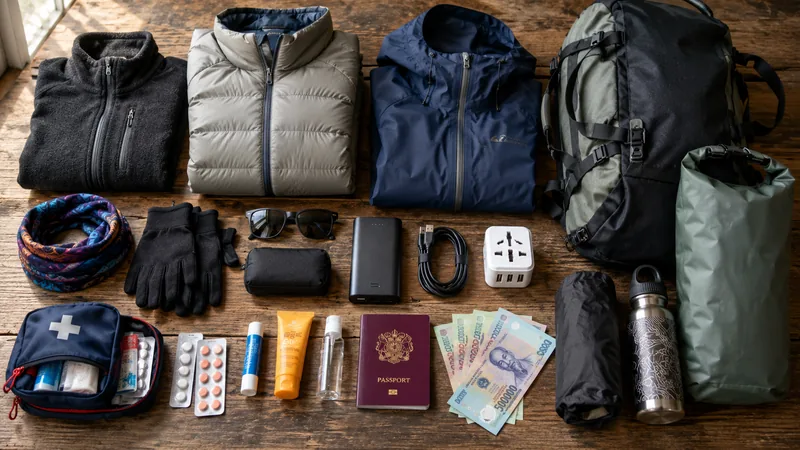
- Clothing: Base layers, fleece or light down, waterproof shell, long trousers, closed shoes, buff or neck gaiter, gloves, warm hat (winter), sunglasses
- Rain gear: Poncho and/or rain jacket, dry bag, waterproof phone pouch
- Documents and money: Passport plus copies, insurance proof, dong in small notes, some SGD to change in Hanoi
- Health: Motion-sickness tablets, personal meds, sunscreen, lip balm, wet wipes, hand sanitiser, plasters
- Electronics: Power bank, universal adapter, offline maps downloaded, action cam and spare battery
What not to bring
Leave the hard-shell suitcase at home. Storage on bikes and in 4x4s is limited, so pack into a soft duffel or backpack that squashes down. Skip the just-in-case extras; you will repack every night and a lighter bag makes that painless. Travelling with kids changes the maths a little, so read our notes on the Ha Giang Loop by private car for families.
Get a packing brief with your quote
Tell us your travel dates and we will tailor this list to your exact week, then build a private, customisable itinerary around it. Message us on WhatsApp at +65 8274 6722 for a custom SGD quote, and browse the full range on the Ha Giang Loop tour page.
Frequently Asked Questions
What should I wear on the Ha Giang Loop as a pillion rider?
Long trousers, closed shoes, a base layer, a fleece or light down mid-layer and a windproof, waterproof shell. Add a buff and gloves; the wind chill at altitude is real even on warm days.
Do I need cold-weather clothing if I visit in December or January?
Yes. Mountain mornings in Dec-Feb can drop to single digits Celsius. Bring thermals, a proper fleece, gloves and a warm hat, even though you left 30C in Singapore.