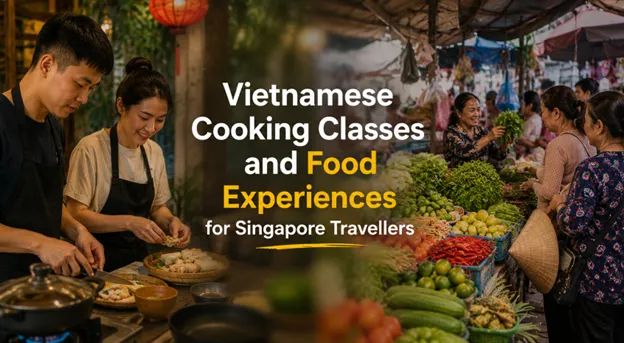
A cooking class can be one of the most useful food experiences in Vietnam. This guide helps Singapore travellers choose the right format, city, and class style.
A cooking class is one of the easiest food activities to justify on a Vietnam trip. You do not just eat. You learn how ingredients fit together, why some dishes taste different by region, and what to order with more confidence for the rest of the holiday.
For Singapore travellers, this works especially well because many Vietnamese ingredients already feel familiar. Herbs, fish sauce, rice noodles, grilled meats, and fresh vegetables are not new. The class helps you see how the balance changes in a Vietnamese kitchen.
Why a cooking class is worth doing
A good class gives you three things at once:
- one practical activity
- one meal you actually care about
- one deeper understanding of Vietnamese food
That is useful on a 4D3N or 5D4N trip where every half-day needs to earn its place.
What types of food experiences are available
Market plus cooking class
This is the best format for first-time visitors. You visit a market, see the ingredients, then cook a few dishes with guidance.
If you want context instead of only recipes, choose this version.
Home-style class
Some experiences focus on family cooking in a smaller setting. These can feel more personal and less polished.
Choose this if you care more about atmosphere and everyday food than a formal studio setup.
Studio class
This is the easiest option for travellers who want comfort, cleaner facilities, and a straightforward schedule. It often suits families, larger groups, or travellers who do not want too much improvisation.
Food tour without cooking
If you enjoy eating more than cooking, a guided food walk may fit better. This can be the better pick if your itinerary already has many activities and you do not want to spend half a day indoors.
Best cities for cooking classes
Hanoi
Hanoi suits travellers who want northern flavours, market context, and dishes tied closely to the Old Quarter food scene. A Hanoi class works well if your trip already includes street food walks and coffee stops.
Ho Chi Minh City
Ho Chi Minh City usually offers the broadest range of class formats. It is often the easiest city to book if you want English-friendly instruction and a more polished setup.
This also makes it a good option for Singapore families or corporate groups.
Other destinations
You may also find classes in central Vietnam or in smaller towns, often with a stronger focus on local specialities. These can be excellent, but they work best if the cooking experience is a key part of the itinerary rather than a last-minute filler.
What you will usually cook
The exact menu changes by class, but common beginner-friendly dishes include:
- fresh spring rolls
- pho or other noodle dishes
- grilled meat dishes
- dipping sauces
- salads with herbs
- simple desserts
Do not choose based only on the longest menu. A class with three dishes taught well is usually better than one rushing through six.
How to choose the right class
Check the duration
Many classes take 3 to 5 hours. That is enough for a market visit, preparation, cooking, and eating. Anything shorter may feel rushed. Anything much longer can become tiring on a hot travel day.
Look at group size
Smaller groups usually mean more hands-on time. Larger groups can still be fine, but the pace often becomes less personal.
Think about your travel group
Couples may enjoy a smaller, slower class. Families with children may prefer a cleaner studio setup and direct transport. Older travellers often value comfort over authenticity points.
Confirm dietary needs early
If your group avoids certain meats, needs seafood-free dishes, or has stricter requirements, ask before booking. The earlier you raise it, the better the class can adjust.
When to schedule it
Do not put a cooking class on your arrival day. You may be tired, and the pace of a class works better when you are already settled.
Day two or three is ideal. By then, you have already eaten around the city and can appreciate the ingredients more.
A lunch class often works better than dinner. You avoid finishing too late, and you still have the evening free.
Is it worth it if you already cook at home?
Yes, if your goal is understanding rather than mastering restaurant-standard recipes. The value is not only in bringing home one exact version of pho or spring rolls.
The value is in seeing local ingredients, learning the logic behind the dishes, and getting a calmer food experience between busier sightseeing days.
Best fit for Singapore travellers
Cooking classes work especially well for:
- couples who want one memorable shared activity
- families with teens
- small private groups
- travellers who enjoy food but want something more structured than a street food walk
Plan Your Trip
Browse our private Vietnam tour packages from Singapore, priced in SGD with no hidden fees. Private guide, 3 to 4 star hotels, and meals included from SGD 448 per person.
Related Reads
- If you want market context first, read Local Market Food Tours: Ben Thanh, Dong Xuan and Hidden Neighbourhood Markets.
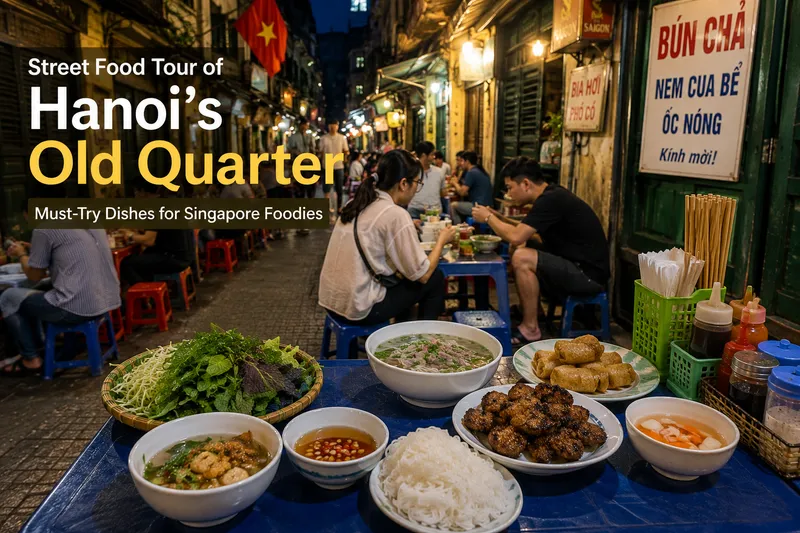
- For Hanoi dish ideas before booking a class, use Street Food Tour of Hanoi’s Old Quarter: Must-Try Dishes for Singapore Foodies.
- For a southern food contrast, read Mekong Delta Culinary Adventure: Fresh Tropical Fruits and Rural Vietnamese Cooking.
- To build a fuller food trip, see Coffee Culture in Vietnam: From Hanoi Street Stalls to Saigon’s Trendy Cafes.
If your trip is very short and packed with touring, a food walk may be the more efficient option. If you have a little more breathing room, the class usually gives better depth.
Final takeaway
A Vietnamese cooking class is worth adding when you want a food experience with more substance than just another meal. Choose a class with a clear format, manageable group size, and dishes you genuinely want to learn.
That usually matters more than chasing the most elaborate package. Keep it practical, book it for the middle of the trip, and use it to understand Vietnamese food better for the rest of your holiday.
Back to all articles