Discover the ultimate guide to Vietnam wellness tours. Find your perfect retreat, clarify your goals, and rejuvenate in stunning locations!
Your guide to Vietnam wellness tours
TL;DR:
- Vietnam has become a top destination for health-focused travel, offering diverse wellness retreats tailored to specific goals. Proper planning, including clarifying your health objectives and understanding structured daily routines, is essential for meaningful results. Genuine wellness programs feature assessments, qualified practitioners, and intentional schedules, ensuring a restorative experience beyond superficial spa visits.
Vietnam has quietly become one of Asia’s most compelling destinations for health-focused travel, and choosing the right experience from the dozens of options available is genuinely harder than it looks. This guide to Vietnam wellness tours walks you through everything you need to know before you book: how to clarify your goals, what a well-structured itinerary actually looks like, which tour formats suit different travellers, and how to spot the retreats that deliver real results rather than just a glossy brochure. Whether you are drawn to ancient herbal therapies, onsen hot springs, or eco-wellness lodges deep in Phong Nha’s forests, this is your starting point.
Table of Contents
- Key takeaways
- Guide to Vietnam wellness tours: planning before you book
- What a structured wellness day actually looks like
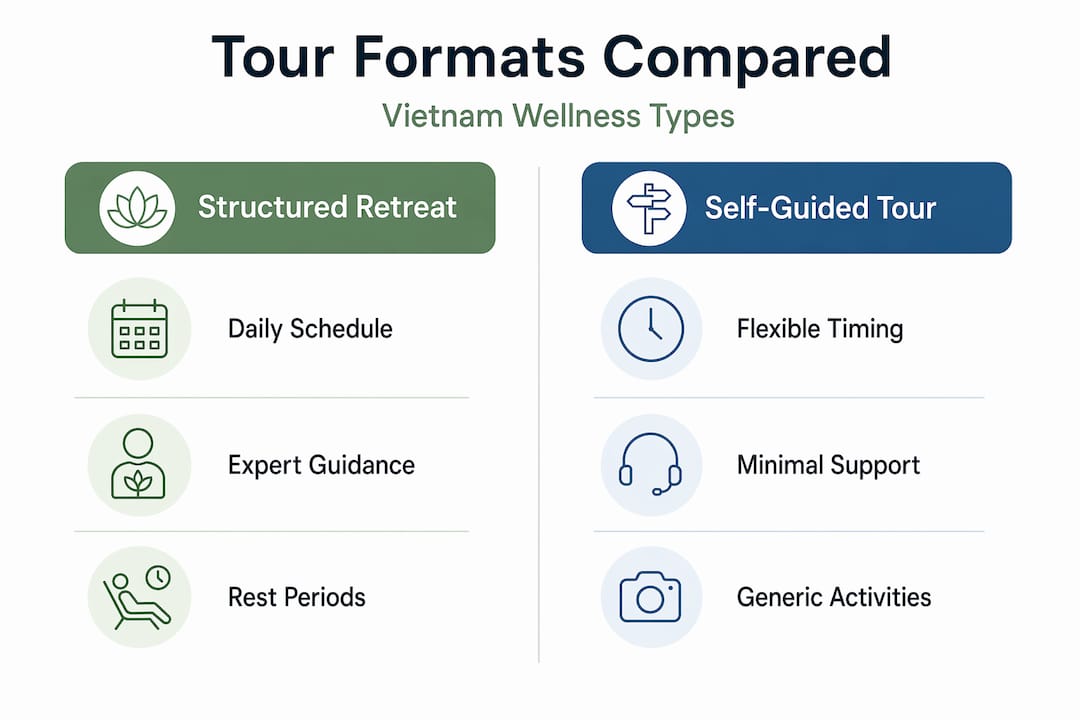
- Comparing Vietnam wellness tour formats
- Avoiding pitfalls and verifying authenticity
- Getting the most from your wellness tour
- My honest take on Vietnam wellness tours
- Plan your Vietnam wellness escape with Vietnamtourpackage
- FAQ
Key takeaways
| Point | Details |
|---|---|
| Clarify your wellness goals first | Knowing whether you want stress relief, detox, or rejuvenation shapes every booking decision you make. |
| All-inclusive daily rhythms work best | Structured programmes with set treatment sequences consistently outperform loosely connected spa visits. |
| Age and safety rules apply | Hot spring resorts like Bang Onsen restrict access to guests aged 12 and above, so plan group bookings carefully. |
| Match tour format to your personality | Eco-lodges, herbal spa retreats, and cultural healing journeys serve very different needs and comfort levels. |
| Rest intervals are non-negotiable | Skipping cool-down and rest periods after thermal rituals significantly reduces the wellbeing benefits you receive. |
Guide to Vietnam wellness tours: planning before you book
Getting your preparation right is where most travellers go wrong. They book a retreat based on photographs and assume the rest will sort itself out. It rarely does.
Start by being honest about your health goals. Are you chasing stress relief after a demanding year? Hoping to detox and reset your digestion? Looking for pain relief and better sleep? Your answer changes everything: a detox-focused retreat in Hoi An looks very different from an onsen thermal circuit in Quang Binh. Good Vietnam spa and wellness planning means matching the programme to your body’s actual needs, not just the aesthetic of the resort.
Budget and inclusions are the next conversation to have with yourself. Mid-range wellness retreats typically include accommodation, daily treatments, and meals. Premium all-inclusive resorts add private consultations, guided movement sessions, and herbal preparation workshops. Always ask what is explicitly excluded before you pay.
For timing, the dry season between February and August is generally the most comfortable window for central Vietnam, covering popular wellness destinations like Hoi An and Phong Nha. Northern retreats near Hanoi work well from September to November when the heat softens.
A few practical considerations worth knowing upfront:
- Hot spring onsen access at Bang Onsen in Quang Binh is restricted to guests aged 12 and above, with the natural source reaching temperatures up to 105°C.
- Room rates at Bang Onsen range from approximately 2,190,000 VND to 3,590,000 VND per night, rising at weekends.
- Many reputable resorts offer pre-arrival wellness assessments online, which guide the selection of personalised herbal therapies and set the tone for your stay.
- Treatments like Dien Chan facial reflexology and herbal steam are traditional Vietnamese practices worth researching before arrival so you can make informed choices on the day.
Pro Tip: Complete any pre-arrival wellbeing questionnaire your retreat sends you with complete honesty. Resorts use these assessments to personalise herbal blends and therapy sequences, and vague answers lead to generic treatments.
What a structured wellness day actually looks like
One of the most useful things you can do when evaluating Vietnam wellness retreats is to look at the day-by-day structure, not just the headline treatments. The difference between a genuinely restorative experience and an overpriced spa day lies almost entirely in the programme’s architecture.
Namia River Retreat in Hoi An offers a strong illustration. Their Daily 90’ Wellness Journey follows a deliberate sequence: guests begin with a consultation to identify their needs, receive personalised herbal parcels, move through thermal rituals in a herbal hammam room heated to 40°C with approximately 80% humidity, then proceed to a 30-minute solo herbal hammam with Vichy shower before a 60-minute traditional therapy session. The programme closes with a mindfulness movement session to bring the body back to equilibrium.
The table below gives you a practical sense of how this flows across a morning:
| Time | Activity | Purpose |
|---|---|---|
| 08:00 | Wellness consultation | Personalise herbal selections and set intentions |
| 08:30 | Herbal parcel preparation | Introduce therapeutic botanicals to the skin |
| 09:00 | Herbal hammam (40°C, 80% humidity) | Deep thermal detox and respiratory opening |
| 09:30 | Vichy shower rinse and rest lounge | Cool down, rehydrate, allow absorption |
| 10:00 | 60-minute traditional therapy | Targeted body work: massage, reflexology, or Dien Chan |
| 11:00 | Mindfulness movement session | Restore circulation and transition to rest |
What makes this format work is that rest intervals after thermal rituals are built in rather than left to the guest’s discretion. Guests who honour those pauses consistently report deeper relaxation and more sustained energy in the hours that follow.
Self-guided spa days and group package tours that skip the consultation phase produce far weaker results. You end up with a pleasant afternoon rather than a genuine reset.
Pro Tip: When comparing retreat programmes, count the number of scheduled transitions and rest periods. The more intentional these intervals are, the more seriously the retreat takes your actual recovery.
Comparing Vietnam wellness tour formats
Not every traveller wants the same experience, and Vietnam’s wellness scene is broad enough to accommodate serious differences in preference. Here is how the main formats compare:
| Tour type | Signature experiences | Best for | Typical location |
|---|---|---|---|
| Herbal spa retreat | Dien Chan, herbal steam, body wraps | Stress relief, first-time wellness travellers | Hoi An, Da Nang |
| Onsen hot spring resort | Mineral bathing, hydrotherapy pools | Circulation, joint pain, couples | Quang Binh |
| Eco-wellness lodge | Forest bathing, sound healing, primal movement | Deep restoration, nature seekers | Phong Nha |
| Cultural healing journey | Traditional medicine, community rituals | Authenticity, spiritual wellness | Hanoi, Hue |
Auko Eco-Wellness Lodges in Phong Nha represent one of the most distinctive new options in Vietnam’s wellness scene. They offer three structured pathways: the Open Way (gentle introduction), the Still Way (meditation and sound healing), and the Wild Way (primal movement and hydrotherapy), drawing on indigenous Cham healing wisdom alongside modern wellbeing science. Their forest-to-table dining and seasonal ceremonies make this a genuinely different proposition from a standard spa resort.
The eco-wellness experience in Phong Nha also incorporates ecosystem preservation directly into the wellness programme, with elevated lodges, meditation caves, and forest rainfall showers creating a depth of restorative immersion that a city spa simply cannot replicate.
A few things to weigh when choosing your format:
- Herbal spa retreats are more accessible but can feel formulaic if the resort lacks genuine traditional knowledge.
- Onsen resorts require attention to health contraindications: high blood pressure, heart conditions, and pregnancy all warrant a conversation with your doctor first.
- Eco-lodges tend to require longer stays of three nights or more to feel the full benefit of the natural environment.
- Cultural healing journeys reward travellers who come with genuine curiosity and respect, not just a checklist of treatments.
Avoiding pitfalls and verifying authenticity
Vietnam’s wellness tourism sector has grown quickly, and not every retreat that uses the word “holistic” has earned the right to do so.
The most common mistake travellers make is treating a wellness tour as a standard spa day with a nicer setting. True wellness detox tours include scheduled assessments, structured detox or healthy meal plans, and treatments that build on each other across multiple days. A single afternoon of massage and a cucumber wrap is not a wellness programme.
Here is what to look for before you commit to a booking:
- Structured daily schedules with named treatments, defined timing, and rest periods built in.
- Qualified practitioners with training in traditional Vietnamese therapies such as Dien Chan, herbal medicine, or acupressure.
- Transparent ingredients and processes: genuine herbal steam uses region-specific botanicals, not synthetic fragrance.
- Honest health screening: reputable operators ask about your health history before confirming bookings.
Age restrictions are not optional. If your group includes children under 12, onsen facilities are off-limits. Plan your itinerary around this rather than assuming exceptions will be made on arrival.
Many wellness marketing claims lack evidence-based protocols. Prioritise programmes that combine scientific wellness practices with authentic traditional grounding, and ask operators specific questions about their practitioners’ qualifications before you pay.
If an operator cannot tell you precisely who will deliver your therapy and what their background is, that is a signal worth taking seriously.
Getting the most from your wellness tour
The benefits of a well-run Vietnam wellness tour are real. Structured programmes combining traditional herbal therapies with modern practices address stress relief, sleep enhancement, and mood improvement while supporting circulation and immunity. But how much you benefit depends heavily on how you show up.
Drink water consistently, especially before and after thermal rituals. Thermal treatments accelerate fluid loss, and dehydration blunts every other benefit you have paid for. Eat lightly on treatment days. Avoid alcohol for at least 24 hours before deep body work.
A few habits that make a measurable difference:
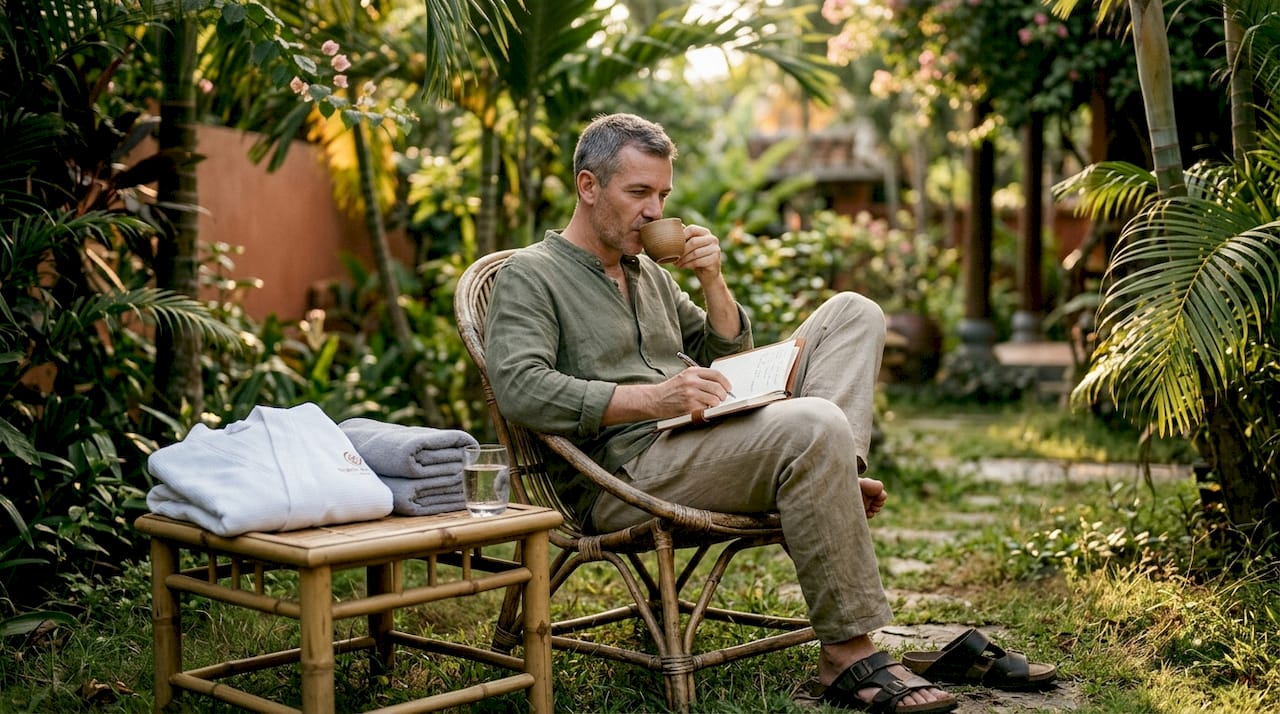
- Keep a short travel journal during your stay. Writing down physical and emotional shifts after each session helps you track patterns and communicate more usefully with your practitioners.
- Minimise screen time in the evenings so that sleep, the most powerful recovery tool available, can do its work.
- After you return home, try to maintain at least one element of the retreat rhythm, whether that is a morning herbal tea ritual, a short movement practice, or a weekly meditation session.
Pro Tip: Ask your retreat’s wellness team for a take-home protocol before you check out. Many resorts will share specific herbal blends or simple self-care sequences designed to extend the benefits of your stay for two to four weeks after you leave.
The deeper value of holistic travel in Vietnam comes from combining the treatments with genuine cultural curiosity. Exploring Hoi An’s ancient town, learning about Vietnamese herbal traditions, or joining a community cooking class centred on wellness foods adds a layer of restoration that a treatment menu alone cannot provide.
My honest take on Vietnam wellness tours
I’ve read hundreds of wellness retreat reviews, spoken to travellers who returned transformed, and spoken to others who felt let down despite booking what looked like the perfect programme. The pattern that emerges is remarkably consistent.
In my experience, the travellers who get the most from their wellness time in Vietnam are those who treat the daily rhythm as non-negotiable rather than optional. They attend the consultation, they sit in the rest lounge, they skip the evening bar. The ones who rush through sessions or tick treatments off a list like tourist attractions tend to leave feeling vaguely disappointed, even from genuinely excellent resorts.
I’ve also seen how eco-wellness lodges change the conversation entirely. There is something about being surrounded by intact forest, hearing rainfall rather than resort music, that accelerates the nervous system’s ability to reset. Auko’s approach in Phong Nha, combining Cham healing wisdom with modern environmental design, is the direction I think serious wellness travel is heading.
The uncomfortable truth about this sector is that marketing budgets and actual programme quality have almost no relationship to each other. Some of the most genuinely restorative experiences in Vietnam charge modest prices. Some of the most expensively photographed retreats are built around loosely connected treatments that share nothing but a spa menu. Do your due diligence. Ask specific questions. Trust operators who welcome scrutiny.
— Kuan
Plan your Vietnam wellness escape with Vietnamtourpackage
If you are ready to move from planning to booking, Vietnamtourpackage makes the process straightforward. The team at Vietnamtourpackage curates Vietnam tour packages that combine wellness stays with cultural sightseeing across destinations including Hoi An, Da Nang, and Ho Chi Minh City. You can explore a focused Hoi An wellness tour starting from SGD 604, or opt for a longer itinerary that layers spa experiences with Ba Na Hills and Hue’s royal heritage.
All packages include private transport, accommodation, and guided support, with the flexibility to adjust for your wellness goals. Booking via WhatsApp is available for direct, personal assistance from licensed travel specialists. Whether this is your first wellness retreat or you are returning for a deeper experience, Vietnamtourpackage offers the local expertise to help you get it right.
FAQ
What is the best season for wellness tours in Vietnam?
February to August is the most comfortable window for central Vietnam’s wellness destinations, including Hoi An and Phong Nha. If you are planning a northern retreat, September to November offers cooler, more pleasant conditions.
Are Vietnam wellness retreats suitable for families with young children?
Many retreats welcome families, but hot spring and onsen facilities such as Bang Onsen in Quang Binh restrict access to guests aged 12 and above. Check specific age policies with each operator before booking group itineraries.
How long should a wellness tour in Vietnam be to feel real benefits?
Most travellers report meaningful results from stays of three to five nights, provided the daily programme is structured. Single-day spa visits rarely produce the cumulative wellbeing effects that a multi-day all-inclusive rhythm delivers.
How do I tell if a Vietnam wellness retreat is genuinely holistic?
Look for programmes with pre-arrival health assessments, named traditional therapies delivered by qualified practitioners, and built-in rest intervals. Genuine wellness tours include structured schedules, not just a list of available treatments to pick from.
What should I pack for a wellness tour in Vietnam?
Light, breathable clothing, a refillable water bottle, and any personal supplements or medications are the basics. Leave heavy exercise gear at home: most wellness programmes prioritise restorative movement over high-intensity activity.
Recommended
- Why book a packaged tour: stress-free Vietnam holidays | VietnamTourPackage.sg
- Private tour booking steps for a seamless Vietnam trip | VietnamTourPackage.sg
- Vietnam Dental Tours from Singapore | VietnamTourPackage.sg
- Vietnam Tour Packages from $428 SGD