Discover the best times to visit Vietnam for a memorable trip. Plan your journey wisely with our month-by-month guide tailored for Singaporean travelers!
Best times to visit Vietnam for a memorable trip
TL;DR:
- March to April offers ideal weather and fewer crowds across Vietnam for Singaporean travelers.
- The season provides comfortable temperatures and dry conditions in all regions, perfect for outdoor activities.
- Planning around Singapore’s school holidays and Vietnamese festivals can optimize experiences and costs.
Planning a holiday from Singapore to Vietnam sounds simple until you realise the country stretches across three distinct climate zones, each behaving differently throughout the year. Unlike Singapore’s predictable heat and humidity, Vietnam swings between cool northern winters, scorching southern summers, and dramatic monsoon seasons that can completely transform a destination. Picking the wrong window can mean wading through flooded streets in Hoi An, sweltering in Hanoi with no relief, or fighting through peak-season crowds at Ha Long Bay. This guide cuts through the confusion and gives you a practical, month-by-month breakdown tailored specifically to Singaporean travellers.
Table of Contents
- How to choose the best time to visit Vietnam
- Why March to April is ideal for Singaporeans
- Comparing Vietnam’s seasons: When to go and what to expect
- Tailoring your Vietnam trip: Recommendations by interest
- Why the best time for Singaporeans isn’t just about weather
- Explore Vietnam your way with tailored tour packages
- Frequently asked questions
Key Takeaways
| Point | Details |
|---|---|
| March to April advantages | March and April offer ideal weather and comfortable travel for Singaporeans escaping local heat. |
| Consider more than climate | Balancing festivals, crowd levels, and flight costs can make your Vietnam trip more enjoyable. |
| Tailor trip by interest | Different months are best for beaches, culture, food, or adventure, so match timing to your preferences. |
| Plan for flexibility | Great experiences are possible year-round with smart planning and awareness of Vietnam’s regional seasons. |
How to choose the best time to visit Vietnam
Before you book anything, it helps to understand the key factors that separate a good Vietnam trip from an unforgettable one. Weather is the most obvious starting point, but it is far from the only variable.
The five criteria that matter most for Singaporean travellers:
- Weather comfort: You already live with 30°C heat and high humidity every single day in Singapore. Travelling to Vietnam during its cooler, drier months gives you a genuine climate escape, not just a change of scenery.
- Flight convenience: Singapore has direct flights to Hanoi, Ho Chi Minh City, and Da Nang, with flight times ranging from 1.5 to 2.5 hours. Choosing peak travel seasons sometimes means fewer seats and higher fares, so checking airline schedules early matters.
- Festivals and events: Vietnam’s calendar is packed with local celebrations, from Tet (Lunar New Year) to the Hoi An Lantern Festival. Some add colour to your trip while others, like Tet, can make services unreliable.
- Crowd levels: Popular spots like Ha Long Bay and Hoi An’s Ancient Town get extremely busy during school holiday windows. Knowing when to expect crowds lets you plan quieter, more personal experiences.
- Pricing trends: Flights and hotels in Vietnam spike noticeably during Vietnam’s public holidays and Singapore’s school breaks. Booking outside these windows often saves you significantly.
For Singaporeans specifically, March and April are widely considered ideal because the south and centre are dry and sunny while the north offers pleasant temperatures. Direct flights make the journey short and hassle-free. This combination is hard to beat for a well-rounded trip.
Pro Tip: If you are planning a north-to-south itinerary, match your travel dates to regions rather than treating Vietnam as one uniform destination. Hanoi and Ho Chi Minh City can have completely different weather on the same day.
Browsing through Vietnam travel packages organised by season and destination is one of the most efficient ways to see how expert planners align itineraries with optimal weather windows.
Why March to April is ideal for Singaporeans
With those criteria in mind, let us tackle the period that travel experts and booking data consistently agree on as the most rewarding for Singaporeans: March to April.
What makes this window so well-suited to travellers from Singapore?
- Northern Vietnam (Hanoi, Ninh Binh, Ha Long Bay): March and April bring mild temperatures in the mid-20s Celsius, clear skies, and very low rainfall. Ha Long Bay’s famous limestone karsts look their most dramatic under blue spring skies.
- Central Vietnam (Hue, Hoi An, Da Nang): These cities enjoy their driest and sunniest stretch from late February through April. Hoi An’s ancient streets are best explored without the umbrella that becomes essential come October.
- Southern Vietnam (Ho Chi Minh City, Mekong Delta, Phu Quoc): The south is in its dry season during March and April, with temperatures around 33 to 35°C but accompanied by cooling breezes and far lower humidity than Singapore.
Crucially, March and April are cooler and drier than Singapore’s year-round heat, which averages above 30°C with near-constant humidity. This is genuinely refreshing for Singaporean travellers who want to walk, cycle, and explore outdoor attractions without feeling drained.
“The spring window in Vietnam is the sweet spot where the north, centre, and south all align to offer comfortable, activity-friendly conditions. For travellers coming from a tropical climate like Singapore, it is as close to perfect timing as you will find.”
April is particularly noteworthy because Vietnamese locals also travel heavily during this month, with searches for domestic destinations spiking significantly in April. This means more local festivals, livelier street food markets, and a more authentic atmosphere in towns like Hoi An and Hue.
Pro Tip: Book your accommodation at least 8 to 10 weeks ahead if you are travelling in April. The combination of Vietnamese domestic tourists and international visitors means popular guesthouses in Hoi An and boutique cruises on Ha Long Bay fill up quickly.
If you are ready to lock in these dates, explore special packages for March-April tours with curated itineraries that cover the best of north, central, and southern Vietnam in one cohesive journey.
Comparing Vietnam’s seasons: When to go and what to expect
But what if your personal schedule rules out March or April? Here is how all the main tourist seasons in Vietnam stack up across the year.
| Season | Months | Hanoi temp | HCMC temp | Rain level | Best for |
|---|---|---|---|---|---|
| Spring | March to April | 22 to 28°C | 33 to 35°C | Low | Families, culture, sightseeing |
| Summer | May to August | 30 to 38°C | 28 to 32°C | High (north) | Adventure, budget travellers |
| Autumn | September to November | 20 to 28°C | 26 to 31°C | Moderate | Food lovers, photography |
| Winter | December to February | 12 to 20°C | 26 to 30°C | Low (south) | Beach holidays, Tet festival |
Key things to note from this comparison:
Spring stands out as the most universally comfortable season across all regions. Summer works well for travellers heading only to the south, as Ho Chi Minh City is actually drier than the north during these months. Autumn is a fascinating period for food and festival lovers, particularly in Hanoi where the cooler air and harvest-season produce create memorable dining experiences. Winter suits beach-focused trips to Phu Quoc or the southern coast, though Tet in late January or early February brings significant price increases and service disruptions.

April search data from VnExpress confirms that Vietnamese domestic travellers favour Vung Tau, Da Lat, Phu Quoc, and Ninh Binh during April, which tells you a great deal about where the atmosphere is most lively. Hanoi in April records average temperatures around 28°C, while Ho Chi Minh City sits at about 34°C, both with minimal rainfall.
One often overlooked consideration is cost variation. Hotel rates in Da Nang, for example, can jump 40 to 60% during Vietnamese National Day (2nd September) and Reunification Day (30th April). If your travel budget is tight, these are dates to avoid rather than target.
For a broader picture of what each period offers, the seasonal highlights guide on our platform breaks down specific destinations by month with pricing trends included.
Tailoring your Vietnam trip: Recommendations by interest
Now that you have compared the seasons, here is how to tailor your Vietnam holiday to fit your passions and interests.
By interest group:
- Foodies: Aim for September to November when Hanoi’s cooler temperatures make street food exploration genuinely enjoyable. Bun cha, banh cuon, and cha ca are best savoured when you are not sweating through your shirt.
- Beach lovers: The March to May window is prime for Da Nang’s My Khe Beach and the islands of Phu Quoc. Water is warm, skies are clear, and the sand is not crowded with monsoon-season visitors.
- Adventure seekers: October to December suits trekkers heading to Sapa or the Ha Giang Loop, where post-monsoon landscapes are lush and dramatic. The rice terraces in Sapa turn golden during harvest season in late September and October.
- Festival-goers: Plan around January to February for Tet, Vietnam’s most spectacular celebration. Just be aware that many shops and restaurants close, so prepare in advance and book guided experiences.
- Cultural travellers: March to April offers ideal conditions to explore Hue’s Imperial Citadel, Hoi An’s Ancient Town, and Hanoi’s Old Quarter without the oppressive heat that makes midday sightseeing in summer exhausting.
As noted for Singaporeans, the dry south and pleasant north during March and April create the perfect backdrop for interest-based travel whether that is cycling through rice paddies, kayaking around Ha Long Bay, or eating your way through Hoi An’s famous cooking classes.
Month-by-month quick picks for specific interests:
- January: Cultural immersion in Hanoi before Tet; cool and dry in the south
- March: Best overall balance for families and first-time visitors
- April: Lively festivals, warm beaches, still manageable heat
- June: Budget-friendly south Vietnam; avoid the north’s rainy season
- October: Sapa trekking, harvest colours, Hanoi food festivals
- December: Phu Quoc beaches, cooler temperatures, festive atmosphere
| Interest | Best months | Top destinations |
|---|---|---|
| Food and culture | Sept to Nov | Hanoi, Hoi An |
| Beaches | March to May | Da Nang, Phu Quoc |
| Trekking | Oct to Dec | Sapa, Ha Giang |
| Festivals | Jan to Feb | Hanoi, Hue |
| Family sightseeing | March to April | Hoi An, Ho Chi Minh City, Ha Long Bay |
Our themed tour options can be customised around all of these interest categories, with dedicated itineraries for beach holidays, cultural tours, and family-friendly adventures.
Why the best time for Singaporeans isn’t just about weather
Here is the part most travel guides skip entirely. After all these season comparisons and climate data points, the biggest decision factors for Singaporean travellers are often completely invisible in a weather chart.
Singapore’s school holidays create artificial demand. When Singapore’s June school break aligns with Vietnam’s rainy season in the north, many families still book Vietnam trips because the dates fit. This drives prices up significantly despite the weather being far from ideal. The real insight here is that when you travel matters less than why you travel when you do. If the school calendar forces you into June, the savvy move is to head straight to the south of Vietnam where June is actually dry and hot, not to Hanoi or Ha Long Bay where the rain can be relentless.
Vietnamese public holidays are frequently underestimated. Tet is the obvious one, but 30th April (Reunification Day), 1st May (Labour Day), and 2nd September (National Day) all create mini-surges in domestic travel. During these windows, popular tourist spots in Da Nang and Nha Trang become genuinely crowded and prices at hotels and restaurants climb noticeably.
Flight pricing from Singapore tells you more than weather data. When return flight prices to Hanoi or Ho Chi Minh City on budget carriers like Vietjet or Scoot spike by 30 to 50%, that is a reliable signal that demand is high. Booking 10 to 12 weeks ahead of March or April travel consistently yields the best fare-to-experience ratio for Singaporeans.
The broader truth is this: even December and January, which sit outside the “ideal” weather window, can deliver extraordinary Vietnam experiences if you plan intelligently. The Mekong Delta is at its most scenic in cooler months, Phu Quoc’s beaches are gloriously quiet after the peak Christmas rush, and Hanoi in January has a romantic, misty quality that photographers absolutely love.
Do not let a weather table be the only thing guiding your decision. Think about your schedule, your budget flexibility, what you actually want to do, and then layer the climate data on top of that.
Explore Vietnam your way with tailored tour packages
Ready to turn these insights into a real journey? Whether your ideal window is March for mild weather and fewer crowds, October for food and trekking, or December for beach time in Phu Quoc, there is a well-crafted itinerary waiting for you.
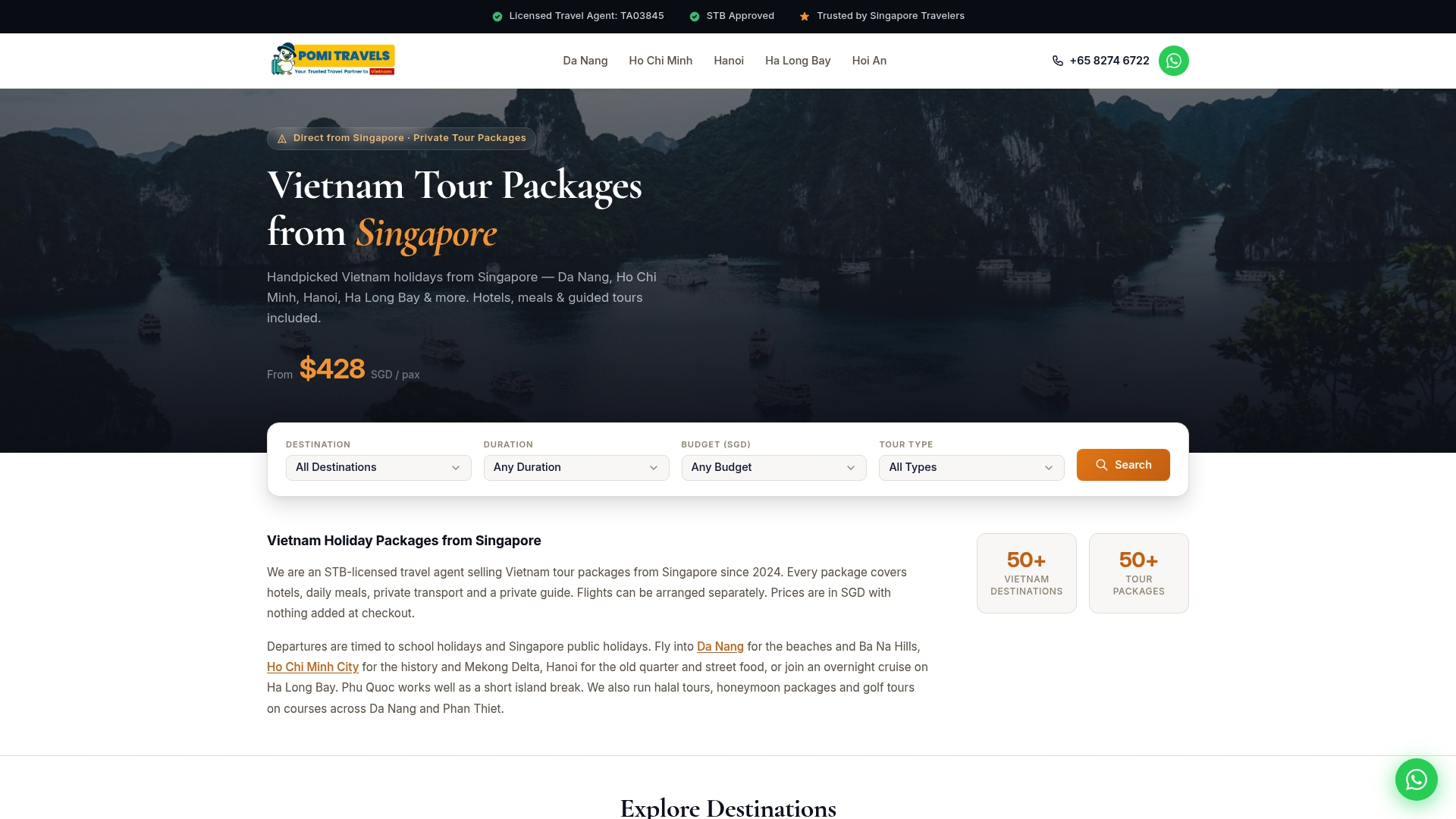
At Vietnam Tour Packages, we specialise in curated trips departing directly from Singapore, with options built around families, couples, solo adventurers, and themed interests like halal travel, golf, and cultural exploration. Every package includes private transport, handpicked accommodation, guided experiences, and transparent pricing with no hidden costs. Our team is licensed by the Singapore Tourism Board, so you can book with complete confidence. Reach out via WhatsApp for personalised recommendations and let us match your travel dates to the best Vietnam experience possible.
Frequently asked questions
Is April really the most popular month for Singaporeans visiting Vietnam?
Yes, travel data confirms a spike in April searches for Vietnam holidays, with Hanoi averaging around 28°C and Ho Chi Minh City at 34°C alongside very low rainfall across most regions.
Which months are best for avoiding crowds along with humid weather?
March and April offer drier, cooler conditions that feel genuinely refreshing compared to Singapore’s year-round humidity, and the crowds are far more manageable than during Vietnam’s peak domestic holiday periods.
Can I enjoy Vietnam’s beaches outside the March to April window?
Yes, beaches remain enjoyable into early summer, but spring offers the best combination of sunshine, comfortable temperatures, and low rainfall, particularly for Da Nang and Phu Quoc, as confirmed by weather patterns across the region.
Do Singaporeans need to plan around Vietnamese local holidays?
Absolutely. Major holidays like Tet and Reunification Day cause noticeable price increases, busier attractions, and occasional service closures, so always check Vietnam’s public holiday calendar before finalising your booking dates.
Recommended
- Vietnam Tour Packages from $428 SGD
- Best Time to Visit Bali: A 12 Month Guide for Divers & Travellers - Bali Dive Cove