Discover how defining educational tourism in Vietnam transforms student trips into valuable, structured learning experiences. Explore our guide!
Educational tourism in Vietnam: An evidence-based guide
TL;DR:
- Educational tourism in Vietnam is a structured, curriculum-aligned experience focused on deliberate learning at heritage sites, not casual sightseeing. Effective programs incorporate clear learning objectives, age-specific activities, pre- and post-trip assessments, and safety measures, distinguishing them from superficial, entertainment-driven trips. Singaporean educators should select providers based on documented curriculum linkages, tailored content, and safety protocols to maximize legitimate educational outcomes.
Most Singaporean educators assume that sending students to Vietnam for a “learning trip” means booking a bus tour and hoping something educational rubs off. That assumption has caused countless school groups to return home with little more than photographs. Vietnam’s educational tourism sector is, in fact, a structured, curriculum-aligned discipline with its own methodology, age-tailored programming, and measurable cognitive outcomes. This guide unpacks what that really means, how the programmes are built, what the evidence says about their value, and how Singaporean educators can avoid the pitfalls that make some trips a wasted opportunity.
Table of Contents
- What is educational tourism in Vietnam?
- How educational tourism programmes are designed in Vietnam
- Experiential learning through field trips: The educational value
- Common pitfalls and criticisms of educational tourism in Vietnam
- A Singaporean perspective: How to maximise educational tourism in Vietnam
- Explore structured educational tourism programmes in Vietnam
- Frequently asked questions
Key Takeaways
| Point | Details |
|---|---|
| Structured learning focus | Educational tourism in Vietnam is anchored in experiential learning at heritage sites, not mere sightseeing. |
| Curriculum alignment | Successful programmes are tailored to specific learning objectives and age groups for maximum impact. |
| Operational best practices | Safety, supervision, and guided interpretation are central to Vietnam’s educational tourism methodology. |
| Pitfalls to avoid | Watch out for formalistic, entertainment-heavy or duplicated-content programmes that lack academic substance. |
| Resources for Singaporeans | Curated tour packages and advice are available to help educators and students plan meaningful educational trips to Vietnam. |
What is educational tourism in Vietnam?
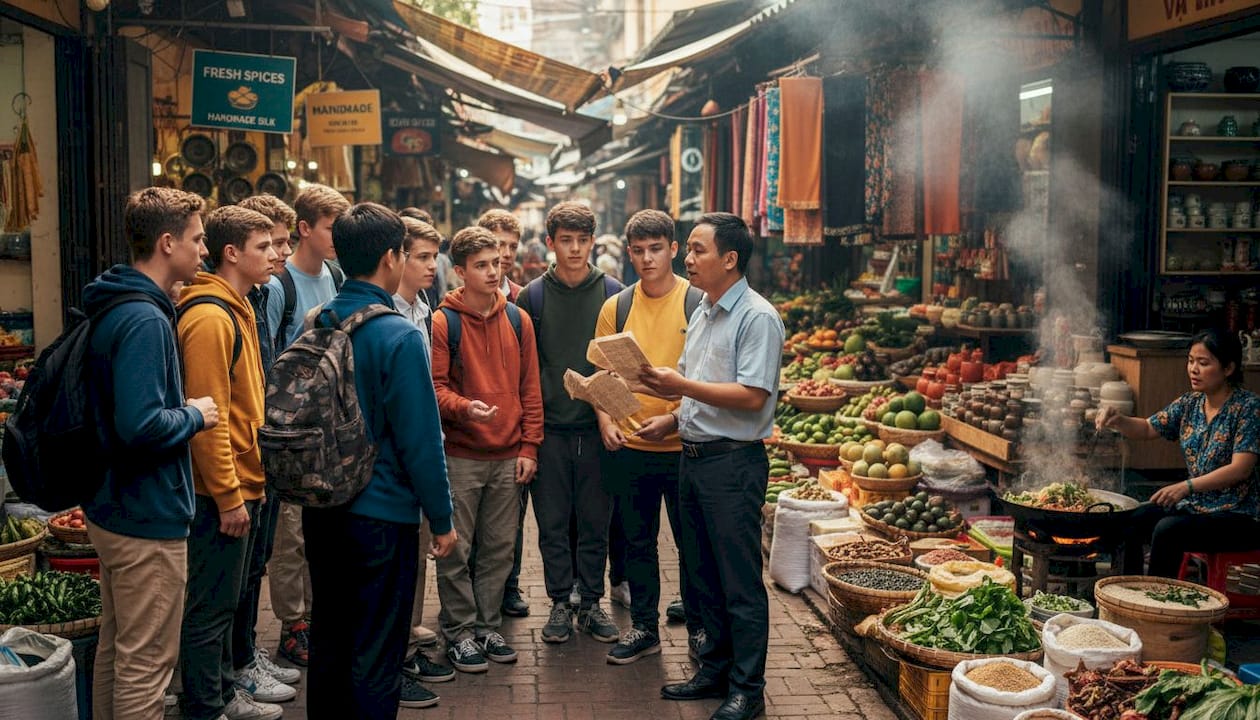
The phrase “educational tourism” gets used loosely, and that vagueness is partly where the confusion starts. In Vietnam, experiential learning trips are designed around structured, practical activities at heritage and historical sites, not casual sightseeing with a few facts thrown in. The difference is significant. Leisure travel is self-directed and consumption-focused. Educational tourism is outcome-focused, with planned activities, guided interpretation, and specific learning objectives attached to each destination.
Academically, the framing is consistent globally. Educational tourism is defined as travel undertaken to acquire knowledge or experiences for educational, personal, or professional learning outcomes. That definition matters because it sets a bar. A trip only qualifies if there is deliberate learning embedded in its design, not merely incidental exposure to culture.
| Feature | Leisure tourism | Educational tourism |
|---|---|---|
| Primary goal | Rest and enjoyment | Learning outcomes |
| Activities | Self-directed | Structured and guided |
| Site interpretation | Optional | Integral to programme |
| Accountability | None | Pre and post assessments |
| Group management | Independent | Supervised and managed |
Vietnam’s strength in this space lies in its extraordinary density of heritage sites. From the Imperial Citadel of Thang Long in Hanoi to the tunnels of Cu Chi near Ho Chi Minh City, the country offers ready-made open classrooms. Educators wanting to explore these settings alongside spiritual and cultural dimensions will find resources like this spiritual sites guide useful for contextualising their itineraries. For those considering the logistics of a structured group visit, understanding private tour booking steps early in the planning process makes a significant practical difference.
“Educational tourism is not merely tourism with a textbook in hand. It is the deliberate structuring of a travel experience so that learning is the primary outcome, not a secondary benefit.”
This distinction reshapes how Singaporean educators should approach the selection of a programme. If a provider cannot clearly articulate the learning objective for each site visit, the trip is leisure travel with an educational label attached.
How educational tourism programmes are designed in Vietnam
Understanding the design methodology behind these programmes helps educators separate genuinely rigorous experiences from superficial ones. Vietnamese operators and schools who take this seriously follow a clear framework. Curriculum alignment and tailoring to student needs are the core methodological priorities, meaning every destination selected and every activity planned should connect to a measurable learning objective appropriate for the students’ age and level.
How programmes are typically structured
A well-designed educational tourism programme in Vietnam generally includes the following elements:
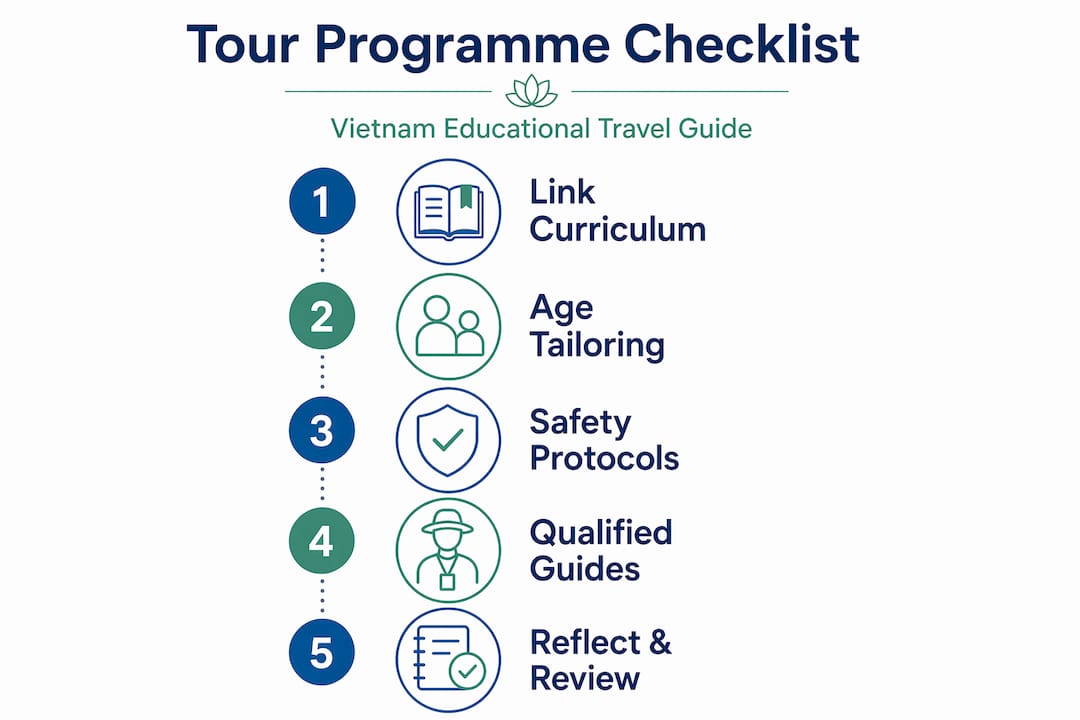
- Curriculum mapping: The tour provider and school work together to identify which subject areas and learning outcomes the trip will address, whether that is history, civics, environmental science, or cultural studies.
- Age-appropriate activity design: Primary school groups, secondary students, and tertiary participants require very different levels of complexity and abstraction. Good operators adjust their guided interpretation accordingly.
- Pre-trip preparation: Students receive background materials, research tasks, or briefing sessions before departure so they arrive at sites with prior knowledge to build on.
- Structured on-site tasks: Rather than simply listening to a guide, students complete worksheets, conduct interviews, sketch artefacts, or participate in role-play exercises at the destination.
- Post-trip reflection: Classroom debrief sessions, written reflections, or project presentations consolidate what was learned in the field.
| Programme element | Purpose | Who is responsible |
|---|---|---|
| Curriculum mapping | Align trip to learning outcomes | School and tour provider |
| Site selection | Match destination to objectives | Tour provider |
| On-site activities | Active engagement with content | Guide and supervising teacher |
| Meal and safety logistics | Participant wellbeing | Tour operator |
| Post-trip debrief | Consolidate and assess learning | Classroom teacher |
Field-trip style educational tourism relies on guided learning at destinations combined with strict participant oversight for safety. This dual focus, on learning quality and safety management, is what separates a professionally designed educational trip from an improvised school excursion.
For families travelling with younger children who are new to Vietnam, reviewing resources on family-friendly tours for kids gives a useful baseline for what good age-appropriate programming looks like. Educators planning group travel to multiple cities should also explore an overview of top cities for families to understand which destinations suit different learning goals. Institutions considering programmes for older students or staff development may find that corporate tours offer a useful structural model as well.
Pro Tip: Ask any prospective tour provider to share the learning objectives for each site on the itinerary before you sign any agreement. If they cannot provide this, look elsewhere.
Experiential learning through field trips: The educational value
The case for getting students out of the classroom and into the field is well-supported. Experiential learning through field trips has been shown to improve cognition and learning outcomes by engaging students through direct sensory experience rather than abstract instruction. In Vietnam’s context, this translates into what educators call the “open classroom” model, where heritage sites function as living textbooks.
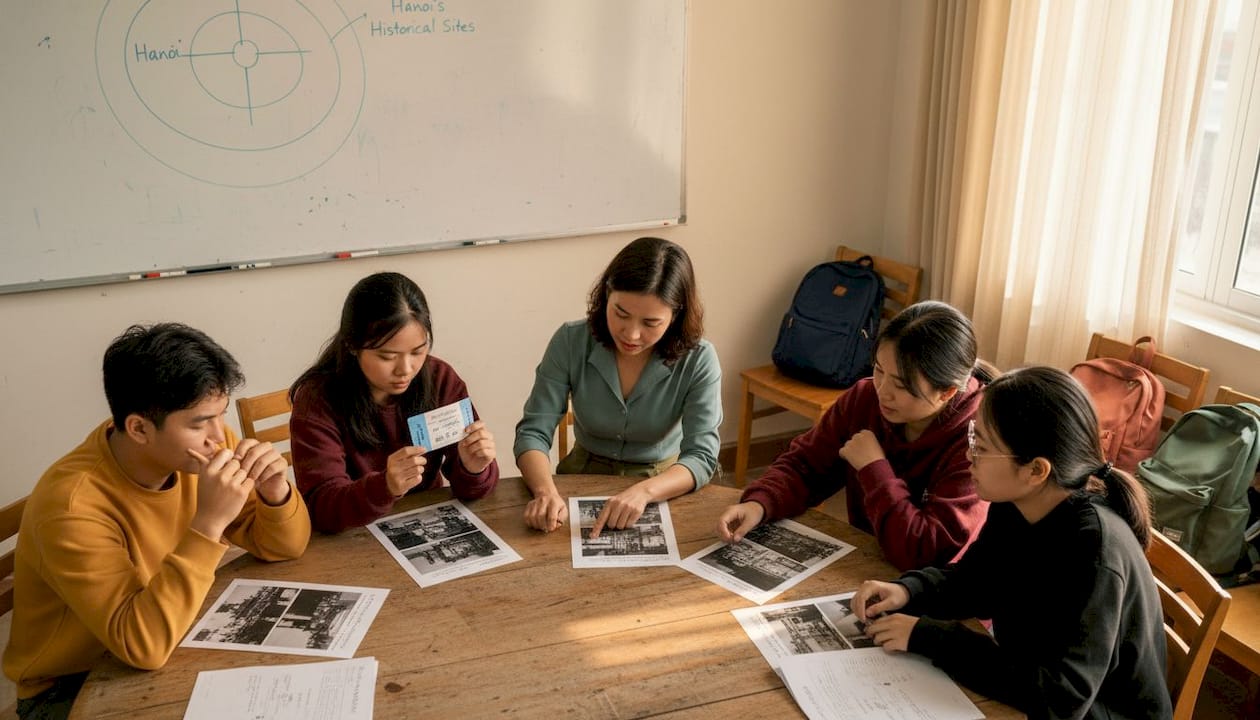
Consider a secondary school group visiting the Hoa Lo Prison in Hanoi. Rather than reading about the French colonial period and the Vietnam War in a textbook, students stand in the actual space, read primary source materials on-site, hear guided interpretation from a knowledgeable guide, and then discuss the ethical and political dimensions in a structured debrief. The learning is multi-sensory, contextual, and emotionally resonant in a way that no classroom exercise can replicate.
Why the open classroom model works
- Contextual encoding: Information learned in a meaningful physical context is retained more effectively because the brain encodes it alongside sensory and emotional cues.
- Active participation: Structured on-site tasks require students to do something with the information, not just receive it passively.
- Social learning: Discussing observations with peers and teachers in real time builds collaborative reasoning skills.
- Cultural empathy: Exposure to a different society’s history and values builds perspective-taking capacity, an essential skill for students in Singapore’s globally connected economy.
- Employability outcomes: The problem-solving, observation, and reflection skills developed through field-based learning are directly transferable to professional settings.
“The heritage site is not merely a backdrop. It is the primary instructional resource, and the guide is the teacher. That reorientation changes everything about how students engage with the material.”
For Singaporean student groups, Vietnam’s history is particularly relevant. The country’s experience of colonisation, war, reunification, and rapid economic development offers rich comparative material for civics, history, and social studies curricula. A well-chosen itinerary can do more for a student’s historical thinking skills in four days than a semester of classroom instruction.
Pro Tip: Build at least one structured reflection task into each site visit, even something as simple as a three-sentence written observation completed before the group moves on. It forces students to process what they are seeing rather than simply experiencing it as spectacle.
For educators who are new to organising overseas learning trips and want to understand the practical logistics, a review of packaged tour advice provides a clear overview of how structured itineraries handle the operational burden so teachers can focus on the learning.
Common pitfalls and criticisms of educational tourism in Vietnam
Honest guidance demands acknowledging the sector’s weaknesses alongside its strengths. Vietnam’s educational tourism practice faces real criticisms, including programmes that are formalistic, overly entertainment-focused, lacking in systematic research, and guilty of duplicating content across too many destinations with insufficient differentiation.
These are not minor issues. An entertainment-heavy programme in a historical site creates the illusion of learning while delivering very little of substance. Students enjoy themselves, parents and teachers feel the trip was worthwhile because everyone seemed engaged, but the measurable educational outcomes are negligible. This is the trap that most poorly designed educational tourism falls into.
Warning signs to watch for when selecting a programme
- Vague itineraries: If the programme description focuses on what students will see rather than what they will learn, that is a red flag.
- No curriculum linkage documentation: Reputable providers can produce a written document showing how each site connects to subject-area objectives.
- Entertainment-to-learning ratio: If more than a third of the itinerary is devoted to theme parks, shopping, or leisure activities, the educational credibility of the programme is compromised.
- Content duplication: Some operators run the same generic itinerary for every school group regardless of the students’ age, subject area, or prior knowledge. A history group and a science group should not be visiting identical sites for identical reasons.
- Inadequate supervision ratios: Quality programmes specify a maximum number of students per supervising adult and per tour guide, typically not more than fifteen to twenty students per guide for effective educational engagement.
- No post-trip assessment component: Without any mechanism to evaluate what students learned, the trip cannot be justified as educational rather than recreational.
Pro Tip: Request references from at least two Singaporean or international schools that have used the provider within the past two years. Ask those schools specifically about the post-trip learning outcomes, not just whether students enjoyed themselves.
Infrastructure gaps are also a real consideration. Some heritage sites in less-visited regions of Vietnam lack the interpretive facilities, trained guides, or accessibility arrangements needed to support structured group learning effectively. Concentrating on well-resourced destinations in Hanoi, Ho Chi Minh City, Hoi An, and Quang Ninh ensures a stronger baseline of quality.
A Singaporean perspective: How to maximise educational tourism in Vietnam
Here is an uncomfortable truth that the educational tourism industry rarely advertises: most school trips to Vietnam are leisure travel with a thin educational veneer applied after the fact. Teachers justify them with phrases like “cultural exposure” or “broadening horizons,” which sound educational but cannot be assessed, measured, or connected to curriculum outcomes. That is a problem when schools are asking parents to spend considerable money and students to give up two weeks of their academic year.
The Singaporean education system, with its emphasis on measurable outcomes and high academic standards, actually creates a stronger incentive than most contexts to demand genuine rigour from educational tourism providers. Educators here should leverage that standard rather than suspend it the moment they cross the border.
Our view is that the best approach treats the Vietnam trip as a field component of an existing subject, not as a standalone experience. A history teacher planning a trip to Ho Chi Minh City should be able to point to specific textbook chapters or syllabus objectives that the trip addresses. A geography teacher visiting the Mekong Delta should have pre-designed observation tasks that connect to classroom content on river systems and agriculture. This learning-first framing changes the provider selection process entirely: you are not choosing a tour operator, you are choosing a field-based instructional partner.
Provider selection should prioritise three non-negotiable criteria: documented curriculum linkage, age-group tailoring with specifics, and a clear safety and supervision plan. Providers who can address all three in writing before you book are the ones worth trusting.
Explore structured educational tourism programmes in Vietnam
Planning a meaningful educational trip to Vietnam from Singapore requires the right partner, one who understands both the logistical complexity of group travel and the academic standards that Singaporean educators expect.
At Vietnam Tour Package, we offer curated itineraries that can be tailored for school groups, institutional visits, and curriculum-linked field experiences. Our Ho Chi Minh City 4D3N tour is a popular starting point for educators exploring Vietnam’s modern history and urban development themes, while our Vietnam corporate tours offer a structural model for senior student or staff development programmes. Licensed by the Singapore Tourism Board, we provide transparency on pricing, safety protocols, and itinerary design so educators can book with confidence and focus on delivering genuine learning outcomes for their students.
Frequently asked questions
What makes educational tourism in Vietnam unique compared to other countries?
Vietnam’s approach is distinctive because heritage sites function as open classrooms, with guided interpretation and structured experiential tasks embedded directly into visits rather than added as an afterthought. The country’s density of historically significant sites makes this model exceptionally rich.
How can Singaporean educators ensure the educational value of a Vietnam tourism programme?
Look for providers and schools that tailor content by age group, integrate activities with learning objectives, and avoid duplicated or entertainment-only itineraries. Ask for written curriculum linkage documents before committing to any booking.
Are these programmes suitable for all age groups?
Most operators tailor content to specific student ages and practical needs, making educational tourism in Vietnam accessible for primary through to tertiary students, provided the provider has experience designing for your specific cohort.
Is educational tourism in Vietnam safe for group travel?
Quality programme operators provide strict supervision per group, meal quality controls, and trained tour-guide presentation as standard. Always verify supervision ratios and emergency protocols with your provider before departure.
Recommended
- Explore Vietnam: top cities for families, groups & tours | VietnamTourPackage.sg
- Transportation in Vietnam for Tourists | VietnamTourPackage.sg
- Why book a packaged tour: stress-free Vietnam holidays | VietnamTourPackage.sg
- Family-Friendly Vietnam Tours for Kids | VietnamTourPackage.sg