How to do the Nho Que River boat ride through Tu San Canyon from Singapore: tickets, timing, the steep descent and which Ha Giang Loop tour includes it.
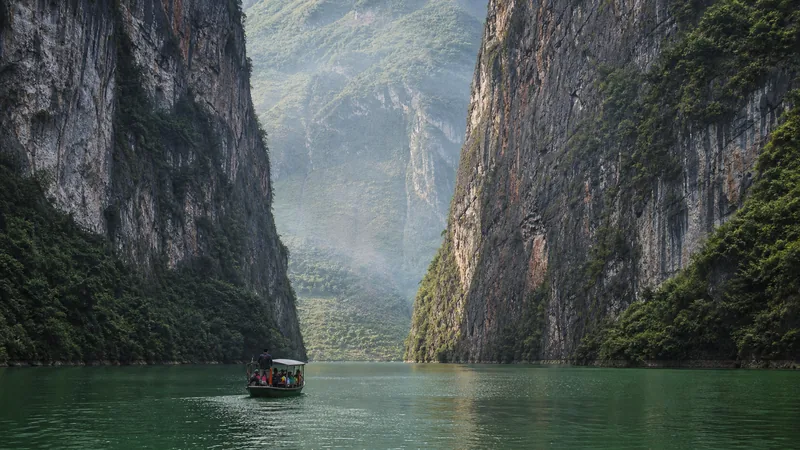
The jade-green water of the Nho Que River sits at the bottom of a canyon so narrow and so deep that the limestone walls seem to lean in over your boat. This is Tu San Canyon, often called the deepest canyon in Southeast Asia, and the Nho Que River boat ride is the only way to see it from the water.
It is one of the few stops on the Ha Giang Loop that genuinely lives up to the photos. From Singapore it takes some getting to, but the reward is an hour of calm, cool water framed by near-vertical cliffs. This guide covers what it is, how to reach it, ticket prices and timing, and how to fit it into your trip.
What the Nho Que River boat ride actually is
The Nho Que River winds along the border country of far northern Vietnam, directly below the famous Ma Pi Leng Pass. Where it cuts through the limestone, it carves Tu San Canyon, also written Tu San Alley, a slot of rock with walls rising hundreds of metres on either side. If you are still shaping your route, it helps to see how this far corner fits the far north within a bigger northern trip alongside Hanoi, Ha Long Bay, Ninh Binh and Sapa.
From a small pier, motorised boats carry you a few kilometres upriver into the narrowest part of the gorge, then turn and bring you back. The water is an unreal shade of green when the light is right, and the scale of the cliffs only registers once you are down on the surface looking up.
It is a calm ride, not a thrill ride. There are no rapids. The pleasure is in the quiet, the cool air off the water and the sheer drama of the rock. For most travellers it is a highlight of the whole loop, which is why it features so heavily on our Ha Giang Loop tour pillar.
Getting there: the steep descent below Ma Pi Leng
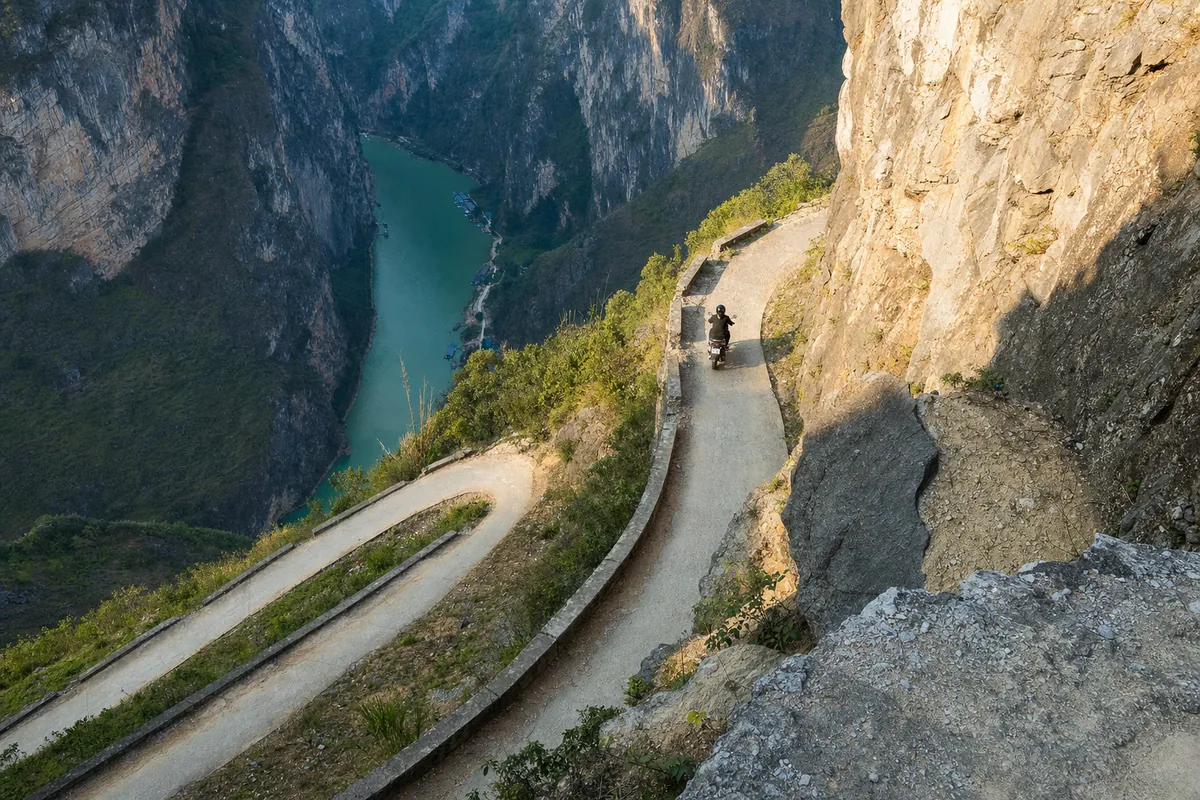
The canyon sits below Ma Pi Leng Pass, on the stretch of road between Dong Van and Meo Vac. You first reach the high viewpoints on the pass itself, then descend a steep, twisting access track down to the Ta Lang pier on the river. The pass is one of the loop’s signature rides; the pillar covers the full route, so we will not repeat it here.
That descent is the part to plan for. The access road is narrow, steep and rough in places. On a guided trip your easy rider or private driver takes you down and waits, so all you do is enjoy the ride. Independent riders, especially newer ones, often find this short stretch the hardest of their whole trip, and some park at the top and miss the boat altogether.
This is one of the clearest cases where a guided trip earns its keep. You get to the water without wrestling a loaded motorbike down a goat track.
Tickets, timing and what to expect
The practical details are simple once you are there. Here are the quick facts.
| Detail | What to expect |
|---|---|
| Boat ticket | Approx 150,000 VND per person (roughly SGD 8); prices vary |
| Ride duration | About one hour return |
| Boats | Shared motorised boats, often 10-20 passengers |
| Included | Life jackets and the return trip into the canyon |
| Payment | Cash in small dong notes; bring it with you |
Tickets are bought at the pier, so carry enough Vietnamese dong in small notes. Card payment is not reliable this far out. The price is modest by Singapore standards, and the hour on the water is the best value stop on the loop.
Boats are shared and fill up before they leave, so you ride with other travellers rather than privately. Life jackets are handed out and worth wearing. The ride is gentle enough for nervous passengers, but the boats can get busy at midday, which affects both the photos and the calm.
The kayak option
Some operators at the pier offer kayaking on the river as an alternative or an add-on to the motorboat. You paddle a section of the gorge yourself, which gets you closer to the water and away from the engine noise.
Kayaking usually runs in the calmer, drier months and depends on water levels and conditions on the day, so it is not guaranteed. You need a basic level of fitness and to be comfortable on the water, but you do not need to be an expert; the current is gentle in the canyon section. If a quiet paddle under the cliffs appeals more than a shared boat, ask us to check availability for your dates before you commit.
Best time of day and season
Two things make or break the colour: light and crowds. Morning is best on both counts. The water is calmest, the light is soft, and you beat the midday boats. The jade-green tone shows strongest in the dry season, when the river runs clear rather than muddy.
We will not relitigate the seasons here, because the best time to visit section on the pillar covers the whole loop in detail. In short: aim for a dry-season morning if the water colour matters to you.
Photography tips
The strongest frames come from two very different positions.
From the pass above, before you descend, the viewpoints look straight down onto the ribbon of green river threading through the canyon. This is the wide, dramatic shot, with the road and the gorge in one frame. Stop here on the way down rather than rushing past.
On the water, the canyon walls frame best when you shoot back along the gorge with the boat’s wake leading the eye. Get low, include a little of the boat or a fellow passenger for scale, and shoot into the narrowest section where the walls close in. Morning light avoids the harsh midday contrast that flattens the rock.
Is it worth it, and who should skip it
For most travellers, yes, clearly. It adds maybe two to three hours to your day once you factor in the descent, the wait for a boat and the ride, but it is the kind of stop people remember for years.
The honest caveats are about access and time. The steep descent is the deciding factor. On a guided trip it is a non-issue because your driver handles it, which is why families and older travellers do this comfortably with us. If you are riding independently and not confident on rough ground, weigh it carefully. If your schedule is very tight, it is the one big add-on you could drop, though we would not.
Travelling with children changes the calculation a little, mostly around the descent and the timing. If your trip is as much about the people and the markets as the scenery, our guide to Ha Giang markets and hill tribe culture shows how these stops pace a day.
Which tours include the Nho Que River boat
The boat ride is built into our fully private 6D5N Ha Giang Loop tour, which also takes in the Lung Cu flag tower. Your driver brings you down to the pier and back, so the steep access stops being your problem.
It can also be added to any custom itinerary. It pairs naturally with the core loop, so if you are working from a tighter plan like our 3 to 4 day Ha Giang Loop itinerary, the boat ride slots in on the Dong Van to Meo Vac day without much reshuffling. To browse all the options side by side, see the Ha Giang Loop tour page.
Plan your Nho Que River boat trip
Tell us your travel dates and group size and we will build a private, customisable itinerary that includes the Nho Que River boat ride, the descent handled by your driver, and a kayak slot if you want one. Message us on WhatsApp at +65 8274 6722 for a custom SGD quote tailored to your week.
Frequently Asked Questions
How much is the Nho Que River boat ticket?
The boat ticket is roughly 150,000 VND per person, about SGD 8, for the return ride through Tu San Canyon. Prices vary by operator and season, and kayak hire is extra. Bring cash in small dong notes, as card payment is not reliable at the pier.
Is the Nho Que River boat ride suitable for older travellers and families?
The boat ride itself is calm and gentle, with life jackets provided, so it suits most ages. The catch is the steep access road down to the pier. On our private tour your driver brings you down, which makes it manageable for families and older travellers who would struggle on a motorbike.