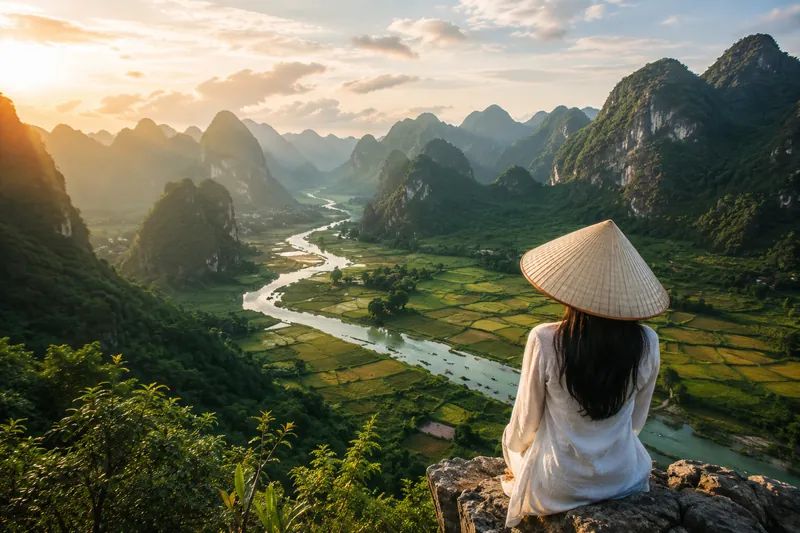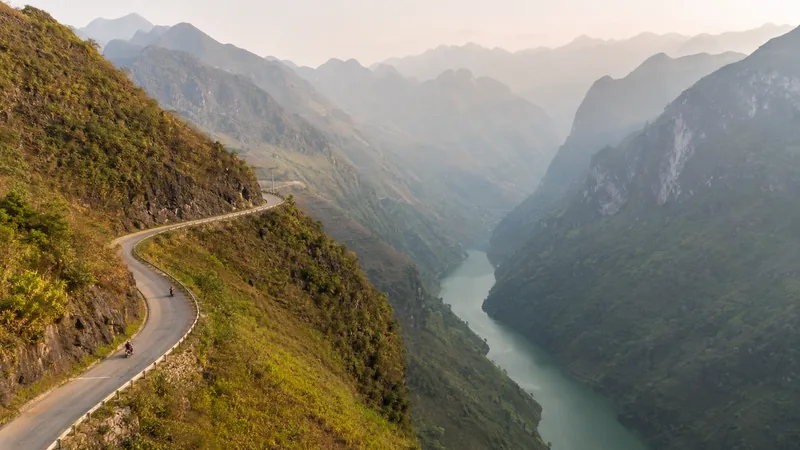
A Singapore traveller's guide to Ha Giang's ethnic minorities, the Dong Van Sunday market, Khau Vai love market and the hill-tribe crafts worth buying.
Ha Giang is famous for its mountains, but the province is shaped just as much by the people who live in them. More than a dozen ethnic groups farm these slopes, trade at the weekly markets and wear textiles you will not see anywhere else in Vietnam. For Singapore travellers, this is the part of the loop that lingers longest in memory.
This guide is about the human side of Ha Giang: who lives where, when the markets run, and how to visit in a way that respects communities rather than treating them as scenery. For the riding route, passes and best time to go, see our Ha Giang Loop tour pillar.
Who lives in Ha Giang
The northern highlands are home to a patchwork of ethnic minorities, each with its own language, dress and customs. A short, respectful overview helps you read what you are seeing.
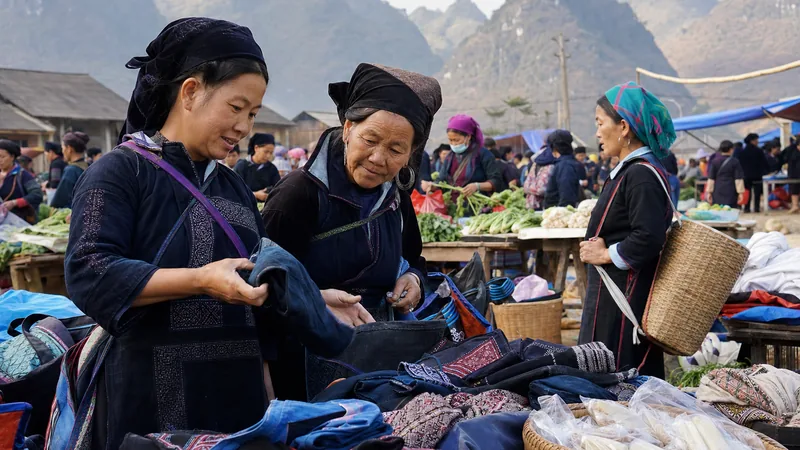
The H’Mong are the largest group, and they are not one people but several sub-groups, often named for the colours and patterns of their clothing: Black H’Mong, White H’Mong and the vividly embroidered Flower H’Mong. You will meet them across the high karst plateau around Dong Van and Meo Vac.
The Dao, particularly the Red Dao, are known for the red headscarves and silver coins worn by the women, and they cluster in villages such as Nam Dam near Quan Ba. In the lower, wetter valleys you find the Tay and Nung, rice farmers who live in stilt houses and make up a large share of the province’s population.
Smaller groups carry outsized character. The Lo Lo are one of Vietnam’s least numerous peoples; the colourful Lo Lo Chai village sits right below the Lung Cu Flag Tower at the country’s northern tip, and its homestays are a gentle way to meet the community. The Giay round out the mix in the river valleys. None of these groups is a relic. They are living communities going about ordinary life, and the markets are where that life comes together.
The weekly markets and when they run
Ha Giang’s markets are real trade-and-social events, not performances laid on for visitors. People walk for hours from outlying hamlets to sell a pig, buy thread, settle news and see relatives. Get there early, because that is when it is most alive.
Dong Van Sunday market is the one most travellers build their trip around. It fills the old quarter every Sunday morning with H’Mong, Tay and Dao traders, stalls of indigo cloth and herbs, and steaming pots of breakfast pho. Arrive by 7am; by late morning the crowd thins.
Meo Vac Sunday market also runs on Sundays and is the bigger livestock and textile affair. The cattle yard alone is worth the early start, with buffalo and cows changing hands amid genuine, unhurried bargaining. Because both fall on the same day, your guide will help you pick one or split the morning.
Sa Phin market, near the H’Mong King’s Palace, and several smaller rotating markets run on a six-day cycle rather than a fixed weekday, so the exact date shifts from week to week. This is precisely the kind of local timing a guide tracks for you. If a market morning is a priority, we plan your Ha Giang Loop itinerary so an overnight in Dong Van or Meo Vac lands on a Saturday night, leaving Sunday free to wander before you ride on.
A word on what to expect when you get there. The pace is brisk but never frantic, the air smells of woodsmoke and grilled corn, and much of the trading is in textiles, livestock and farm tools rather than souvenirs. Bring small denominations of Vietnamese dong, go gently with your camera, and treat the food stalls as half the point: a bowl of steaming pho or a sweet rice cake at a plastic stool is the most authentic breakfast on the loop.
The Khau Vai love market
One market stands apart. The Khau Vai love market (Cho tinh Khau Vai), held in a small commune near Meo Vac, runs just once a year, around the 27th day of the third lunar month, usually in April.
Its story is tender. By tradition it is the one day former sweethearts who married other people can meet again, talk, share a cup of corn wine and part as friends, without jealousy from their spouses. What began as a quiet local custom has grown into one of the most famous cultural events in the north, and it draws people from across the surrounding valleys.
For the other fifty-one weeks Khau Vai is an ordinary village. So this is an event to time a trip around rather than stumble upon. Tell us early if it matters to you and we will anchor your dates to that single day.
Textiles, crafts and what to buy
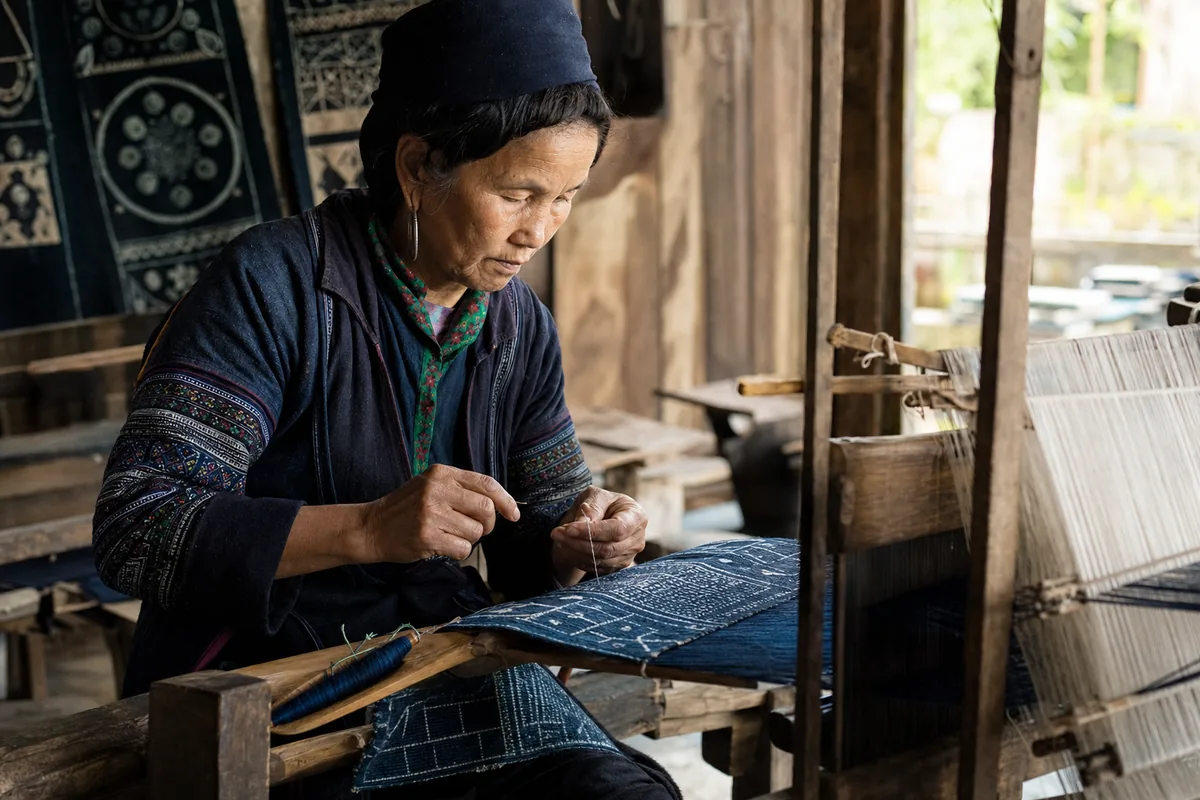
The dress you admire at market is the product of months of work, and you can buy it at the source. The Lung Tam hemp-linen weaving cooperative, in a valley off the road near Quan Ba, is the best-known. Here H’Mong women grow and spin hemp, dye it in deep indigo vats, and draw patterns in melted beeswax before dyeing, the batik technique that gives the cloth its fine white lines.
Buying directly from a cooperative like Lung Tam, or from the women who made the piece at market, means more of your money reaches the maker rather than a middleman. Good buys include indigo scarves, embroidered table runners, and small beeswax-batik panels that pack flat for the flight home. Prices are fair and fixed at the cooperative; at market, a little polite negotiation is normal, but see the note below on where to draw the line.
Homestays and food culture
The warmest cultural experiences happen after the engines are off. Family homestays in Dong Van, Meo Vac and the Red Dao village of Nam Dam put you under the same roof as your hosts, often in a traditional stilt or rammed-earth house.
Expect a communal meal where dishes are shared from the centre: local pho for breakfast, thang co (a hearty H’Mong stew, an acquired taste worth trying once), and small cups of ruou ngo, the fierce corn wine your host will press on you with great hospitality. Accepting a cup, even a sip, is a kind gesture. Staying in homestays through our easy rider value tours keeps your spending with the families who host you.
Visiting with respect
These are people’s homes and livelihoods, not a backdrop. A little care goes a long way, and a local guide makes most of it effortless.
- Always ask before photographing people, especially elders and children. A smile and a gesture at your camera is enough; a refusal means no.
- Do not haggle aggressively at subsistence markets. These traders are not running tourist stalls; a fair price kindly given matters more than a small saving.
- Dress modestly, with shoulders and knees covered, particularly in villages and homes.
- Follow your host’s lead indoors, removing shoes and waiting to be seated at meals.
- Buy from the maker where you can, and from cooperatives over middlemen.
This is where travelling with a local easy rider or guide changes everything. They speak the languages, know which market falls on which day, can introduce you to a host family properly, and explain the meaning behind a headscarf or a wedding custom you would otherwise just photograph. The cultural depth of Ha Giang opens up far more fully with someone who belongs to it walking beside you.
See the culture for yourself
The markets and villages pair naturally with the famous landscapes; many travellers combine a Sunday market with the Nho Que River boat through Tu San Canyon on the same trip. If you are building Ha Giang into a wider northern journey alongside Hanoi, Ha Long Bay, Ninh Binh and Sapa, our regional guide sets out how the regions link up and when to go. Our Ha Giang Loop packages are built around local guides and homestays precisely so the human side is not an afterthought.
Tell us your travel dates and whether a market morning or the Khau Vai love market is on your wish list, and we will time your loop to catch it. WhatsApp us on +65 8274 6722 for a custom Ha Giang itinerary and a clear SGD quote.
Frequently Asked Questions
What day is the Dong Van market on, and what time should I arrive?
The main Dong Van market runs on Sunday mornings, and it starts very early. Trading is in full swing not long after dawn and tails off by late morning, so the best plan is to be there by around 7am. If you only have one market morning on your loop, ask us to time your Dong Van or Meo Vac overnight to land on a Saturday night so Sunday is free.
Is the Khau Vai love market something I can just turn up to?
Not on any given week. The Khau Vai love market is a once-a-year event held around the 27th day of the third lunar month, which usually falls in April. If experiencing it matters to you, tell us early and we will build your Ha Giang dates around that single market day, because the rest of the year Khau Vai is a quiet village.