Create your perfect trip with our step by step Vietnam itinerary! Discover the best spots, tips, and budgets for an unforgettable adventure.
Plan the perfect Vietnam trip: Step-by-step itinerary guide

TL;DR:
- Vietnam’s diverse climate requires careful planning around optimal travel seasons for each region.
- Flexible itineraries and thorough pre-trip planning enhance enjoyment and adaptability in Vietnam.
- Focusing on matching destinations to travel themes ensures a satisfying experience for all travel styles.
Vietnam is one of the most rewarding destinations for Singaporean travellers, yet it’s also one of the easiest to get wrong. Many people book flights first, then scramble to fill the days, ending up with a rushed, exhausting itinerary that skips the best parts. Whether you’re planning a family getaway, a solo adventure, or a romantic honeymoon, the secret lies in matching your theme to the right regions, the right seasons, and the right pace. This guide walks you through every step, with practical budgets in SGD, honest packing advice, and clear itinerary frameworks for each travel style.
Table of Contents
- What you need to know before planning your Vietnam trip
- Step-by-step itinerary for a family-friendly Vietnam adventure
- Step-by-step itinerary for adventure and nature seekers
- How to tailor your itinerary for honeymoons and special occasions
- Step-by-step checklist: Ensuring a smooth Vietnam trip from start to finish
- Why the best Vietnam itinerary is a flexible one
- Book your Vietnam journey with exclusive Singaporean deals
- Frequently asked questions
Key Takeaways
| Point | Details |
|---|---|
| Best times by region | Travelling north, central, or south Vietnam requires attention to seasonal weather differences for a smoother trip. |
| Tailored itinerary themes | Family, adventure, and romantic trips each benefit from specific planning priorities and activities. |
| Singapore-friendly tips | Direct flights, daily SGD cost benchmarks, and essential travel apps make DIY Vietnam travel easier for Singaporeans. |
| Step-by-step checklist | Following a sequential plan—from booking to travel troubleshooting—ensures a stress-free experience. |
What you need to know before planning your Vietnam trip
Before you search for flights, you need to understand one fundamental truth about Vietnam: it is a long, narrow country with three climatically distinct regions. What’s sunny in one part can be stormy in another. Optimal travel times vary significantly: the North (Hanoi and Ha Long Bay) is best from October to April, Central Vietnam (Hoi An and Da Nang) shines from February to July, and the South (Ho Chi Minh City and the Mekong Delta) is most pleasant from December to April. If you’re planning a north-to-south trip, you’ll need to sequence your regions carefully around these windows.
Key pre-trip essentials for Singaporean travellers:
- Visa: Singapore passport holders currently enjoy a 45-day visa exemption for Vietnam. Always verify current rules before booking, as policies can change.
- Travel insurance: Purchase a policy that covers medical evacuation, trip cancellation, and adventure activities if relevant.
- Flights: Direct flights operate from Singapore to Hanoi, Ho Chi Minh City, and Da Nang. Booking mid-week can save you a meaningful amount compared to weekend departures.
- On-ground transport: Use Grab (Southeast Asia’s ride-hailing app) in cities for safe, metered fares. For intercity travel, domestic flights are faster and often surprisingly affordable.
- Money: Vietnam runs heavily on cash. Bring some SGD to exchange on arrival, and use ATMs in cities for Vietnamese Dong top-ups.
Quick reference: Planning essentials at a glance
| Factor | Detail |
|---|---|
| Best months: North | October to April |
| Best months: Central | February to July |
| Best months: South | December to April |
| Daily budget (excl. flights) | SGD 50 to 80 per person |
| Visa for Singaporeans | 45-day exemption (verify before travel) |
| Recommended trip length | 7 to 14 days depending on theme |
| SIM card | Buy a local SIM at the airport on arrival |
“Vietnam rewards travellers who plan around the weather, not just the wish list. One wrong season choice can turn a dream trip into a soggy disappointment.”
Pro Tip: If you want to cover multiple regions in one trip, fly between them rather than taking overnight buses. Domestic flights between Hanoi and Ho Chi Minh City cost as little as SGD 30 to 60 when booked in advance, saving you a full day of travel. Explore Vietnam tour packages that bundle domestic flights into the itinerary for seamless connections.
Step-by-step itinerary for a family-friendly Vietnam adventure
Now that you understand your travel needs and basic requirements, let’s tackle a popular itinerary for families. Travelling with children demands a different kind of planning. You need shorter travel stretches, predictable meal options, and activities that hold a child’s attention without exhausting everyone by day three.
A recommended 8-day family itinerary:
- Days 1 to 2: Hanoi. Arrive, settle in, and explore the Old Quarter at a relaxed pace. Visit Hoan Kiem Lake and the Temple of Literature. Keep the first day light to recover from travel.
- Days 3 to 4: Ha Long Bay. Board a family-friendly overnight cruise. Children love the limestone karsts, kayaking in calm waters, and squid fishing at night. Choose a reputable cruise with proper safety equipment and life jackets.
- Days 5 to 6: Hoi An. Fly south. Hoi An is walkable, colourful, and gentle. Cycling around the ancient town and the rice paddies is a highlight for kids and parents alike. The lantern-lit evenings are magical.
- Days 7 to 8: Phu Quoc. Fly to this island for beach time and waterpark fun. Vinpearl Land waterpark is a firm favourite with children. The pace slows right down here, which is perfect for the final leg.
Family trips work best when you prioritise kid-friendly pacing: Ha Long cruises, Hoi An cycling, Phu Quoc beaches and waterparks, and Mekong boat rides all feature strongly. Avoid long overland journeys with young children. A 7 to 10 day trip typically costs SGD 400 to 600 per person excluding flights.

Comparison of family itinerary options:
| Option | Duration | Highlights | Best for |
|---|---|---|---|
| North only | 7 days | Hanoi, Ha Long Bay | Younger children, first-timers |
| North and Central | 9 days | Ha Long, Hoi An, Da Nang beach | Mixed-age families |
| North, Central, South | 12 days | All highlights + Phu Quoc | Older children, experienced travellers |
“The Mekong Delta boat ride is genuinely one of the most memorable experiences for children. Floating markets, coconut candy factories, and river life are unlike anything they’ll see at home.”
Pro Tip: Pack a small medical kit with rehydration sachets, antihistamines, and a fever remedy. Vietnam’s street food is delicious, but children’s stomachs may need a day or two to adjust. Stick to cooked food initially and carry bottled water at all times. Browse family tour options that include guided meal stops at vetted, child-friendly restaurants.
Step-by-step itinerary for adventure and nature seekers
Family trips are just one way to experience Vietnam. Adventure seekers will find entirely unique opportunities in this country’s dramatic landscapes, from towering rice terraces to jungle waterfalls.
Recommended adventure sequence over 14 days:
- Days 1 to 2: Hanoi. Use this as your base to organise permits and gear. Book your Ha Giang loop permit here.
- Days 3 to 5: Ha Giang. The motorbike loop through Ha Giang province in the far north is considered one of Asia’s most spectacular rides. Hire a local “Easy Rider” guide or rent your own bike if experienced.
- Days 6 to 7: Sapa. Trek through terraced rice paddies with a local Hmong guide. Fansipan, the highest peak in Indochina, is accessible by cable car for those who prefer a less strenuous option.
- Days 8 to 9: Dalat. Fly south to this cool highland city for canyoning, mountain biking, and waterfall hikes. Dalat’s canyoning operators are among the most professional in Vietnam.
- Days 10 to 12: Lan Ha Bay. Quieter than Ha Long Bay, Lan Ha is a kayaker’s paradise. Rock climbing on the limestone cliffs is also available through specialist operators.
- Days 13 to 14: Ho Chi Minh City. Wind down with a city day before your flight home.
Adventure itineraries work best when you prioritise motorbiking the north-west loops in Ha Giang, canyoning in Dalat, kayaking in Lan Ha Bay, and trekking in Sapa. A minimum of two weeks is strongly recommended to do this safely with experienced guides.
Adventure packing checklist:
- Lightweight waterproof jacket
- Sturdy closed-toe shoes or hiking boots
- Insect repellent with DEET
- Helmet (if motorbiking, always wear one)
- Portable first aid kit
- Offline maps downloaded on your phone
Pro Tip: Typhoon season in Central Vietnam runs roughly from August to November. If your adventure route passes through Da Nang or Hoi An during this period, build in buffer days or have a contingency plan. Weather delays are common and not worth rushing through.
How to tailor your itinerary for honeymoons and special occasions
Adventure isn’t for everyone. For those after romance and relaxation, Vietnam delivers stunning experiences that rival far more expensive destinations.
Vietnam’s romantic credentials are genuinely impressive. Hoi An’s ancient town glows with hundreds of silk lanterns every evening, creating an atmosphere that feels effortlessly intimate. Ha Long Bay’s luxury overnight cruises offer private balconies, sundeck dining, and butler service. Phu Quoc’s sunsets over the Gulf of Thailand are consistently ranked among the finest in Southeast Asia.
Honeymoon highlights to weave into your itinerary:
- Hoi An: Book a private lantern-making class followed by a sunset river cruise. The town is best explored on foot in the early morning before the crowds arrive.
- Phu Quoc: Choose a resort on the western coast for the best sunset views. Many resorts offer couples’ spa packages and private beach dinners.
- Ha Long Bay: Opt for a boutique luxury cruise rather than a large group boat. Smaller vessels offer more privacy, better food, and a genuinely more romantic atmosphere.
- Hanoi: A rooftop cocktail at one of the Old Quarter’s sky bars makes for a perfect first evening.
A well-structured honeymoon plan follows these steps: set a daily budget of SGD 50 to 80 per person, confirm your visa status, choose your travel season, book flights and insurance together, arrange internal transport including domestic flights or sleeper trains, secure accommodations in advance, purchase a local SIM or eSIM, and pack light. For honeymoons, upgrading accommodation to four or five-star properties adds roughly SGD 80 to 150 per night but transforms the experience.
Pro Tip: Book a private cooking class in Hoi An as a couple. You’ll visit a local market together, learn to make fresh spring rolls and pho, then sit down to eat what you’ve cooked. It’s one of those experiences that stays with you long after the trip ends. Check out honeymoon package details for curated romantic itineraries that handle all the logistics.
Step-by-step checklist: Ensuring a smooth Vietnam trip from start to finish
With your personal itinerary shaped, here’s a streamlined end-to-end checklist to ensure nothing gets overlooked.
Sequential planning checklist:
- 3 to 6 months before: Set your budget, choose your theme and regions, check visa requirements, and research the best travel season for your chosen route.
- 2 to 3 months before: Book international flights (mid-week for better fares), purchase travel insurance, and reserve accommodation for the first and last nights at minimum.
- 4 to 6 weeks before: Book domestic flights within Vietnam, reserve any overnight cruises (Ha Long or Lan Ha Bay), and arrange guided tours or activities that sell out quickly.
- 1 to 2 weeks before: Download Grab, Google Maps offline, and XE Currency. Notify your bank of travel dates to avoid card blocks.
- Day of departure: Purchase a local SIM or activate an eSIM at Changi Airport or on arrival in Vietnam. Exchange some SGD to Vietnamese Dong.
- On the ground: Use Grab for city transport, carry small-denomination Dong for markets and street food, and keep digital copies of all documents in your email.
Good pre-trip planning covers budget, visa, season, flights, insurance, internal transport, accommodation, SIM cards, and packing. Missing any one of these steps is where most first-timers run into trouble.
Planning timeline at a glance:
| Timeframe | Action |
|---|---|
| 3 to 6 months out | Budget, theme, visa check, season research |
| 2 to 3 months out | Flights, insurance, key accommodation |
| 4 to 6 weeks out | Domestic flights, cruises, guided tours |
| 1 to 2 weeks out | Apps, bank notification, offline maps |
| Day of departure | SIM card, currency exchange |
Pro Tip: If something goes wrong on the ground, your travel insurance hotline and your tour operator’s local contact are your two most important resources. Save both numbers in your phone before you leave Singapore. A good operator will have a 24-hour WhatsApp line for exactly these situations.
Why the best Vietnam itinerary is a flexible one
Here’s something the step-by-step guides don’t always say plainly: rigid itineraries often fail in Vietnam. Weather changes without warning. A boat captain cancels due to swell. A village festival appears on a road you weren’t expecting to be on. These aren’t disasters. They’re often the best parts of the trip.
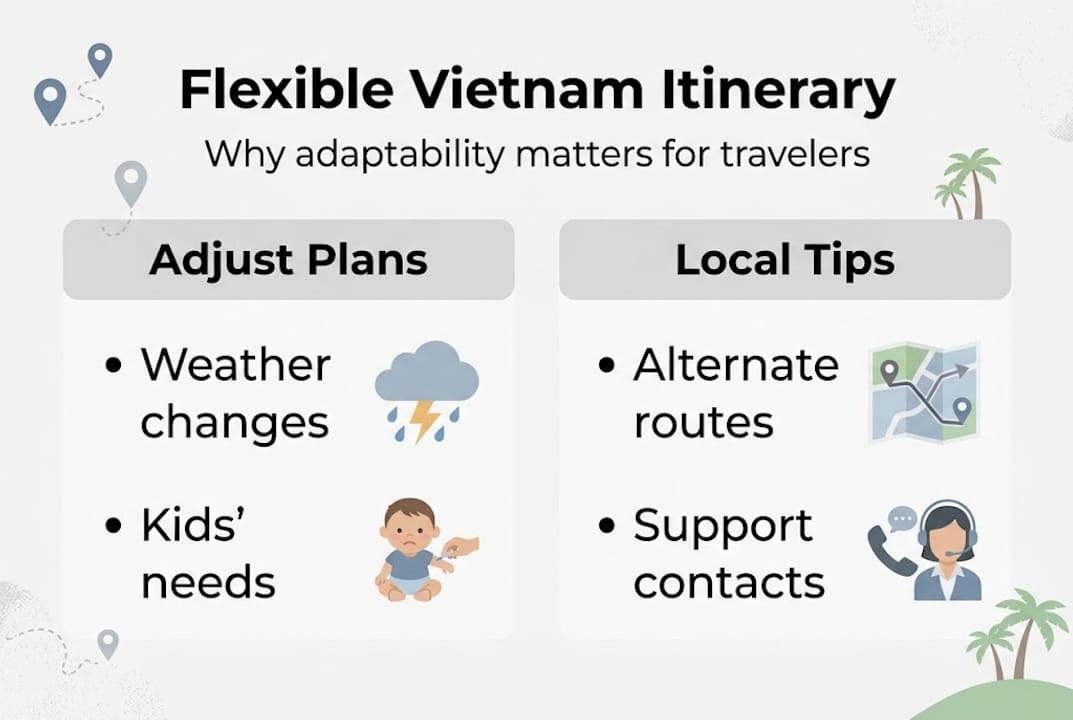
The Singaporean travellers who come back with the most memorable stories aren’t the ones who stuck to every planned hour. They’re the ones who kept their thematic priorities firm (beach relaxation, or adventure, or romance) but held the daily schedule loosely. That flexibility is only possible when you’ve done the foundational planning well. Know your budget, your visa, your season, and your key bookings. Then let the rest breathe. Vietnam rewards curiosity. The best meal you’ll eat probably won’t be in any guide. The most beautiful view might be from a wrong turn on a motorbike. Plan well, then trust the country to surprise you.
Book your Vietnam journey with exclusive Singaporean deals
Inspired to map out your Vietnam step-by-step? Here’s how to make the process even smoother.
Planning a Vietnam trip from scratch takes real time and local knowledge. From choosing the right cruise operator to knowing which family restaurant is genuinely safe for children, the details matter enormously.
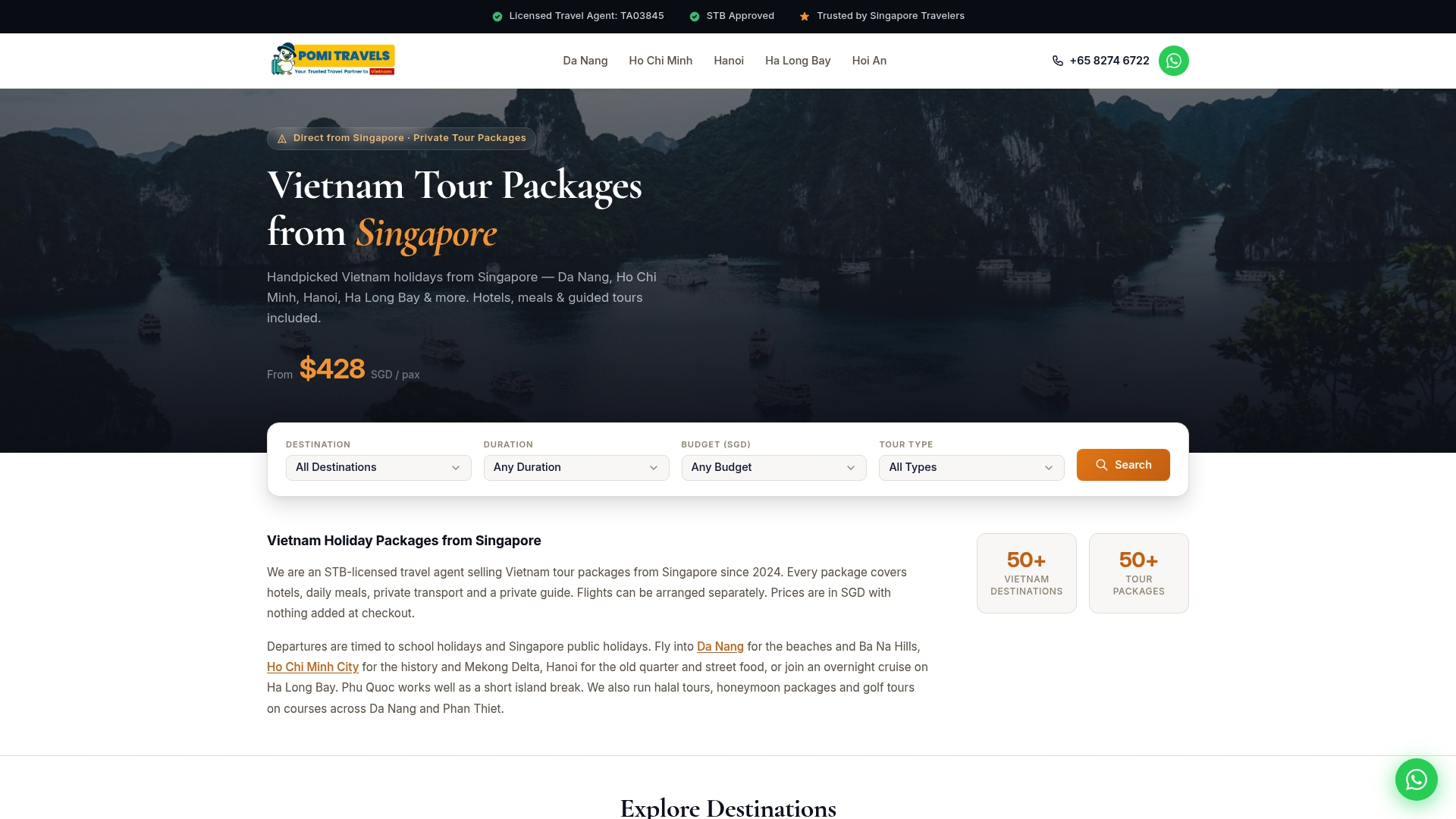
At vietnamtourpackage.sg, we specialise in curated Vietnam tour deals built specifically for Singaporean travellers. Every package is designed around real themes: family, honeymoon, adventure, halal, and more. We handle domestic flights, vetted accommodation, guided tours, and private transport so you can focus on enjoying the trip. Our team is reachable via WhatsApp for real-time support before and during your journey. Browse our full range of packages and find the itinerary that fits your travel style perfectly.
Frequently asked questions
When is the best month for a Vietnam family trip?
For family travel, aim for October to April in the north and December to April for the south, avoiding rainy season disruptions that can derail outdoor activities.
How much does an average Singaporean spend daily in Vietnam?
Most Singaporeans should expect to budget SGD 50 to 80 per day per person, excluding international flights.
What’s the biggest mistake first-timers make with Vietnam itineraries?
Overpacking the schedule and underestimating regional travel times is the most common issue, as kid-friendly pacing and transit gaps are easy to overlook when planning from a map.
Are there direct flights from Singapore to Vietnam’s main cities?
Yes, direct flights connect Singapore to Hanoi, Ho Chi Minh City, and Da Nang, and mid-week bookings can save you a noticeable amount on fares.
What’s a recommended trip length for families in Vietnam?
A 7 to 10 day trip is the sweet spot for families, covering key highlights without exhausting young travellers.
Recommended