Understand Vietnam travel insurance for Singaporeans: what it covers, how to choose the right policy, and how to make a successful claim when you need...
Vietnam travel insurance explained: What Singaporeans must know

TL;DR:
- Domestic health insurance often does not cover emergencies abroad, increasing risk and costs.
- Travel insurance covers medical expenses, evacuations, trip cancellations, and lost belongings.
- Proper planning and understanding policy exclusions are essential for effective travel protection in Vietnam.
Many Singaporean travellers assume their regular health insurance applies abroad, only to discover mid-trip that their domestic plan offers little to no protection once they cross the border. Vietnam is a fantastic destination, brimming with street food, ancient temples, and dramatic coastlines. But unexpected events, from a motorbike accident in Hanoi to a stomach infection in Hoi An, can spiral into costs that ruin both your holiday and your finances. This article breaks down what Vietnam travel insurance actually covers, why it matters more than most travellers realise, and how to choose a policy that genuinely fits your trip.
Table of Contents
- Why travel insurance matters for Vietnam
- What Vietnam travel insurance typically covers
- How to choose the right travel insurance for your Vietnam trip
- Making a claim: What Singaporean travellers should know
- Why most Singaporeans misjudge Vietnam travel risks
- Plan your Vietnam adventure with peace of mind
- Frequently asked questions
Key Takeaways
| Point | Details |
|---|---|
| Essential protection | Travel insurance shields you from major financial and medical risks in Vietnam. |
| Coverage clarity | Always check exactly what the policy covers and look for exclusions. |
| Choose wisely | Match your insurance plan to your activities and travel style for full peace of mind. |
| Document claims carefully | Keep all receipts and act quickly for smooth and successful claims. |
Why travel insurance matters for Vietnam
Vietnam is one of the most popular destinations for Singaporeans, and it is easy to see why. The food is exceptional, the scenery is stunning, and flights are short. But familiarity with a destination can breed complacency about risk. The reality is that Vietnam’s private healthcare system operates very differently from Singapore’s, and costs can escalate rapidly if you require emergency treatment without insurance.
Medical emergencies abroad can cost thousands and are often not covered by domestic health insurance plans. A hospitalisation requiring an air ambulance evacuation back to Singapore, which is not uncommon in serious cases, can cost upwards of SGD 30,000 to 80,000. Without insurance, that bill lands squarely on you.
Travel insurance bridges that gap in several important ways:
- Medical expenses: Covers hospital stays, doctor consultations, and prescription costs.
- Emergency evacuation: Arranges and pays for medical repatriation when local care is insufficient.
- Trip cancellation or curtailment: Reimburses non-refundable costs if you must cancel due to illness or a family emergency.
- Lost or stolen belongings: Covers cameras, luggage, travel documents, and electronics.
- Travel delays: Compensates for accommodation and meals during prolonged delays.
“Travel insurance is not a luxury purchase. It is the single most important safety net a traveller can carry, and yet it remains one of the most frequently skipped steps before departure.”
It is also worth noting that some Vietnam tour packages include clauses requiring proof of travel insurance before participation, particularly for adventure activities or group tours. Arriving without coverage can mean being turned away from experiences you have already paid for.
Pro Tip: Purchase your travel insurance the moment you book your flights or tour, not the day before departure. This way, you are covered for cancellations that occur during the lead-up to your trip, not just while you are in Vietnam.
What Vietnam travel insurance typically covers
Understanding the importance is just the first step; knowing what your policy actually covers is crucial. Policies vary enormously across insurers, so reading the fine print before you sign is not optional.
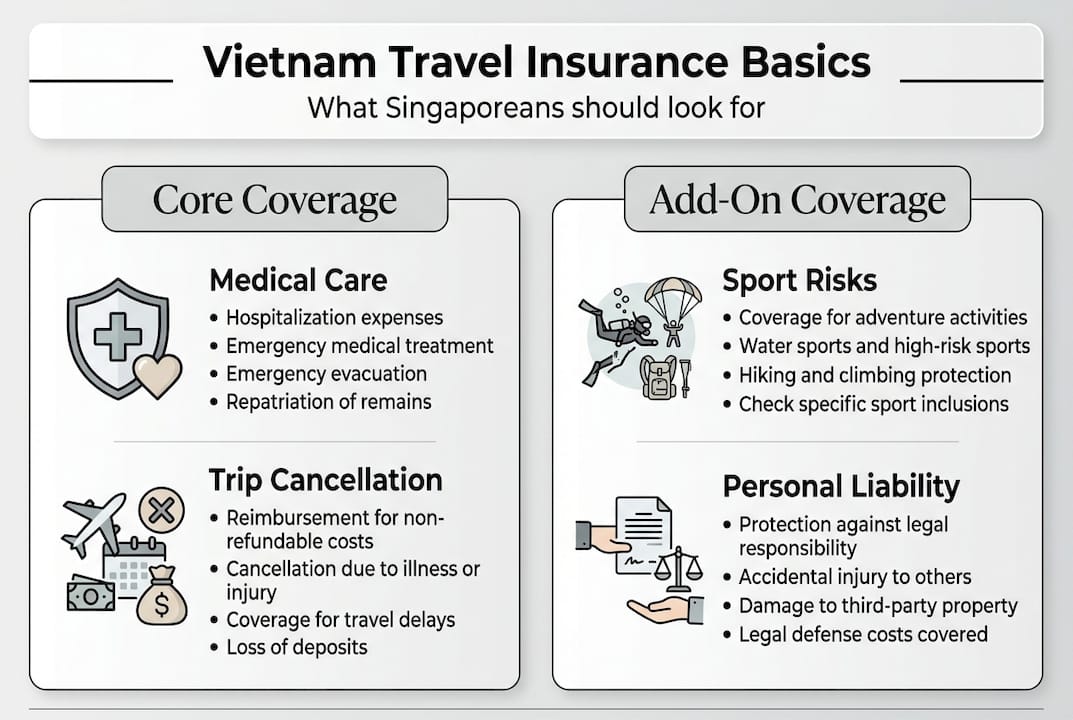
The GIA travel insurance guide confirms that common travel insurance benefits include medical coverage, trip cancellation, and loss of luggage. These three areas form the backbone of most standard policies. However, what sits outside that backbone can catch travellers off guard.
| Coverage area | Typically included | Often excluded or add-on |
|---|---|---|
| Emergency medical treatment | Yes | Pre-existing conditions |
| Hospitalisation costs | Yes | Elective procedures |
| Emergency evacuation | Yes | Non-medical evacuations |
| Trip cancellation | Yes | Change-of-mind cancellations |
| Lost or delayed baggage | Yes | Unattended belongings |
| Personal liability | Sometimes | Intentional acts |
| Adventure sports | Sometimes | Extreme or high-risk sports |
| Rental vehicle excess | Sometimes | Motorbike hire (common in Vietnam) |
Pay close attention to exclusions. Pre-existing medical conditions are among the most common reasons claims are denied. If you have a heart condition, diabetes, or any chronic illness, you need to either declare it when purchasing the policy or find a specialist insurer who covers it.
Adventure activities deserve particular attention for Vietnam travellers. Activities such as:
- Motorbiking through mountain passes
- Kayaking in Ha Long Bay
- Rock climbing in Cat Ba Island
- Trekking in Sapa
…may not be covered under a basic policy. You may need to purchase an adventure sports add-on or choose a policy that includes these activities explicitly. Do not assume. Check the policy wording.
Personal liability coverage is another underrated benefit. If you accidentally injure someone or damage property in Vietnam, legal costs and compensation can be substantial, and personal liability cover can protect you in those situations.
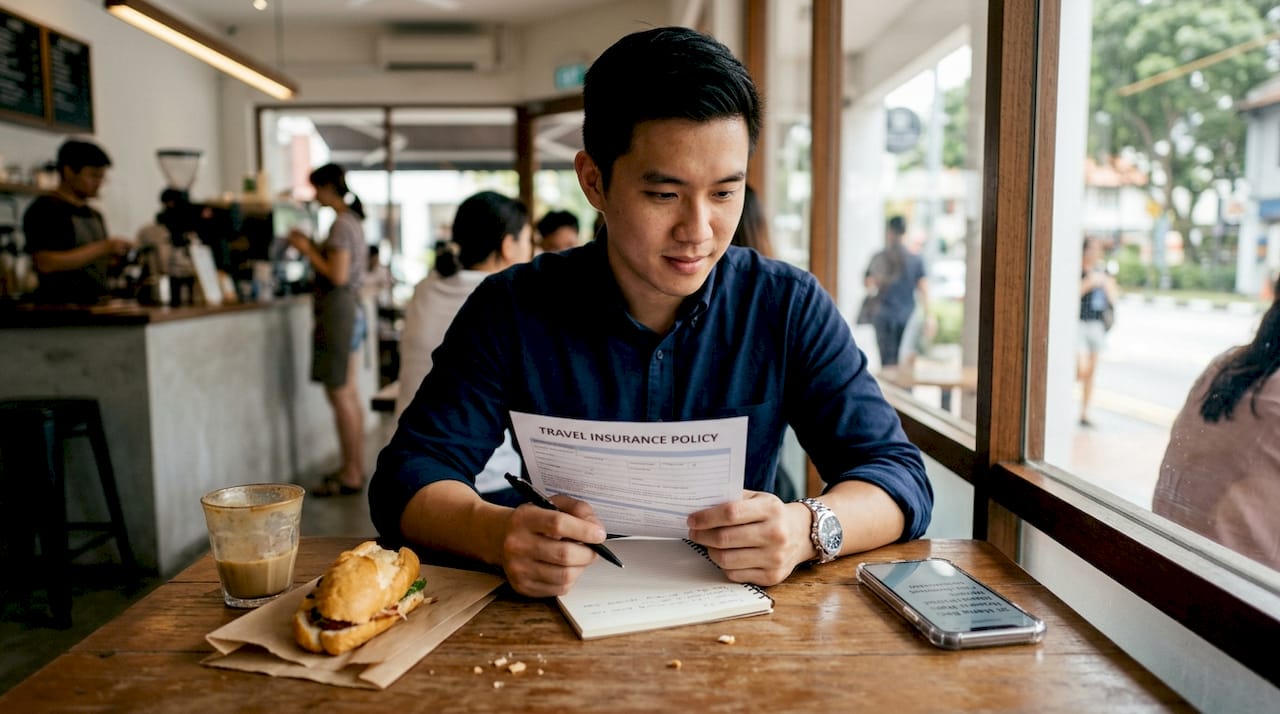
How to choose the right travel insurance for your Vietnam trip
Now that you know what is typically covered, it is time to discover how to choose a policy that is genuinely suitable for your Vietnam getaway. The process is not complicated, but it does require a bit of planning before you compare quotes.
Choosing a plan involves comparing medical, cancellation, and personal liability coverage alongside price. The cheapest option is rarely the best value if the coverage limits are too low to be useful.
Here is a straightforward process to follow:
- List your itinerary activities. Are you doing adventure sports, renting a motorbike, or taking a cruise? Each activity affects what coverage you need.
- Set a minimum medical coverage threshold. For Vietnam, a minimum of SGD 200,000 in emergency medical coverage is sensible, with evacuation coverage on top.
- Check cancellation coverage. If you are booking a package tour with non-refundable costs, ensure cancellation benefits match what you stand to lose.
- Review exclusions carefully. Look for exclusions around pre-existing conditions, alcohol-related incidents, and unattended baggage.
- Compare at least three policies. Use MoneySense travel insurance tips as a reference framework for what good coverage looks like.
| Factor | Budget policy | Mid-range policy | Comprehensive policy |
|---|---|---|---|
| Medical coverage | SGD 50,000 | SGD 200,000 | SGD 500,000+ |
| Evacuation coverage | Limited | Included | Fully included |
| Adventure sports | Excluded | Add-on available | Often included |
| Trip cancellation | Basic | Up to trip cost | Full trip value |
| Personal liability | Minimal | SGD 500,000 | SGD 1,000,000+ |
If you are booking guided tours that include specific excursions or experiences, check whether the tour operator has any insurance requirements or recommendations. Aligning your policy with your actual itinerary removes the guesswork.
Pro Tip: For couples or families travelling together, a group or family travel insurance plan often works out significantly cheaper per person than purchasing individual policies, while still providing the same level of protection for each traveller.
Making a claim: What Singaporean travellers should know
Even the best policy is only as good as knowing how to use it when needed, so let us explore the claims process. Many travellers only discover the complexity of making a claim when they are already stressed and unwell abroad. Being prepared beforehand removes a lot of that difficulty.
90% of unsuccessful claims result from missing documents or delayed reporting. That single statistic should change how you behave the moment something goes wrong.
Follow these steps to protect your claim:
- Report the incident immediately. Whether it is a theft, a hospitalisation, or a missed flight, contact your insurer’s emergency hotline as soon as it happens. Most policies have a reporting window of 24 to 48 hours.
- Collect all documentation. Keep every receipt, medical report, police report, and correspondence related to the incident. Photograph originals in case they are lost.
- Get a police report for theft or loss. In Vietnam, filing a report at the local police station is essential for any claim involving stolen or lost property. Without it, most insurers will not process the claim.
- Follow insurer instructions precisely. Your insurer may have specific hospitals or clinics they work with in Vietnam. Using an unapproved provider can affect your reimbursement.
- Submit your claim promptly after returning. Most policies require submission within 30 days of your return to Singapore. Do not let time slip away.
Pro Tip: Create a simple digital folder on your phone before you travel. Store scanned copies of your passport, insurance policy, emergency contacts, and booking confirmations. If your bag is stolen, you still have everything you need to act quickly.
The most common pitfalls are entirely avoidable. Travellers lose claims because they discard receipts, wait too long to report, or submit forms that are incomplete. Treat documentation as part of travelling responsibly.
Why most Singaporeans misjudge Vietnam travel risks
Stepping back from the technical details, it is worth re-examining our assumptions about travel safety in Vietnam. Vietnam feels familiar to many Singaporeans. The food stalls, the warmth of locals, and the relative affordability create a sense of ease that can quietly dull our awareness of genuine risks.
What we have seen repeatedly when assisting travellers in difficulty is that the challenges are rarely what they anticipated. It is not dramatic accidents that cause the most problems. It is a sudden fever in a rural area where the nearest hospital is two hours away. It is a language barrier at 2am when a traveller needs to explain symptoms to a Vietnamese doctor. It is the realisation that private ambulance response times in Vietnam are nothing like what we are accustomed to in Singapore.
Travel insurance does not just pay bills. It connects you to a 24-hour assistance network that can arrange translation, locate the right facility, coordinate family communication, and manage evacuation logistics. These are not abstract benefits. They are the things that actually matter when something goes wrong, and they are precisely what most travellers do not think about until they urgently need them.
Plan your Vietnam adventure with peace of mind
Secure travel starts with the right planning, and the best experiences combine safety and adventure in equal measure.
At Vietnam Tour Packages, we design curated itineraries for Singaporean travellers that take the complexity out of planning your Vietnam holiday. Our packages span destinations from Ha Long Bay to Ho Chi Minh City, with options for families, couples, and adventure seekers alike. We work with travellers to ensure every aspect of their trip, including knowing what insurance they need, is thought through before departure. Whether you are after a relaxed cultural tour or a multi-city adventure, browse our range of packages and travel with the confidence that comes from proper preparation.
Frequently asked questions
Is travel insurance compulsory for Singaporeans travelling to Vietnam?
Travel insurance is not legally required, but many tour operators require proof of coverage before allowing participation in group packages or adventure activities. It is strongly recommended for all travellers.
What should I look for in a Vietnam travel insurance policy?
Prioritise policies that cover medical emergencies, evacuation, lost property, and trip cancellation, and verify that any activities on your itinerary are not listed as exclusions under your chosen policy benefits.
How do I make a claim on my travel insurance after my Vietnam trip?
Collect all receipts and incident reports, report the event to your insurer without delay, and follow their submission process precisely. Claims fail most often due to missing documents or slow reporting, so act quickly and keep thorough records.
Recommended