Discover what is travel package flexibility and learn how to make informed choices for 2026 travel. Maximize your booking benefits today!
What is travel package flexibility? Your 2026 guide

TL;DR:
- Travel package flexibility involves specific policy conditions that govern when and how you can modify or cancel bookings, often varying widely between providers. It primarily covers date changes, passenger amendments, destination swaps, and partial refunds, but does not necessarily include cash refunds, which many travelers confuse. The true cost of flexibility is a premium—around 15% more—with benefits most valuable to families, business travelers, and those with uncertain plans, while requiring awareness of fare differences and support quality before purchasing.
Most travellers assume a “flexible” package means they can change or cancel whenever they like. That assumption costs people money every year. What is travel package flexibility, really? It is a spectrum of policy conditions that govern when and how you can alter your booking, covering date changes, passenger amendments, destination swaps, and cancellations. According to 2026 market data, 74% of travellers prefer to build their own itineraries, yet persistent confusion about flexible travel plans means many still book the wrong product for their needs.
Table of Contents
- Key takeaways
- What travel package flexibility actually means
- The real cost of flexibility: trade-offs worth understanding
- Building itineraries that actually flex
- How to compare flexible packages properly
- My honest take on travel flexibility
- Vietnam tours with real flexibility built in
- FAQ
Key takeaways
| Point | Details |
|---|---|
| Flexibility is not one-size-fits-all | Policies vary widely across providers, so always read the specific terms before booking. |
| Flexible does not mean refundable | Date changes and cash refunds are separate benefits that rarely come together in one package. |
| Premiums are often worth it | Flexible tickets typically cost around 15% more but protect travellers with unpredictable schedules. |
| Build itineraries with anchors and orbits | Structuring your trip around fixed anchor points and optional activities keeps plans adaptable without full re-planning. |
| Support quality matters as much as policy | A responsive booking team can resolve last-minute changes faster than any written cancellation window. |
What travel package flexibility actually means
The phrase “flexible booking” appears across nearly every travel website, but providers define it differently. At its most basic, travel package flexibility refers to the set of conditions under which you can modify a confirmed booking without incurring full financial loss.
Most flexible travel packages include some combination of the following features:
- Date changes: Move your travel dates to a later period, often within a set window (typically 12 months from the original travel date).
- Passenger name amendments: Correct or transfer a booking to another person, particularly useful for group travel where participants change.
- Destination swaps: Redirect your trip to an alternative destination, subject to price differences being covered.
- Cancellation with partial refund: Cancel the booking and receive either a cash refund or travel credit.
- Deposit protection: Lose only your deposit rather than the full trip cost if you cancel early enough.
The critical deadlines vary enormously. Fee-free changes range from 28 to 75 days before departure, depending on the provider. Book with a provider that requires 75 days’ notice and you lose your window surprisingly fast, particularly for trips you book six to eight months out.
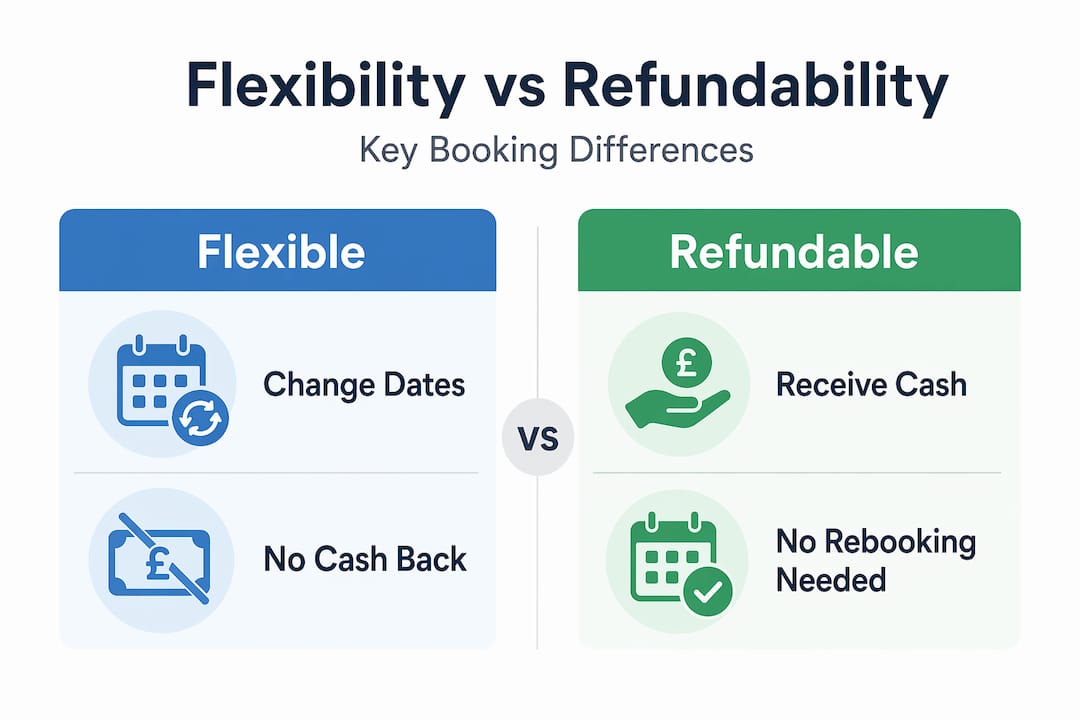
There is also a distinction that many travellers miss entirely. Flexibility and refundability are not the same thing. A flexible package lets you change your dates or details. A refundable package gives you your money back in cash. Many packages offer one without the other, and some advertise “free cancellation” when they actually mean travel credit, not a cash return. That is a meaningful difference if you need funds returned to your bank account rather than locked inside a voucher system.
Pro Tip: Always search for the phrase “cash refund” specifically in the terms and conditions. If it only says “credit” or “voucher,” you are not getting your money back.
The real cost of flexibility: trade-offs worth understanding
Flexibility is not free, and the premium is often larger than travellers expect. Flexible tickets cost roughly 15% more than standard fares on average. On a family trip costing $4,000 SGD, that is an additional $600 SGD for the privilege of changing your plans without penalty.
The travellers who genuinely benefit from that premium fall into recognisable groups.

| Traveller type | Likely benefit from flexibility | Likely cost concern |
|---|---|---|
| Families with school-age children | High: school schedules and illnesses disrupt plans | Medium: large bookings amplify the premium |
| Frequent business travellers | High: meetings shift without warning | Low: costs often reimbursed |
| Retirees with open calendars | Low: plans rarely disrupted externally | High: fixed income makes premiums significant |
| Budget backpackers | Low: already booking close to travel date | High: every dollar counts |
| Honeymoon couples | Medium: emotional cost of disruption is high | Medium: once-in-a-lifetime mindset justifies the spend |
There is another layer to this that catches people off guard. Even when a provider waives change fees, you still pay the fare difference between bookings. If flights to your destination have risen in price between your original booking and the date you want to reschedule, that difference comes out of your pocket. In some cases, the fare difference alone can exceed what a standard ticket originally cost.
The other common misconception involves “free cancellation” credits. Airline credits typically expire within one year, and only a small number of carriers offer non-expiring credits. If your travel plans are genuinely uncertain and you may not fly again within 12 months, credit is not the safety net it appears to be.
The honest framing: flexibility protects your schedule, not necessarily your budget. Refundable fares protect your cash flow but cost considerably more upfront. Understanding which of those two outcomes matters to you is the key to selecting the right travel package option.

Building itineraries that actually flex
The best travellers do not just choose flexible policies. They build itineraries that are structurally adaptable from the start. There is a practical framework worth knowing here.
The FlexFlow model structures daily plans around three elements: anchors, orbits, and pivots. An anchor is a confirmed, non-negotiable activity. An orbit is a set of alternatives that could replace it if conditions change. A pivot is a decision point where you choose between orbit options based on real-time circumstances. This approach means disruption to one activity rarely derails the whole day.
Here is how to apply this when building your own travel plans:
- Identify your anchors. These are the experiences that define your trip, the specific temple you came to visit, the cooking class you booked months in advance, the cruise departure. Protect these with your most flexible booking terms.
- Create orbit lists for each anchor. For every anchor, note two or three nearby alternatives that would satisfy the same purpose. If the temple is closed, the nearby market might serve equally well.
- Build in buffer time. Longer layovers and backup routes act as affordable insurance for complex itineraries. A 3-hour connection costs you a few hours of waiting; a missed connection costs you a full day and possibly more.
- Protect critical segments with flexible bookings, not every segment. For a 10-day trip, your arrival flight and your final night’s accommodation carry the most disruption risk. Those two segments deserve flexible terms. Mid-trip activities are easier to rebook on the ground.
- Mix flexible and standard fares strategically. Hybrid fare strategies that combine flexible bookings on high-risk segments with non-flexible bookings on stable segments optimise both cost and resilience. You do not need to pay the flexibility premium across every element of your trip.
Pro Tip: For family or group trips, always book your most critical segment, usually the outbound flight, under flexible terms. One sick child can derail a departure. A flexible fare means you reschedule without a fight.
How to compare flexible packages properly
Most travellers evaluate packages based on headline price and a quick scroll through the itinerary. That approach misses the features that determine whether a package actually works for you when things go wrong.
A proper evaluation checklist for flexible travel packages should cover these criteria:
- Cancellation window: How many days before departure can you cancel and receive a meaningful refund? Anything under 14 days is very limited.
- Refund type: Cash, credit, or voucher? And if credit, does it expire?
- Change fees: Is there a flat fee per change, or is it waived entirely with a flexible add-on?
- Fare difference policy: Who pays when the new dates cost more than the original booking?
- Deposit amount: A high deposit on a flexible package can undermine the benefit if you cancel early.
- Support responsiveness: Can you reach a human within hours when something goes wrong, or are you waiting three business days for an email?
The warning signs that a “flexible” package is less flexible than advertised tend to cluster together. Short cancellation windows (under 14 days), refunds paid in vouchers with expiry dates, high change fees, and no direct customer support number are all red flags. None of these features disqualifies a package outright, but each one chips away at the practical value of the flexibility you are paying for.
Transparent support can be as valuable as the written policy itself. A booking agent who picks up the phone and resolves a last-minute change within an hour is worth more than a technically generous cancellation policy administered through a slow online portal.
When should you accept a less flexible deal? If your travel dates are fixed by an external factor, a public holiday, a wedding date, a school schedule, and you have no realistic reason to change them, a standard package at a lower price often makes more financial sense. The benefits of travel package flexibility are real, but they only pay off if there is actual uncertainty in your plans.
My honest take on travel flexibility
I have helped clients navigate dozens of rescheduled trips and last-minute cancellations, and I will tell you something most flexibility guides avoid saying. The conventional wisdom, that buying maximum flexibility is always the smart move, is often backwards.
In my experience, travellers who buy the most expensive flexible packages tend to over-rely on the safety net. They make less effort to plan the trip properly because they feel insulated. And when they do need to change plans, they discover the fine print they did not read. The credit expired. The fare difference wiped out the refund. The support line takes 72 hours.
What actually works is spending 80% of your flexibility budget on two things: the outbound flight and the first night’s accommodation. Those are the pressure points. Everything else is recoverable on the ground. A local guide can be rebooked. A restaurant reservation can be moved. A missed flight home costs you a hotel night and possibly a new fare, and that is exactly what flexible return flights protect against.
I also think experienced travellers pay for flexibility not out of anxiety but as a calculated hedge. They know their own disruption history. If you have rescheduled two trips in the last three years, the premium pays for itself statistically. If you have never changed a booking, you are probably paying for peace of mind you do not need.
Build the itinerary properly first. Then decide which specific segments carry real uncertainty. Buy flexibility there, and save the money everywhere else.
— Kuan
Vietnam tours with real flexibility built in
Planning a trip to Vietnam and wondering which package actually delivers the flexibility you need?
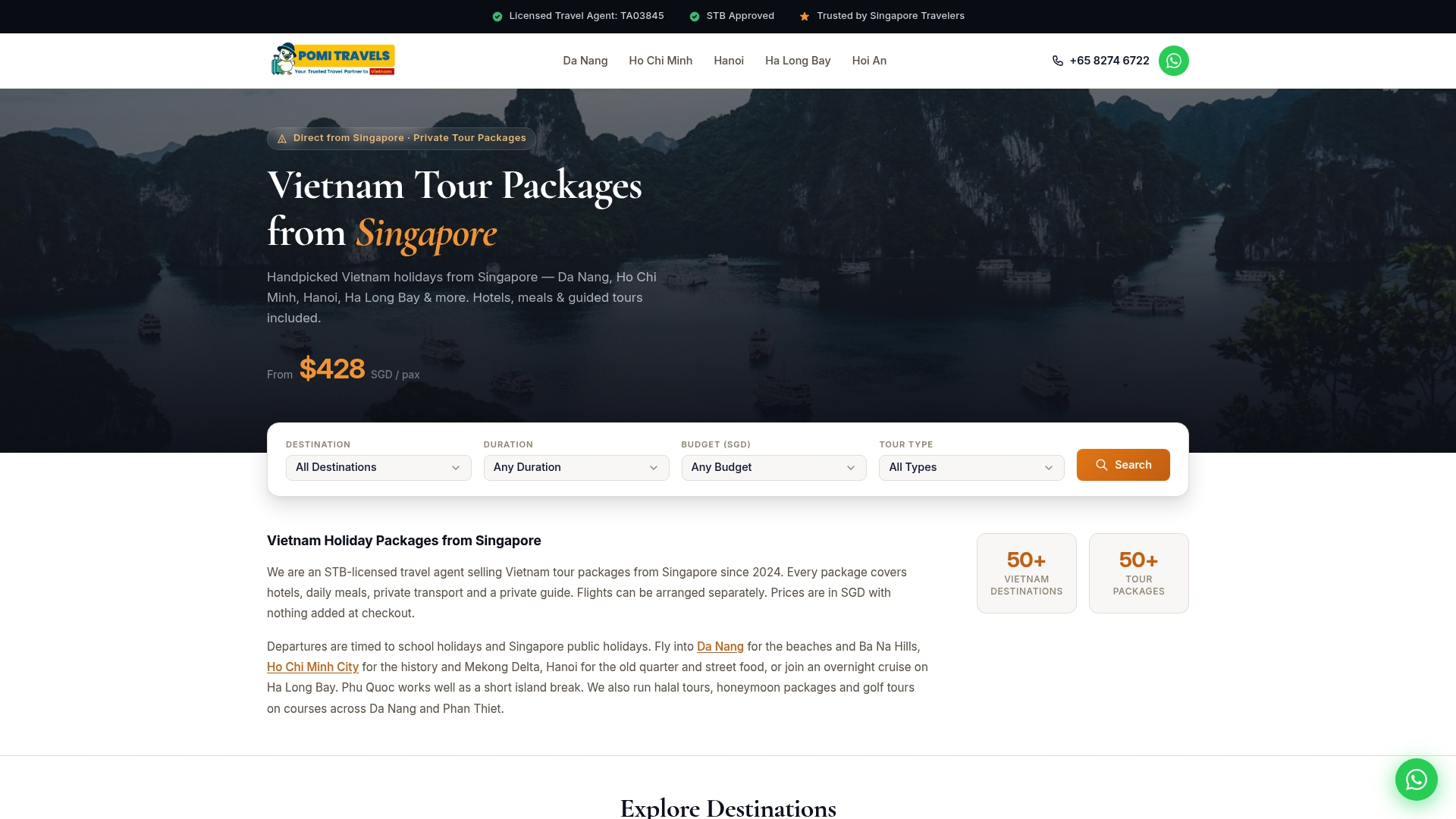
Vietnamtourpackage offers a range of Vietnam tour packages with transparent date change policies, expert support via WhatsApp, and itineraries designed to accommodate real-life disruptions. Whether you are travelling as a couple, family, or corporate group, the team helps you match your flexibility requirements to the right package from the start. Explore a tailored Ho Chi Minh City short tour or a multi-destination itinerary covering Da Nang and beyond, with pricing that starts from $428 SGD. Every booking comes with direct support from licenced travel professionals who can help you adjust plans without the runaround.
FAQ
What is travel package flexibility, in simple terms?
Travel package flexibility refers to the conditions under which you can change, postpone, or cancel a confirmed booking without losing the full amount paid. It covers date changes, name amendments, destination swaps, and cancellation refund options.
Is flexible always the same as refundable?
No. A flexible package typically allows you to change dates or details, while a refundable package returns cash to your account. Many packages described as flexible only issue travel credit or vouchers, which is a meaningful distinction.
How much extra does a flexible travel package cost?
Flexible tickets and packages cost around 15% more than standard options on average. Whether that premium is worthwhile depends on how stable your travel dates and plans are.
What should I check before buying a flexible package?
Look at the cancellation window, refund type (cash versus credit), change fees, fare difference policy, deposit size, and how responsive customer support is. Short windows and voucher-only refunds are the most common restrictions to watch for.
Do flexible travel packages cover fare differences when rescheduling?
Generally, no. Even when change fees are waived, you typically pay the fare difference between your original booking and the new travel dates, which can sometimes exceed the original fare.
Recommended
- Why book a packaged tour: stress-free Vietnam holidays | VietnamTourPackage.sg
- Vietnam Tour Packages from $428 SGD
- Private tour booking steps for a seamless Vietnam trip | VietnamTourPackage.sg
- Budget Planning for Vietnam Tours | VietnamTourPackage.sg