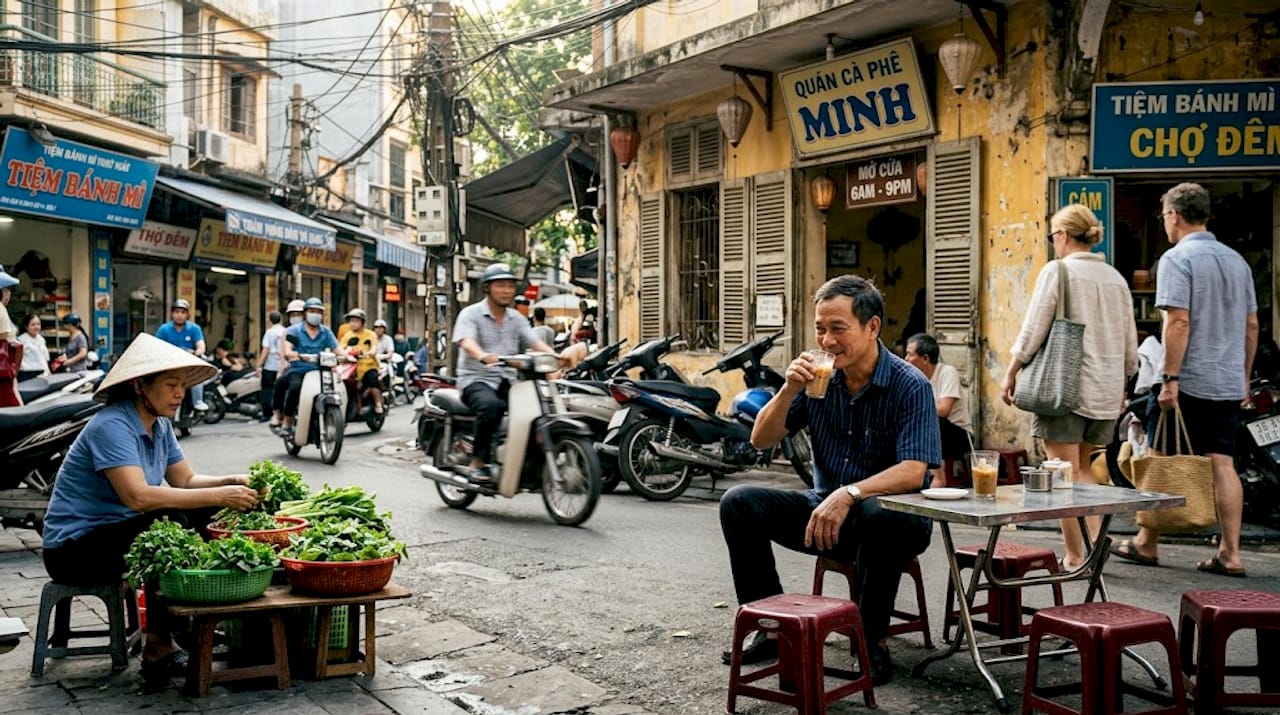
Discover responsible travel options with our Vietnam responsible tourism guide. Make a positive impact while exploring this beautiful country!
Your guide to responsible tourism in Vietnam
TL;DR:
- Singaporean families increasingly seek responsible Vietnam travel experiences that benefit local communities and protect the environment. Practical guidelines emphasize choosing certified operators, supporting local businesses, minimizing waste, and respecting cultural sites. Travelers’ informed decisions and demand for transparency can drive industry progress toward sustainability.
Singaporean families and groups are increasingly seeking Vietnam travel experiences that do more than tick off a bucket list. They want their spending to benefit local communities, protect the environment, and preserve the cultural heritage they have come to admire. Yet finding genuinely responsible options can feel daunting when every second tour operator claims to be “eco-friendly.” Vietnam’s official tourism platform offers practical guidance on responsible behaviour, but the real challenge lies in translating good intentions into verified, impactful choices across a complex destination.
Table of Contents
- What is responsible tourism in Vietnam?
- How to prepare for a responsible Vietnam trip
- Choosing activities and providers that make a difference
- Is Vietnam closing the gap on global sustainability?
- Why benchmarks matter more than promises in responsible travel
- Connect with ethical Vietnam travel experts
- Frequently asked questions
Key Takeaways
| Point | Details |
|---|---|
| Look for measurable standards | Providers using frameworks like VTDI and Travelife are more likely to offer truly responsible tourism. |
| Don’t be swayed by green promises | Proof of certification or participation in benchmark schemes matters more than pledges alone. |
| Traveller demand drives progress | Your choices and feedback help push Vietnam’s tourism sector towards genuine sustainability. |
| Family options abound | Vietnam offers a range of ethical destinations and activities suitable for groups and families. |
What is responsible tourism in Vietnam?
Responsible tourism is not simply about picking up litter or avoiding plastic straws. In Vietnam, it describes a full spectrum of behaviours, choices, and standards that together reduce negative impacts on nature and communities whilst actively generating benefits for the people who call these places home.
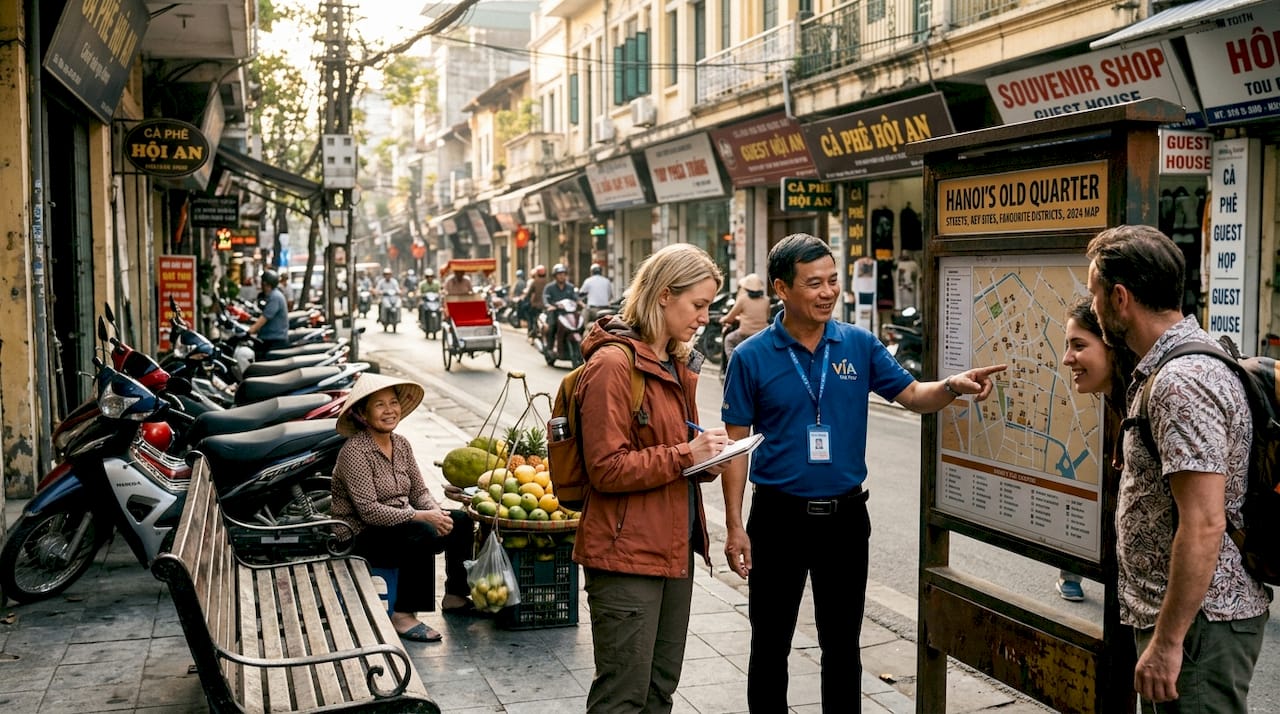
Vietnam’s travel responsibly guidance groups best practices into clear categories: respecting local customs, choosing community-based experiences, supporting local traders, and minimising environmental footprints. These are not aspirational slogans. They are practical daily decisions about where you eat, sleep, shop, and how you interact with how locals shape authentic travel in ways that directly sustain livelihoods.
The social, environmental, and cultural stakes are high. Vietnam welcomed over 17 million international visitors in 2024, and the pressure on fragile ecosystems such as Ha Long Bay and Hoi An’s ancient town is measurable. Overcrowding strains water systems, degrades heritage sites, and pushes up rents beyond what local families can afford. Responsible tourism redirects some of that pressure by spreading visitor flows and spending more fairly.
For Singaporean families, the good news is that choosing ethically rarely means sacrificing comfort. Many of the top cities for families have a growing ecosystem of community-led tours, locally owned guesthouses, and artisan workshops that offer richer experiences than mass-market alternatives.
Key principles at a glance
- Buy local: Choose markets, restaurants, and craft shops run by residents rather than large international chains.
- Respect sacred spaces: Dress modestly and follow behavioural guidelines at temples, pagodas, and minority villages.
- Minimise waste: Carry a reusable bottle, decline single-use plastics, and use refill stations where available.
- Support wildlife protection: Avoid venues offering elephant rides, wildlife selfies, or products made from endangered species.
- Learn the language basics: A few words of Vietnamese go a long way in showing cultural respect.
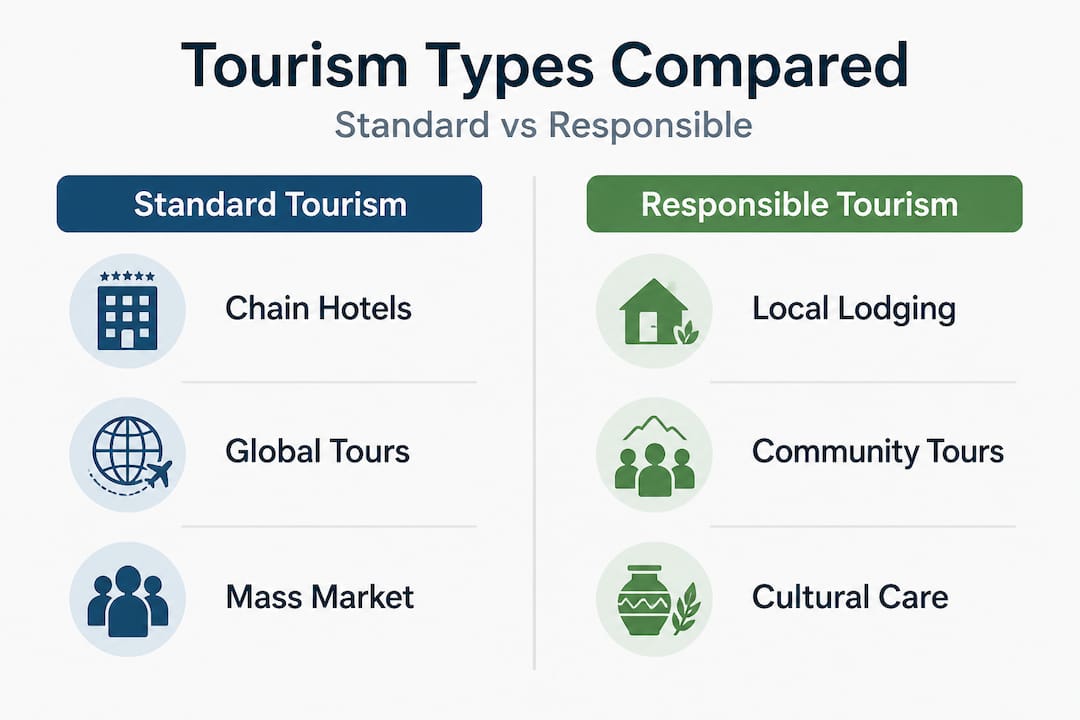
Responsible vs standard tourism: a comparison
| Dimension | Standard tourism | Responsible tourism |
|---|---|---|
| Accommodation | International chain hotels | Locally owned guesthouses or homestays |
| Dining | Hotel buffets or tourist restaurants | Street food and family-run eateries |
| Activities | Mass-market bus tours | Community-led or certified small-group tours |
| Shopping | Airport duty-free or souvenir chains | Artisan markets and co-operatives |
| Wildlife | Shows or rides involving animals | Ethical sanctuaries or wildlife-free experiences |
| Environmental footprint | Higher single-use plastic, packaged tours | Lower waste, carbon-conscious options |
How to prepare for a responsible Vietnam trip
Understanding responsible tourism is one thing. Knowing how to prepare and what standards to look for before you book is another matter entirely.
Vietnam is building formal measurement tools to assess tourism’s health. The VTDI initiative (Vietnam Sustainable Tourism Development Index, 2024) evaluates destinations on environmental footprint, community benefit, infrastructure resilience, and cultural integrity. It moves the conversation beyond raw visitor numbers towards a genuine measure of well-being for both host communities and guests.

Internationally, frameworks like Travelife’s 200+ criteria are being adopted by Vietnamese tour operators to benchmark their environmental, social, and governance (ESG) performance. These criteria cover everything from staff wages and safety standards to waste disposal practices and supplier diversity. When an operator can point to Travelife participation or a VTDI-aligned destination strategy, that is a meaningful signal.
For families and groups travelling from Singapore, the preparation checklist below covers the most important steps.
Your pre-trip responsible travel checklist
- Research the destination’s sustainability profile. Check whether your chosen city or region participates in VTDI monitoring or comparable national programmes.
- Vet your tour operator. Ask directly: Do you hold any sustainability certifications? Which framework do you follow? A credible operator will answer specifically, not vaguely.
- Compare group and private tour structures. Understanding the difference between group vs private tours helps you assess carbon footprint per person and the level of itinerary customisation available.
- Review accommodation choices. Look for guesthouses that employ local staff, source ingredients locally, and have visible waste-reduction practices.
- Plan your spending consciously. Allocate budget for local artisans, community-based experiences, and tipping guides and drivers fairly.
- Check wildlife policies. Refuse any activity that exploits animals for entertainment.
- Understand cultural protocols. Research dress codes, photography etiquette, and tipping norms for each region on your itinerary.
When you are ready to book, following private tour booking steps that include sustainability vetting questions ensures you arrive with both confidence and accountability.
Pro Tip: Ask operators whether they can name a specific local community partner or social enterprise they work with. Genuine responsible operators can name names and share outcomes. Vague answers like “we support local communities” are a warning sign.
Questions to ask before you book
Questions matter. Specific answers distinguish genuine operators from those using responsible language as a marketing layer:
- What percentage of your guides and drivers are locally hired?
- Do you have a written environmental policy? Can I see it?
- How do you handle waste on multi-day tours?
- Which international or national sustainability standards do you align with?
- Can you share any impact reports from the past year?
Choosing activities and providers that make a difference
Once the preparation is done, the practical task is selecting activities and providers that genuinely support local people and the environment rather than simply claiming to do so.
The most reliable filter is certification. Operators assessed against Travelife’s criteria have undergone documented, third-party review across more than 200 indicators. That is a meaningfully different level of accountability compared to a self-declared “eco-tour” label.
Six steps to vet a responsible activity or provider
- Confirm certification status. Ask for the certificate number or organisation name. Cross-check directly with the certifying body if in doubt.
- Look at guide credentials. The vital role of tour guides in creating ethical, informed experiences cannot be understated. Certified guides with local knowledge protect both heritage sites and visitor safety.
- Assess group sizes. Smaller groups cause less disruption to ecosystems and cultural sites, and typically provide richer interactions for your family.
- Examine animal welfare policies. Any reputable operator will clearly state a no-exploitation policy in writing.
- Read recent traveller reviews with a critical eye. Look for comments about local engagement, waste practices, and guide knowledge rather than just service scores.
- Inspect the itinerary for community spending. Does the programme include meals at locally owned restaurants? Does it visit social enterprises or artisan workshops?
“Responsible travel is not about doing less. It is about choosing better. When visitors ask the right questions and reward operators who answer them honestly, they become the most powerful force for accountability in any tourism system.”
Greenwashing is a genuine risk. Common patterns include: vague language about “nature” and “culture” without measurable commitments; photographs of wildlife in ways that suggest captive conditions; and promises to “plant trees” without specifying volumes, species, or locations. When something sounds too convenient, investigate further.
For destinations specifically, Hoi An responsible tours consistently demonstrate how heritage towns can integrate community involvement, cultural education, and environmental stewardship into visitor experiences. The ancient town’s lantern-making workshops, riverside cycling routes, and local cooking classes all channel spending directly into resident livelihoods. Choosing a well-structured packaged tour that bundles these experiences together is often the most efficient way for families to access them responsibly.
Pro Tip: During your tour, pay attention to how your guide talks about local people and environments. Guides who use the names of specific villages, farmers, or artisans demonstrate genuine community connection. Impersonal scripts are a signal the “community engagement” is purely decorative.
Is Vietnam closing the gap on global sustainability?
It is important to approach Vietnam’s responsible tourism landscape with both optimism and realism. Progress is real, but gaps remain.
One research summary catalogues Vietnam’s sustainable tourism challenges, placing the country 96th out of 99 nations on a composite sustainable tourism benchmark. That is a sobering figure, and it reflects real limitations in governance structures, monitoring capacity, and enforcement at site level.
However, those numbers tell only part of the story. The VTDI initiative, the adoption of Travelife by Vietnamese operators, and the growing sophistication of Singaporean and regional travellers are all exerting upward pressure on standards. Benchmarks create accountability structures that pledges alone cannot provide.
Visitors who choose ethical Hanoi tours with certified providers, stay in community-linked accommodation, and actively avoid unverified operators contribute directly to a competitive shift in the sector. This is how visitor behaviour converts into industry-wide improvement over time.
Hotels and lodges that invest in certified textile standards for bed linen and uniforms are a good example of incremental but meaningful progress. When these choices are visible to travellers and rewarded with repeat bookings, they become self-reinforcing.
Vietnam vs regional peers on sustainability indicators
| Indicator | Vietnam (current) | Regional best practice | Gap |
|---|---|---|---|
| National sustainability index ranking | 96th of 99 | Top 30 globally | Significant |
| VTDI destination coverage | Growing, 2024 launch | Full national coverage | Moderate |
| Travelife-certified operators | Small but increasing | Widespread adoption | Moderate |
| Community benefit tracking | Developing | Standardised reporting | Significant |
| Wildlife protection enforcement | Inconsistent | Strong legal enforcement | Significant |
The takeaway is not pessimism. It is calibrated expectation. Vietnam has the infrastructure, the cultural richness, and the international visitor demand to accelerate sustainability progress. Your choices as a traveller determine whether that acceleration happens from the demand side.
Why benchmarks matter more than promises in responsible travel
Here is an uncomfortable truth that most responsible travel guides avoid: the phrase “responsible tourism” has become so widely used that it has lost much of its power to distinguish genuinely ethical operators from those who simply know the right vocabulary.
Promises are free. Certifications are not. When an operator has invested the time and resources to work through Travelife’s 200+ criteria, they have created a documented trail of accountability. When a destination participates in VTDI monitoring, it accepts external measurement of its environmental and community footprint. These are the building blocks of real improvement, not marketing copy.
Singaporean travellers occupy a particularly influential position in this dynamic. Singapore’s tourism spend is substantial, its travellers are well-informed, and its proximity to Vietnam means repeat visits are common. When a segment of the market consistently rewards operators with verified credentials and consistently avoids those without them, the financial incentive to pursue certification grows stronger.
The myth that responsible tourism is primarily about individual sacrifice, such as carrying your own cutlery or refusing air conditioning, misses the structural point entirely. Real leverage lies in purchasing decisions made before you board the plane. Which operator did you choose? Which accommodation? Which activities? Those decisions collectively shape the incentives that either accelerate or retard sector-wide progress.
We believe that Singaporean families and groups travelling to Vietnam have the sophistication to ask hard questions and the market weight to make their answers matter. Supporting corporate tours with impact frameworks, demanding transparency, and leaving detailed reviews that specifically address responsible practices all contribute to a feedback loop that lifts the whole industry.
Connect with ethical Vietnam travel experts
Planning a responsible Vietnam journey from Singapore does not have to be complicated, but it does benefit from expert guidance.
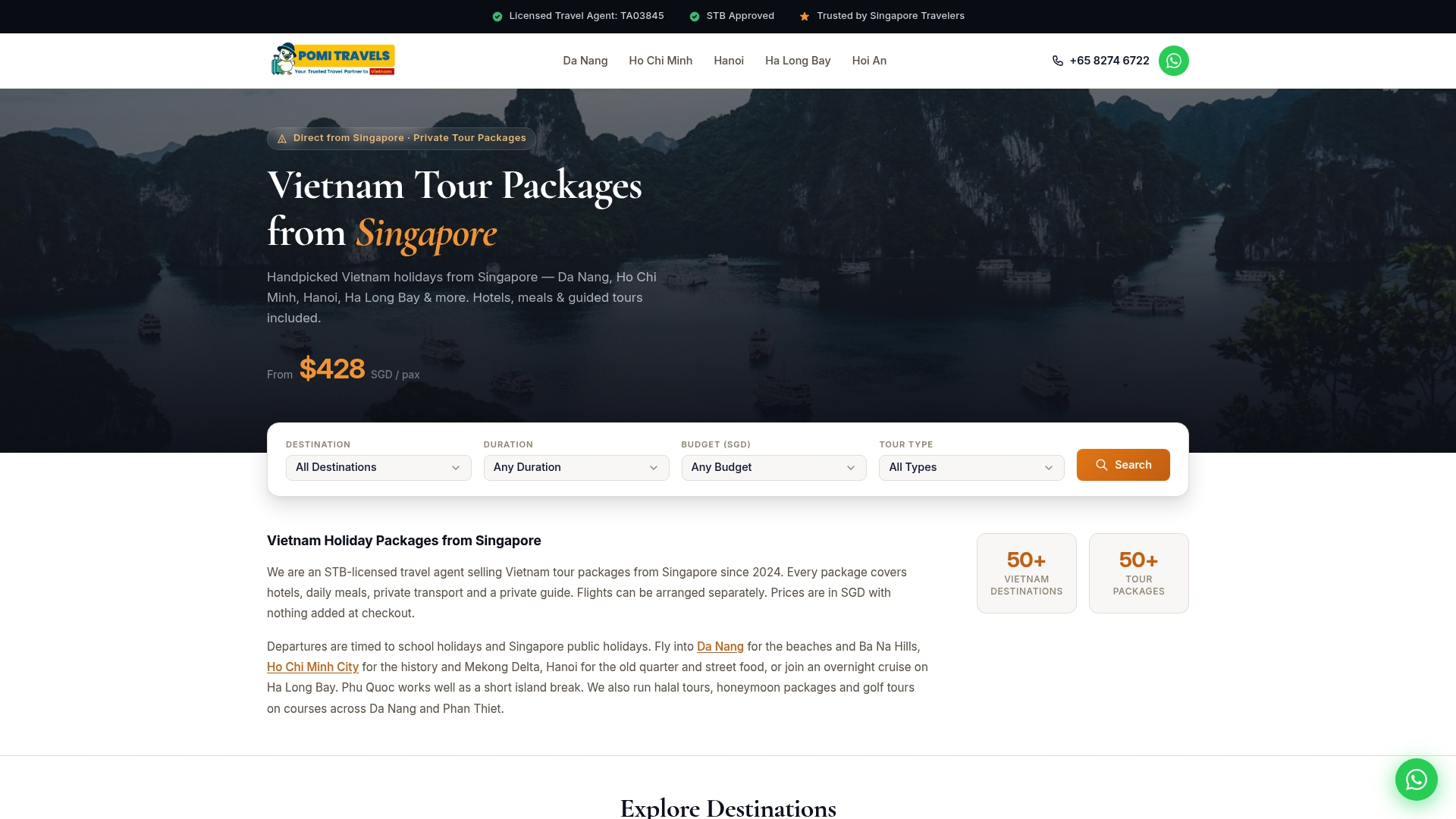
At vietnamtourpackage.sg, we curate Vietnam tour packages with transparency in pricing, vetted providers, and itineraries designed to benefit local communities. Whether you are considering a Ho Chi Minh City 4-day tour that includes community dining and locally guided heritage walks, or a Da Nang and Hoi An tour spanning five days through culturally rich destinations with responsible activity options, our team is ready to help you build an ethical experience that works for your family or group. Reach out via WhatsApp for personalised recommendations tailored to your values and travel style.
Frequently asked questions
What are the top responsible travel destinations in Vietnam for families?
Hoi An, Da Nang, and Hanoi are consistently recommended for families seeking ethical experiences, as all three cities offer community-led tours, heritage education, and locally owned dining options aligned with responsible travel principles.
How can I check if a Vietnam tour operator is truly sustainable?
Look for documented alignment with international frameworks such as Travelife or participation in Vietnam’s VTDI monitoring initiative, and ask operators to name specific community partners or share recent impact data.
What is the main challenge to responsible tourism progress in Vietnam?
Governance gaps and limited monitoring capacity are the primary constraints, as evidenced by Vietnam’s low ranking on composite sustainable tourism benchmarks, though new national frameworks are beginning to address these weaknesses.
Are responsible tourism options more expensive than regular tours?
Not necessarily. Community-based experiences and locally owned accommodation often cost the same as or less than mass-market alternatives, and the value delivered in cultural depth and authentic engagement frequently exceeds what standard tours offer.
How can travellers help increase Vietnam’s sustainability ranking?
Supporting providers who participate in the VTDI index and other measurable standards, alongside leaving specific and detailed reviews about responsible practices, creates the market-level pressure that encourages sector-wide improvement over time.
Recommended
- Private tour booking steps for a seamless Vietnam trip | VietnamTourPackage.sg
- Transportation in Vietnam for Tourists | VietnamTourPackage.sg
- Why book a packaged tour: stress-free Vietnam holidays | VietnamTourPackage.sg
- Explore Vietnam: top cities for families, groups & tours | VietnamTourPackage.sg
- Responsible travel in Scotland: your guide to authentic tours - Skye Highlands Tours