Discover the role of Singapore Tourism Board in travel safety. Learn how understanding its focus can enhance your travel experience.
Role of Singapore Tourism Board in travel safety
TL;DR:
- Most travelers mistakenly believe the Singapore Tourism Board directly ensures their personal safety abroad.
- In reality, STB primarily supports industry and destination reputation, not individual traveler protection in countries like Vietnam.
Most travellers assume the Singapore Tourism Board (STB) works like a safety net. They believe it directly monitors their personal welfare, handles medical emergencies, or steps in when things go wrong abroad. This assumption is understandable but largely incorrect. Understanding the true role of Singapore Tourism Board in travel safety helps you plan smarter, especially if you are a Singaporean heading to Vietnam. The STB does important work, but its focus sits firmly on industry support and destination reputation, not individual traveller protection. Knowing where its responsibilities end and yours begin is one of the most practical things you can do before any overseas trip.
Table of Contents
- Key takeaways
- The role of Singapore Tourism Board in travel safety
- Singapore’s safety reputation and what it actually means for travellers
- What travellers must manage independently for Vietnam trips
- How industry partnerships raise the bar for traveller safety
- My honest take on STB and travel safety expectations
- Plan your Vietnam trip with real safety in mind
- FAQ
Key takeaways
| Point | Details |
|---|---|
| STB’s mandate is industry-focused | STB supports tourism businesses and destination safety, not personal traveller assistance abroad. |
| Singapore scores 8.9/10 for safety | High domestic safety standards build traveller confidence but do not extend to overseas trips. |
| Travel insurance is non-negotiable | STB does not cover medical or legal emergencies; comprehensive insurance is your responsibility. |
| Tour operators fill safety gaps | Licensed operators with STB accreditation follow safety standards that protect you during guided tours. |
| Vietnam trips require independent prep | Cultural, legal, and logistical differences in Vietnam mean travellers must prepare independently. |
The role of Singapore Tourism Board in travel safety
The STB is a government statutory board operating under the Ministry of Trade and Industry. Its mandate centres on growing Singapore as a tourism destination and supporting the resilience of the tourism industry. Travel safety guidelines Singapore travellers often attribute to STB are largely directed at businesses, not individual tourists.
When it comes to supporting tourism businesses, STB focuses on continuity during global uncertainty rather than direct traveller intervention. This means its crisis management efforts typically address industry-level problems. A good illustration came in March 2026, when STB arranged a special flight for stranded travellers following Middle East airspace disruptions, assisting nine passengers out of 33 applicants. That kind of response is the exception, not the rule, and it applied to visitors stranded in Singapore, not Singaporeans stuck abroad.
STB does not operate a personal safety service for outbound travellers. It does not provide medical assistance, legal representation, or travel insurance to individual tourists. Its travel safety measures focus on how licensed operators, hotels, and attractions manage visitor experiences within Singapore’s borders.
- STB licences travel agents and tour operators in Singapore, setting minimum safety and service standards.
- It publishes industry guidelines for crisis preparedness but does not monitor individual tourist welfare.
- STB has no authority over safety conditions at overseas destinations, including Vietnam.
- There is no dedicated 24/7 tourist helpline for visitors needing urgent assistance; standard national emergency numbers and embassy contacts are the appropriate channels.
Pro Tip: Before any overseas trip, save the Singapore Embassy contact number for your destination country alongside local emergency numbers. For Vietnam, the Singapore Embassy in Hanoi and the Consulate in Ho Chi Minh City are your most direct official support channels.
Singapore’s safety reputation and what it actually means for travellers
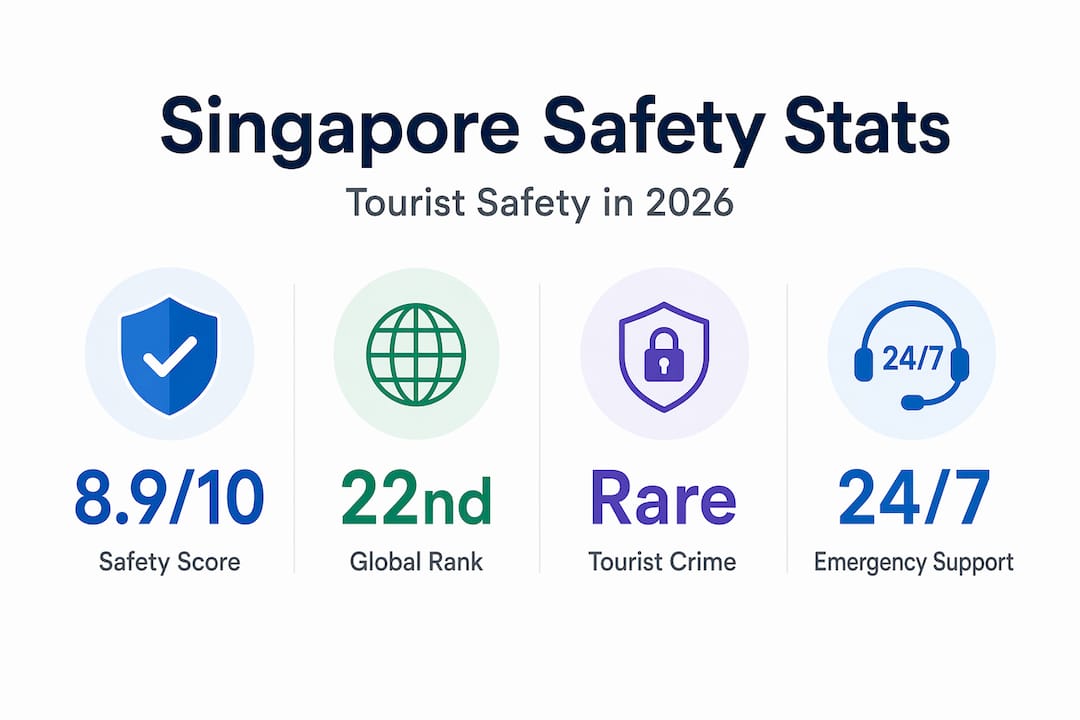
Singapore regularly ranks among the safest countries in the world. As of 2026, Singapore scores 8.9 out of 10 for safety, placing it 22nd out of 248 countries globally. Violent crime against tourists is exceptionally rare, and the city functions with a level of order that most visitors find genuinely reassuring.
Much of this safety comes from Singapore’s strict legal environment. Fines and enforcement apply even to minor infractions such as jaywalking and littering. Travellers sometimes find this surprising, but those same laws are precisely what keep the environment so controlled and safe. Emergency response is fast, with police and medical services reachable on 999 and 995 respectively, and citywide response times under 15 minutes.
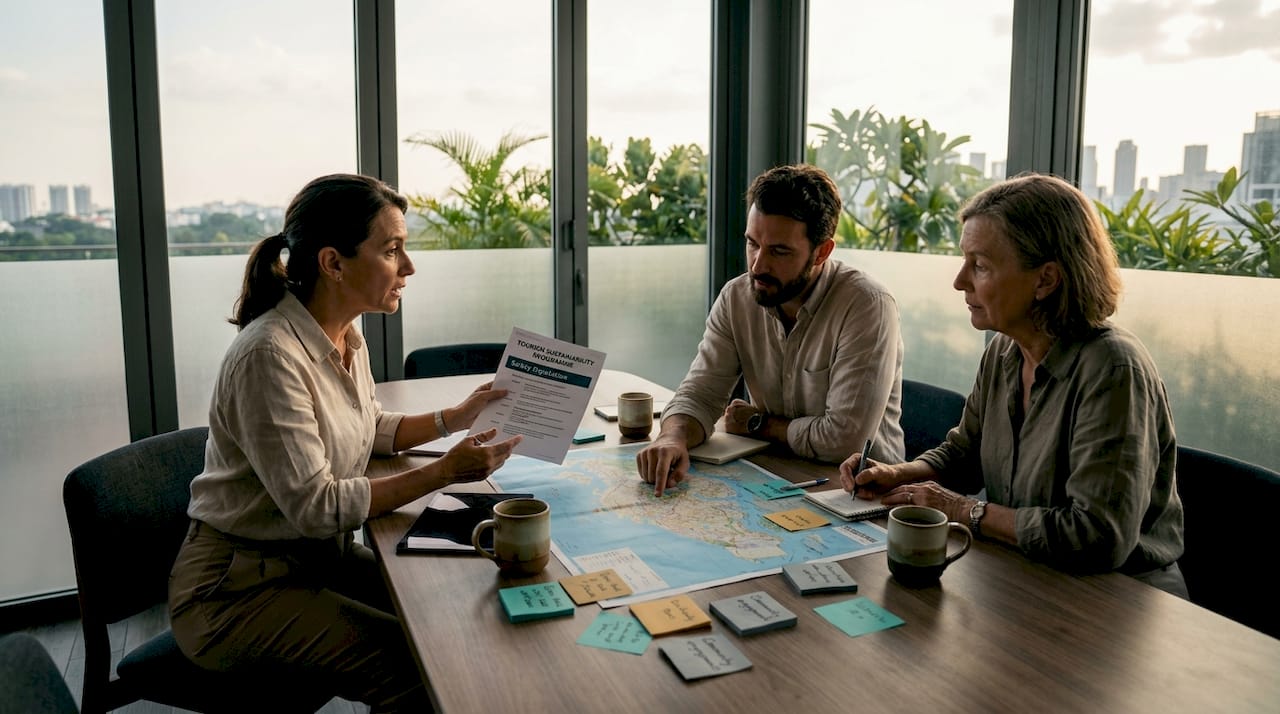
STB actively leverages this safety reputation through its Tourism Sustainability Programme, which guides tourism businesses towards better safety and sustainability practices. This indirectly benefits visitors by raising the baseline quality of services they encounter in Singapore.
Here is where the distinction matters most:
| Safety factor | Applies in Singapore | Applies to you in Vietnam |
|---|---|---|
| STB-licenced operators | Yes | Partially, through Singapore-based agents |
| Low crime environment | Yes | Varies by location |
| STB crisis management | Limited (industry-level) | No |
| Travel insurance coverage | Your responsibility | Your responsibility |
| Embassy and consular support | Singapore embassies abroad | Singapore embassies abroad |
Singapore’s exceptional domestic Singapore visitor safety protocols do not travel with you to Hanoi or Da Nang. They are place-specific. Once you board that flight to Vietnam, your safety net becomes your own preparation.
What travellers must manage independently for Vietnam trips
This is the section most travel articles skip over. Singapore tourism safety measures within the country are excellent, but they tell you nothing about what to do when you arrive in Ho Chi Minh City and encounter a motorbike accident, a visa complication, or a medical emergency.
Here is a practical framework for what you must handle personally:
- Purchase comprehensive travel insurance before departure. Medical costs for non-residents can be significant, and this applies just as much in Vietnam as it does in Singapore. STB does not cover these costs under any circumstances.
- Verify your visa requirements in advance. Singapore citizens can access Vietnam visa-free for up to 45 days, but conditions change. Check the current Vietnam visa requirements before you travel to avoid complications at the border.
- Understand local laws and cultural norms. Vietnam has its own legal framework and customs around photography, religious sites, and public behaviour. What is acceptable in Singapore may not be appropriate in a Vietnamese temple or rural community.
- Register your travel itinerary with MFA. Singapore’s Ministry of Foreign Affairs allows you to register your overseas travel so that help can be coordinated more quickly in emergencies.
- Choose your tour operator carefully. An STB-licenced Singapore travel agency must meet regulated service and safety standards. This licence means something. Choosing a registered operator for your Vietnam trip gives you significantly stronger consumer protection than booking through unlicensed channels.
Pro Tip: When comparing group tours versus private tours for Vietnam, private tours generally allow more flexibility to avoid crowded or higher-risk areas, though group tours offer built-in accountability and usually come with more experienced guides.
How industry partnerships raise the bar for traveller safety
STB does not work in isolation. Its Singapore travel safety measures extend through a network of partnerships with hotels, resorts, travel agents, and attractions operating within Singapore. These partnerships set and maintain safety standards that visitors benefit from, often without realising it.
Several aspects of this cooperative approach are worth understanding:
- STB-accredited travel agents operating in Singapore are required to hold licences and follow consumer protection standards, giving outbound travellers legal recourse if things go wrong.
- Regional tourism cooperation across Southeast Asia, including agreements with Vietnamese tourism authorities, helps align minimum service and safety standards for tour packages crossing borders.
- Local Vietnamese operators partnering with Singapore-based agencies are typically held to higher standards than those selling solely to domestic Vietnamese tourists. Singapore travellers benefit from this arrangement, as reputable Singapore-based agencies select Vietnamese partners with strong safety track records.
- Travel safety initiatives Singapore agencies implement often include pre-trip briefings, on-ground contact persons in Vietnam, and 24/7 emergency support lines from the Singapore operator side, not from STB directly.
The important takeaway is that how Singapore promotes travel safety is primarily through the quality of its licensed travel industry, not through direct STB intervention in your personal holiday. When you book through a properly licenced Singapore travel operator, you access a layer of protection and accountability that independent bookings simply do not provide.
Understanding the role of tourism boards more broadly helps here. Tourism boards around the world, including STB, set the conditions for safe travel rather than managing individual safety events. Think of STB as a regulator and promoter rather than a rescue service.
My honest take on STB and travel safety expectations
I’ve spent years working within and alongside Singapore’s travel industry, and the single biggest source of traveller frustration I’ve witnessed is misplaced expectation. People book a Vietnam holiday, assume STB has their back if something goes wrong, and then feel genuinely abandoned when they discover it does not work that way.
In my experience, the travellers who have the safest, least stressful trips are not the ones who rely on government bodies. They are the ones who have done three specific things: bought good travel insurance, chosen a licensed operator, and spent thirty minutes researching local laws at their destination.
What I find most interesting is that Singapore’s strict legal environment actually creates a blind spot for some of its travellers. They are so accustomed to a well-managed, high-safety domestic environment that they underestimate the degree to which personal responsibility takes over the moment they cross a border. Vietnam is a wonderful destination, genuinely safe in most respects, but it operates on very different systems.
My honest advice? Stop asking what STB will do for you overseas and start asking what you have done to prepare. The role of tourism boards is to create the conditions for safe, enjoyable travel. The rest is yours to own.
— Kuan
Plan your Vietnam trip with real safety in mind
If reading this has made you more conscious about building a properly structured, safety-aware trip to Vietnam, Vietnamtourpackage is worth a look. Every package on the platform is operated under an STB licence, meaning the consumer protections discussed in this article are built directly into your booking.
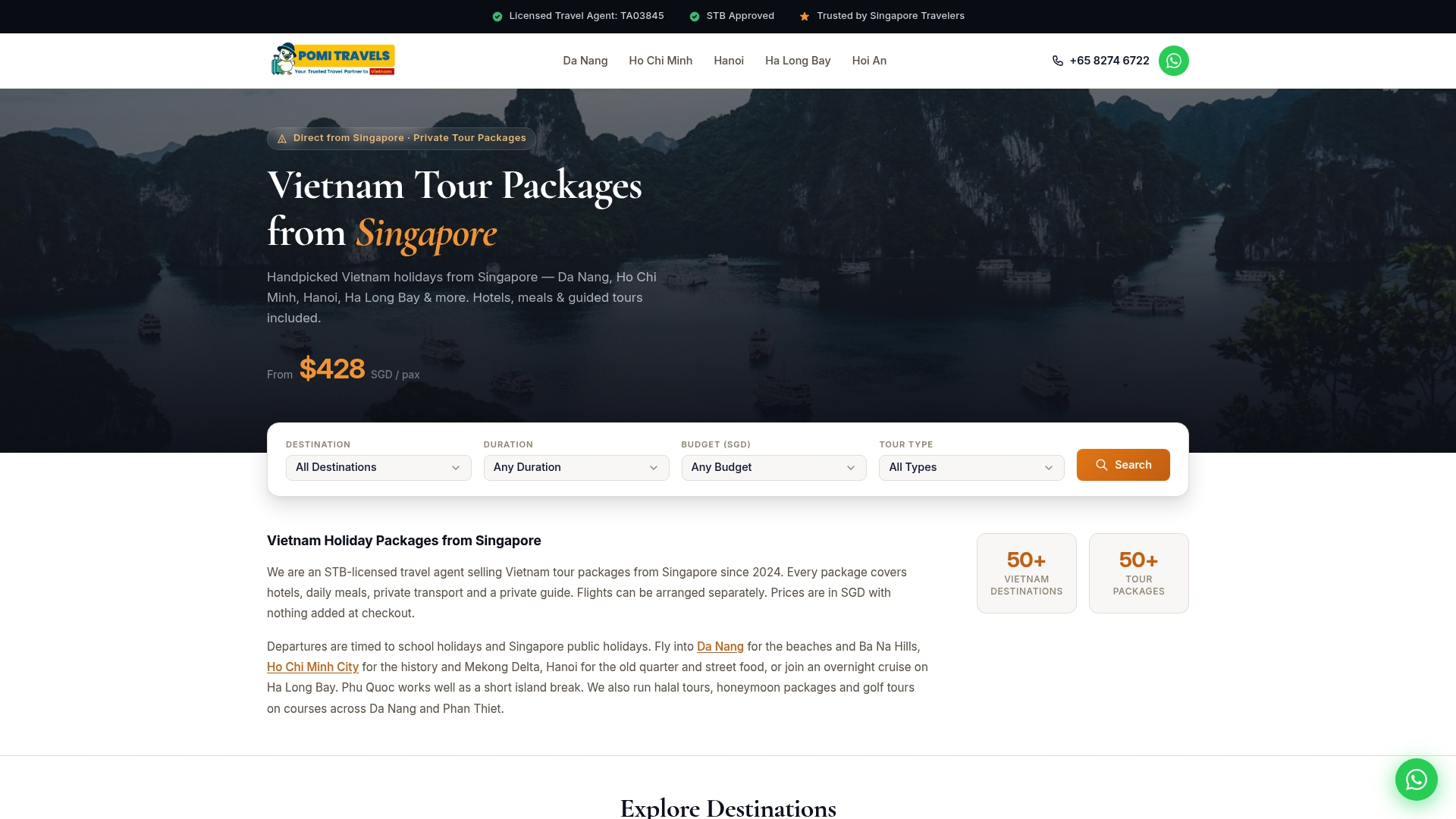
Vietnamtourpackage offers a range of options designed for Singapore travellers, from a Ho Chi Minh City 3D2N package starting from $428 SGD to longer multi-destination tours. All packages include private transport, accommodation, and on-ground support, which addresses the practical safety gaps that independent travellers typically encounter. You can also explore the full range of Vietnam tour packages starting from $428 SGD to find the right fit for your travel style and schedule. Knowing your operator is licensed and accountable makes a meaningful difference, especially when you are travelling somewhere new.
FAQ
What does the Singapore Tourism Board actually do for travel safety?
STB sets safety and service standards for licensed tourism businesses operating in Singapore. It does not provide direct personal safety services to individual travellers, particularly for trips abroad.
Does STB help Singaporeans in emergencies overseas?
No. STB’s remit covers tourism businesses and inbound visitor experiences within Singapore. For emergencies overseas, Singaporeans should contact the Ministry of Foreign Affairs or the nearest Singapore Embassy.
Is Singapore safe for tourists in 2026?
Singapore ranks 22nd globally for safety, scoring 8.9 out of 10. Crime against tourists is rare, and emergency services are fast and reliable.
Do I need travel insurance even if I book through an STB-licenced operator?
Yes. Comprehensive travel insurance is your personal responsibility regardless of who you book with. An STB licence protects your consumer rights but does not cover medical or legal costs abroad.
How do I verify if a travel agent is STB-licenced?
You can check the STB website’s registry of licensed travel agents before booking. Vietnamtourpackage operates under an STB licence, giving Singapore travellers formal consumer protection for their Vietnam bookings.
Recommended
- Vietnam Visa Requirements for Singapore Citizens 2026 | VietnamTourPackage.sg
- Group Tours vs Private Tours in Vietnam | VietnamTourPackage.sg
- Vietnam Tour Packages from $428 SGD
- Tipping Culture in Vietnam | VietnamTourPackage.sg